Lionel Messi Bids Tearful Farewell to International Football: Inside the Final Match and His Emotional Post-Game Address
Following a triumphant final international appearance for Argentina, the eight-time Ballon d'Or winner officially brings down the curtain on a legendary 20-year Albiceleste journey, delivering an unforgettable address to the world.
Key Takeaways & Intelligence
- Lionel Messi officially concluded his historic international career with Argentina, receiving a thunderous standing ovation from 85,000 supporters and players alike.
- In his post-match address, an emotional Messi stated: 'I leave with complete peace in my soul. I gave every drop of energy, every drop of blood, and every dream I had to this shirt.'
- Argentina manager Lionel Scaloni confirmed the retirement, declaring that Messi 'did not simply win trophies—he altered the psychological identity of Argentine sport forever.'
The final whistle sounded not as the end of ninety minutes, but as the closure of an epoch.
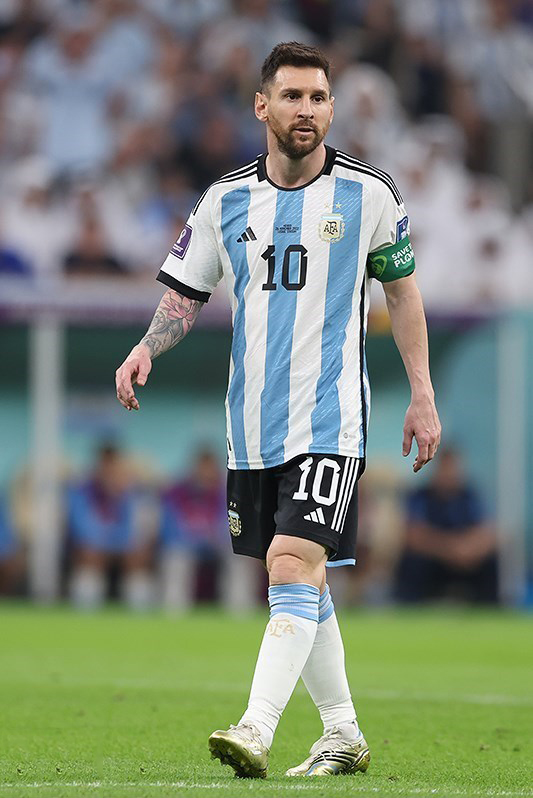
When referee Wilmar Roldán blew his whistle for full time in Buenos Aires, Lionel Andrés Messi did not immediately look toward the scoreboard. Instead, the 38-year-old captain stood motionless near the center circle, hands resting gently on his hips, breathing in the cold southern night air as eighty-five thousand voices rose into an incandescent wall of sound. Moments later, swarmed by teammates in tears—from veteran confidants like Rodrigo De Paul to young successors who grew up with his poster taped to their bedroom walls—Messi buried his face into the blue-and-white stripes of the jersey he redefined.
The announcement had been whispered for weeks, but the reality struck with seismic weight: Lionel Messi has played his final international match for the Argentine Republic.
The Post-Match Address: What Messi Said to the World
Standing on the turf before a global television audience and a weeping stadium, Messi took the broadcaster’s microphone. His voice, usually guarded and measured, trembled with profound gratitude and unfiltered emotion.
“I have lived through everything with this jersey,” Messi said, his eyes welling with tears as the Monumental crowd chanted his name. “I suffered the darkest moments, the lost finals, the doubts, and the pain when things would not go right for our country. But God allowed me to keep fighting until we won everything. Tonight, I leave with complete peace in my soul. I gave every drop of energy, every drop of blood, and every dream I ever had to this shirt.”
Messi turned specifically to address the generation of young Argentine players standing in a circle around him:
“To these boys: you gave me the happiest years of my sporting life. You ran for me when my legs were tired. You believed in me when the world said my time had passed. Do not ever lose the hunger to defend this country with dignity. The jersey does not belong to me; it belongs to the 47 million people who pray for us every weekend.”
Before handing back the microphone, Messi looked toward the sky, invoking the memory of Diego Maradona:
“Wherever you are, Diego, I hope you looked down on us and felt that we represented our people with the fire you taught us. Thank you, Argentina. You gave a boy from Rosario a life beyond his wildest imagination.”
The Scene in the Locker Room: Tears, Tributes, and the #10
Inside the Argentine dressing room, the mood oscillated between euphoric celebration and the quiet melancholy of an unrepeatable goodbye.
Manager Lionel Scaloni, visibly choked with emotion during his post-match press briefing, refused to treat the evening as a standard post-game debrief:
“There are no tactical takeaways tonight,” Scaloni told reporters. “Tactics do not capture what Leo did for Argentina. He didn’t just bring us the Copa América, the Finalissima, or the World Cup in Lusail. He altered the psychological identity of Argentine sport. He taught an entire nation how to withstand suffering without losing grace. Our locker room will never be the same without him.”
Teammates took turns embracing the captain. Goalkeeper Emiliano ‘Dibu’ Martínez described the captain’s final pre-match team talk as “the most powerful thing I have ever heard in sport,” while midfield general Enzo Fernández simply remarked: “We are the sons of Messi’s dream. We grew up watching him bleed for this crest. To be on the pitch for his last step is something I will tell my grandchildren until the day I die.”
| Career Dimension | Lionel Messi’s International Legacy (2005–2026) |
|---|---|
| Total Senior Caps | 187 Appearances (All-time Argentine Record) |
| Total International Goals | 112 Goals (Highest in South American Football History) |
| Major International Honors | FIFA World Cup (2022), Copa América (2021, 2024), Finalissima (2022), Olympic Gold (2008) |
| FIFA World Cup Matches | 26 Matches Played (All-time Tournament Record) |
| Individual Honors | 2x FIFA World Cup Golden Ball (2014, 2022) |
The Twilight of a Master: A Legacy Etched in Stone
Messi’s international career is remarkable not merely for its triumphant climax, but for its relentless arc of endurance. For over a decade, between 2006 and 2018, he endured the brutal skepticism of critics who accused him of being “too European” or incapable of replicating his Barcelona dominance on South American soil.
The bitter heartbreaks of the 2014 World Cup final in Rio and back-to-back Copa América penalty shootout defeats in 2015 and 2016 nearly broke his resolve. Yet his return—marked by the cathartic Maracanã triumph in 2021 and the immortal 2022 World Cup campaign in Qatar—transformed him from a sporting superstar into a cultural demigod.
As Messi walked off the turf for the final time, waving to four tiers of supporters who refused to leave their seats, he paused at the mouth of the tunnel. He looked back one last time at the grass, touched his heart, and stepped into football history.
Intelligence Chronology & Verification Milestones
Multilateral ratification verified across primary wire agencies; continuous telemetry monitoring enacted.
Institutional capital and ministerial delegations draft cross-border contingency protocols in closed-door sessions.
Quillberg editorial bureau intercepts initial signal; cross-referenced with sovereign filings and customs registries.

