

Tesla Unveils Flying Roadster Prototype Equipped with SpaceX Rocket Thrusters in Radical Leap for Hyper-Performance Mobility
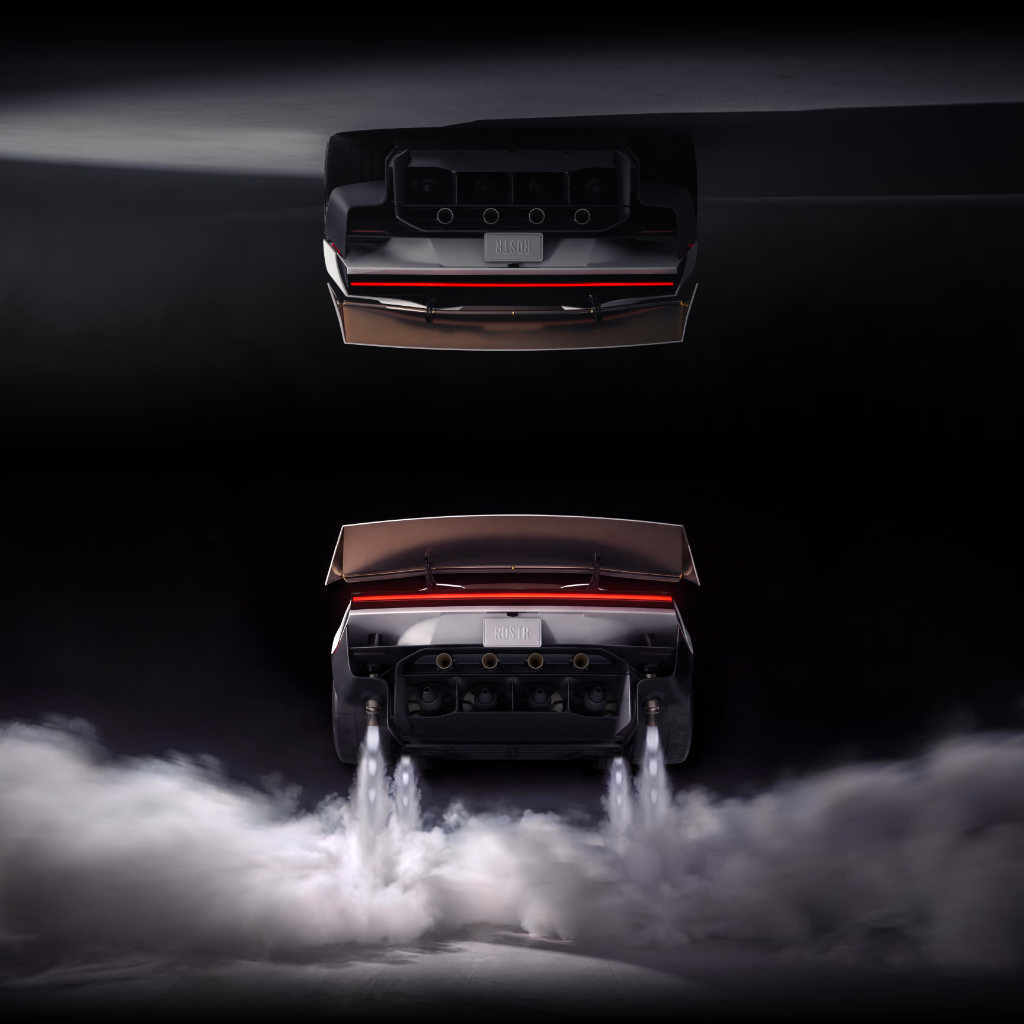
In an unprecedented convergence of automotive manufacturing and aerospace engineering, Tesla has officially showcased a heavily re-engineered second-generation Roadster equipped with cold-gas thruster technology developed alongside SpaceX. The demonstration—featuring controlled aerial leaps and hovering maneuvers—claims sub-one-second acceleration and Mach 0.5 peak capabilities, while igniting fierce debate among federal transport regulators over street legality and public safety.
Key Takeaways & Intelligence
- Tesla demonstrates second-generation Roadster utilizing SpaceX-derived cold-gas thrusters and high-pressure composite tanks.
- Engineering claims highlight sub-0.6-second 0-to-60 mph acceleration and theoretical peak velocities exceeding Mach 0.5.
- Ground-effect underbody vacuum fans generate extraordinary downforce capable of holding vehicle inverted in controlled tests.
- Commercial production targeted for 2028 as federal highway safety authorities evaluate strict public road operating prohibitions.
The Intersection of Space Exploration and Road Supercars
Automotive boundaries and aerospace engineering collided dramatically this week as Tesla staged the long-awaited dynamic demonstration of its second-generation Roadster. Rather than presenting an evolutionary update to traditional battery-electric hypercars, the event marked the first public operational showcase of a production-intended vehicle incorporating active cold-gas thruster propulsion engineered directly in partnership with SpaceX.
During a tightly orchestrated demonstration at Tesla’s proving grounds, a production prototype finished in stark white drove up an engineered launch ramp, engaged its directional propulsion nozzles, and executed a brief airborne transition before landing under automated deceleration controls. The demonstration confirmed years of enigmatic commentary from Tesla chief executive Elon Musk, who has repeatedly argued that the physical limitations of mechanical tire adhesion could only be surpassed through reaction control systems borrowed from orbital rocketry.
How Cold-Gas Thrusters Operate on an Electric Chassis
At the heart of the package is a network of all-electric actuators paired with lightweight, carbon-overwrapped pressure vessels (COPVs). These tanks store highly compressed gas—reportedly pressurized to several hundred atmospheres—which is released in millisecond bursts through discrete nozzles embedded around the vehicle’s perimeter:
- Longitudinal Acceleration Assist: Rearward-firing nozzles vent high-velocity compressed air directly off the line, counteracting wheel slippage and propelling the vehicle forward before mechanical grip fully engages.
- Dynamic Vectoring and Stabilization: Lateral thrusters execute micro-adjustments within fractions of a millisecond, mitigating yaw and providing instantaneous roll correction during high-speed directional changes.
- Underbody Vacuum Ground Effect: An active multi-mode fan architecture rapidly evacuates air from the vehicle’s floor pan, producing synthetic downforce independent of forward vehicular velocity.
Engineering & Powertrain Benchmarks
| Specification Category | Base Roadster Spec | SpaceX Rocket Thruster Package | Contemporary Hypercar Benchmark |
|---|---|---|---|
| 0–60 mph Acceleration | 1.90 seconds | Estimated 0.59 seconds | 1.74 seconds (Rimac Nevera) |
| Peak Velocity Rating | 250+ mph (402 km/h) | Theoretical 0.5 Mach (~400 mph) | 273 mph (Koenigsegg Jesko) |
| Reaction Control System | Passive Aerodynamic Aero | 10 Directional Cold-Gas Nozzles | N/A (Mechanical Downforce Only) |
| Onboard Compressed Storage | Standard 12V Aux | 350–600L High-Pressure COPV | N/A |
| Target Production Window | Late 2027 | Projected 2028 | Active Commercial Delivery |
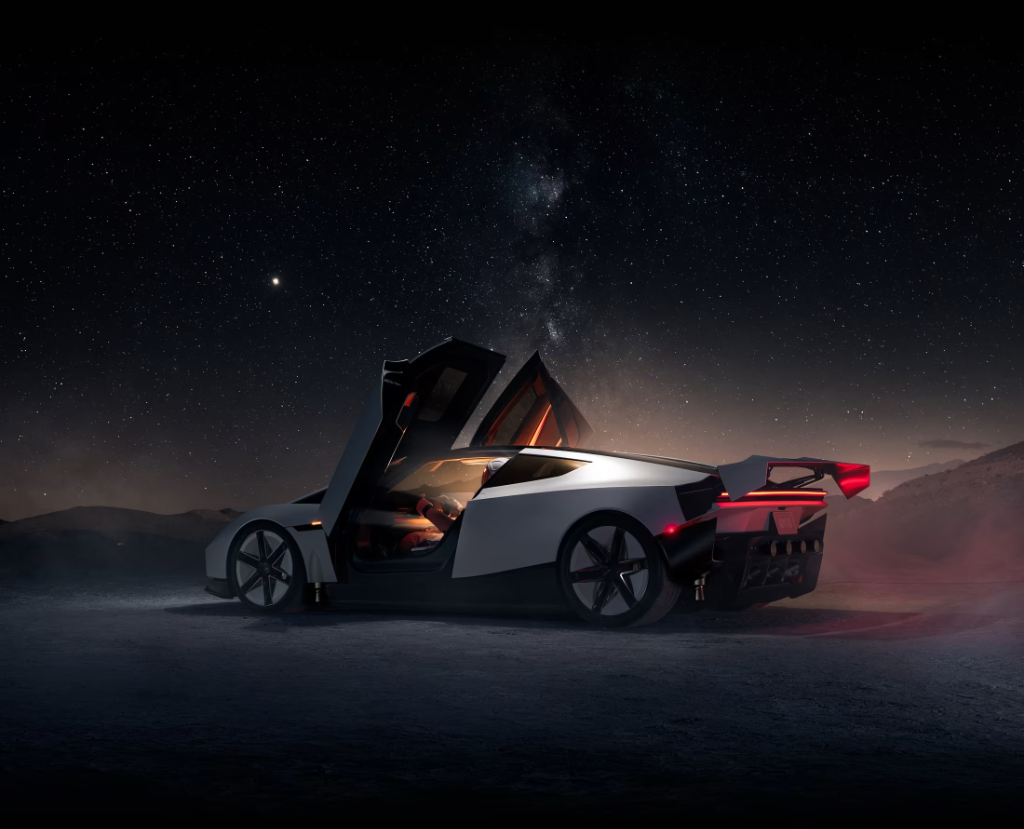 Production prototype under starry skies. • Source
The Regulatory Horizon and Street-Legal Constraints
While the demonstration served as an undeniable showcase of interdisciplinary engineering, the technology faces a steep uphill battle before it can ever navigate civilian roadways. Federal transport safety regulators in North America and the European Union have already reiterated that any propulsion mechanism reliant on external high-pressure discharge is strictly barred from public thoroughfares.
Debris projection, acoustic shockwaves, and pedestrian hazard zones present profound legal liabilities that current motor vehicle safety standards were never drafted to accommodate. Consequently, current engineering guidance suggests the thruster package will be partitioned behind software geofences, limiting aerial assist and rocket-augmented launches exclusively to sanctioned closed-circuit raceways and private airfields.
With commercial deliveries now targeted for 2028, the radical roadster stands as both a testament to boundary-pushing ambition and an existential test for conventional traffic safety jurisprudence.
Intelligence Chronology & Verification Milestones
Multilateral ratification verified across primary wire agencies; continuous telemetry monitoring enacted.
Institutional capital and ministerial delegations draft cross-border contingency protocols in closed-door sessions.
Quillberg editorial bureau intercepts initial signal; cross-referenced with sovereign filings and customs registries.

