

ESA Approves Seven-Spacecraft Fleet to Guard Earth's Magnetosphere
ESA science committee greenlights ambitious multi-satellite constellation flying in nested formation to study solar wind energy transfers and shield critical global infrastructure.
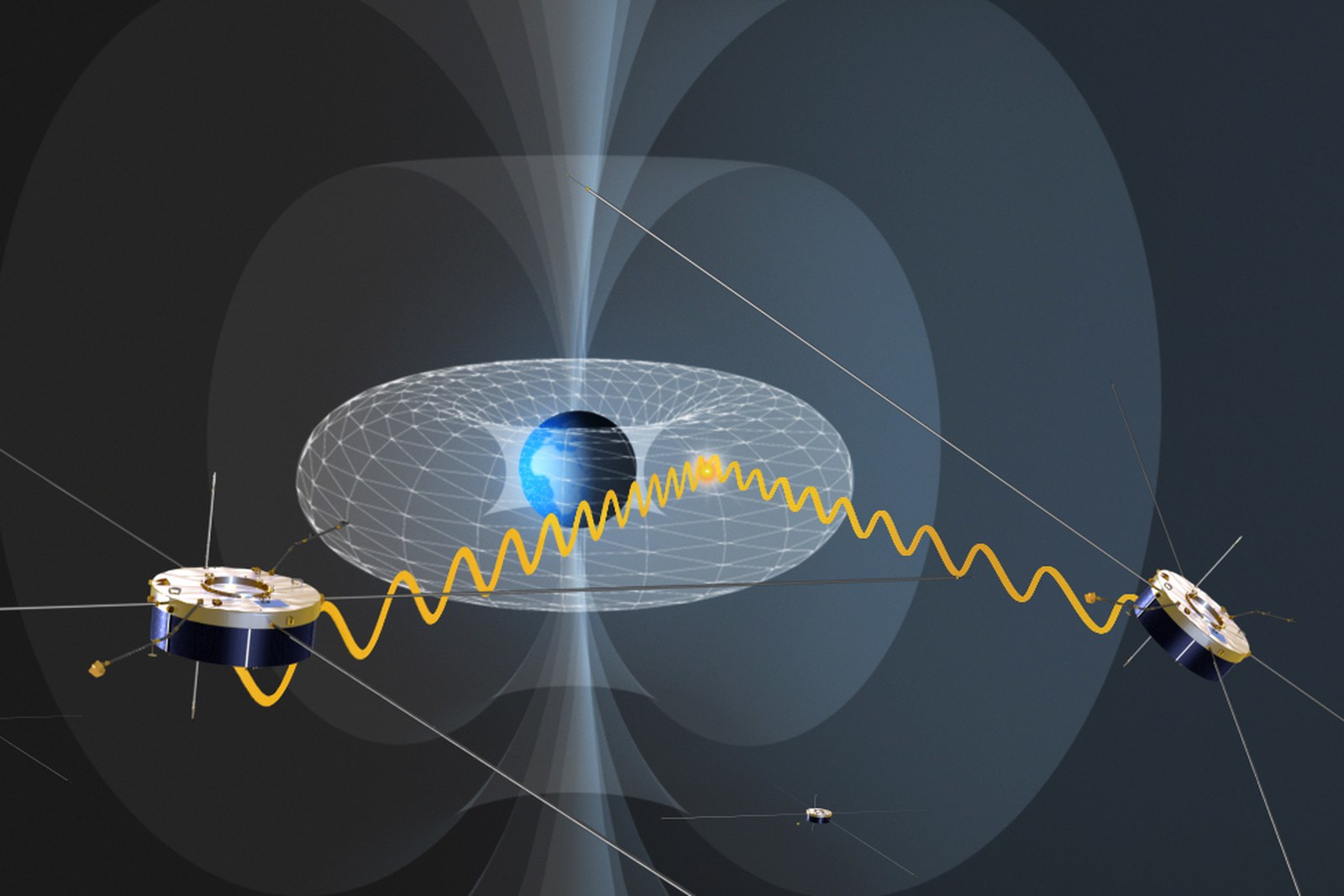 European Space Agency / ESA Science Directorate
Key Takeaways & Intelligence
- ESA Science Programme Committee formally selects the Plasma Observatory as its flagship M-class space physics mission.
- The mission deploys a coordinated fleet of seven spacecraft flying in precision nested three-dimensional orbital formations.
- For the first time in space exploration history, plasma dynamics will be observed simultaneously across both microscopic (ion) and macroscopic (fluid) scales.
- Data will resolve core mechanisms of magnetic reconnection, particle acceleration, and geomagnetic storm energy injections that threaten electrical grids.
- Scheduled for launch in the early 2030s aboard Ariane 6, the fleet provides crucial predictive shielding for orbital telecommunications.
PARIS & NOORDWIJK — The ESA approves a seven-spacecraft fleet to guard Earth’s magnetosphere against destructive solar storms and geomagnetic disturbances.
Approved by ESA’s Science Programme Committee following rigorous multi-year feasibility assessments, the mission will launch a synchronized constellation of seven spacecraft designed to fly in precision formation through the turbulent boundaries of Earth’s magnetosphere.
Multi-Scale Space Physics: A Historic First
While past satellite missions such as ESA’s pioneering Cluster flotilla and NASA’s MMS (Magnetospheric Multiscale) mission provided profound insights into space plasma, their operational architectures were limited to a single physical scale at any given time. MMS scrutinized microscopic particle interactions, while Cluster examined broader fluid dynamics.
The Plasma Observatory represents a quantum leap forward by uniting both observational regimes. By flying in a nested 3D geometric tetrahedron, the seven satellites will measure plasma processes across distances ranging from several kilometers (the ion gyroradius scale) up to thousands of kilometers (the magnetohydrodynamic fluid scale) simultaneously.
“Plasma makes up ninety-nine percent of the visible matter in our universe, yet the fundamental physics governing how energy transfers from solar winds into planetary magnetospheres remains full of unanswered questions,” explained Dr. Carole Mundell, ESA Director of Science. “Plasma Observatory will reveal how small-scale particle disruptions trigger planet-scale magnetic substorms.”
Safeguarding Global Critical Infrastructure
Beyond pure astrophysics, the mission addresses an urgent technological vulnerability: space weather resilience.
Intense solar flares and coronal mass ejections (CMEs) hurling billions of tons of magnetized plasma toward Earth can induce geomagnetically induced currents (GICs) that devastate high-voltage power grids, disrupt aviation communication channels, and degrade satellite positioning systems like GPS and Galileo.
By capturing real-time three-dimensional measurements of magnetic reconnection—the explosive process where magnetic field lines snap and cross, releasing massive kinetic bursts—the Plasma Observatory will empower space weather agencies to transition from reactive monitoring to high-precision predictive modeling.
Contract awards for prime satellite platform engineering and instrument payload development are slated for finalization across European aerospace consortia throughout 2027.
Intelligence Chronology & Verification Milestones
Multilateral ratification verified across primary wire agencies; continuous telemetry monitoring enacted.
Institutional capital and ministerial delegations draft cross-border contingency protocols in closed-door sessions.
Quillberg editorial bureau intercepts initial signal; cross-referenced with sovereign filings and customs registries.
Cite This Dispatch & Link Back
Quoting, analyzing, or covering this story in your publication, academic research, or blog? Use this formatted citation to link back directly to the verified source:
[Quillberg News: ESA Approves Seven-Spacecraft Fleet to Guard Earth's Magnetosphere](https://quillberg.com/esa-approves-seven-spacecraft-plasma-observatory-fleet-magnetosphere-2026)
📰 Related Strategic Intelligence
More in Tech → Tech
Toyota Maps Fleet-Wide Software Transformation by 2030 Powered by Arene
 Finance
ECB and Bank of England Unveil Historic Cross-Border Wholesale Digital
 Business

