Euro Area Economy Expands 0.4% in Third Quarter, Beating Forecasts
Eurostat's preliminary flash estimate puts third-quarter GDP growth at 0.4% across the euro area and 0.5% in the EU, driven by Spain and French Olympic momentum as Germany skirts recession.
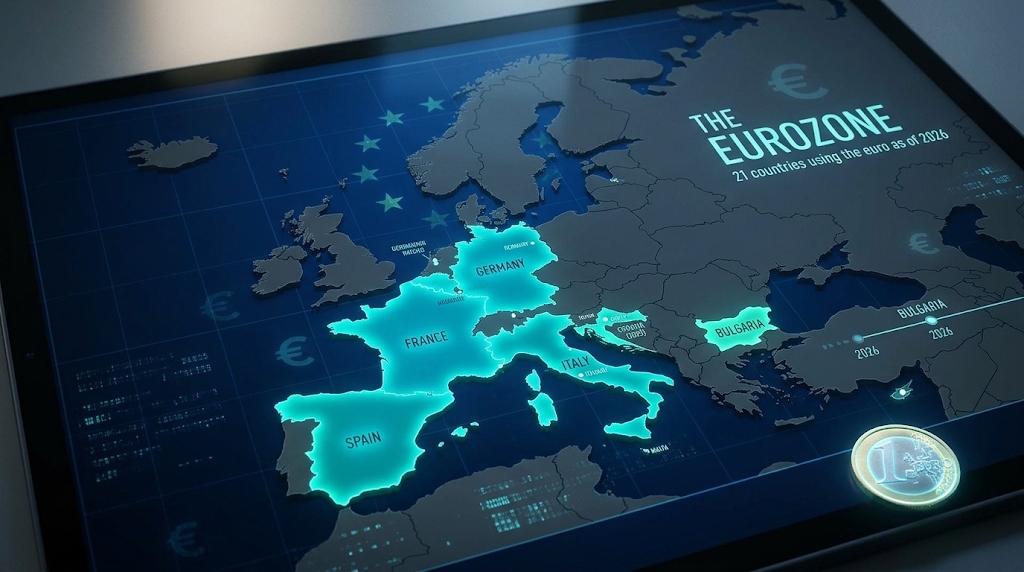 Digital Synthesis / Macroeconomic Data Analytics
Key Takeaways & Intelligence
- Seasonally adjusted GDP rose by 0.4 percent in the euro area and 0.5 percent across the European Union in the third quarter of 2026, according to Eurostat's preliminary flash estimate.
- The reading outpaced consensus economist forecasts of 0.2 percent and doubled the 0.2 percent expansion recorded in the second quarter.
- Spain led major continental economies with robust 0.8 percent quarterly growth, while France gained 0.4 percent aided by summer tourism and Olympic activity.
- Germany unexpectedly averted a technical recession with 0.2 percent growth, despite ongoing contraction in energy-intensive heavy manufacturing.
- Eurostat emphasizes that flash estimates remain preliminary and subject to revision ahead of detailed national account releases scheduled for mid-November.
BRUSSELS & FRANKFURT — The euro area economy accelerated at a faster-than-anticipated pace during the third quarter of 2026, expanding by 0.4 percent quarter-on-quarter and providing welcome relief to policymakers contending with stubborn industrial stagnation, according to preliminary flash estimates published by Eurostat, the statistical office of the European Union.
Across the wider 27-member European Union, gross domestic product (GDP) grew by 0.5 percent over the July-to-September period. The performance doubled the 0.2 percent euro area expansion observed in the second quarter and outstripped the 0.2 percent median consensus projected by international economists.
On an annualized and year-on-year basis, seasonally adjusted GDP increased by 0.9 percent in the euro area and 1.0 percent across the EU, compared with the identical quarter of 2025. The data suggests that resilient domestic consumer spending and services sector vitality are helping the European continent withstand persistent trade headwinds and automotive restructuring.
 Photo: Kaap bij Sneeuw / Wikimedia Commons (CC0 1.0)
Divergent National Drivers: Spain Outperforms, Germany Skirts Slump
While the headline bloc-wide figure painted an encouraging picture of macroeconomic resilience, underlying member state data revealed starkly contrasting fortunes across the continent’s primary economic engines.
| Member State | Q3 2026 GDP (Quarter-on-Quarter) | Key Growth Drivers & Challenges |
|---|---|---|
| Spain | +0.8% | Surging consumer demand, foreign tourism, services sector strength |
| France | +0.4% | Major economic dividend from Paris Summer Olympic Games |
| Germany | +0.2% | Averted technical recession; automotive & chemical headwinds persist |
| Italy | 0.0% | Stagnant growth; dragged down by net exports and manufacturing slump |
| Ireland | +2.1% | Highest growth in the bloc, driven by multinational corporate accounting |
| Lithuania | +1.0% | Robust domestic retail trade and Baltic manufacturing recovery |
Source: Eurostat Preliminary Flash Estimate for Q3 2026; national statistical offices (INE, Destatis, INSEE, Istat).
Spain solidified its status as Europe’s top-performing large economy, registering 0.8 percent growth on the back of relentless tourism inflows, elevated household purchasing power, and aggressive deployment of NextGenerationEU recovery funds.
France registered a solid 0.4 percent gain, buoyed directly by the Summer Olympic and Paralympic Games hosted in Paris. Ticket sales, hotel bookings, hospitality turnover, and broadcasting rights created a concentrated economic surge that cushioned sluggish domestic capital investment.
Germany, Europe’s largest industrial powerhouse, delivered the quarter’s most closely watched surprise. Avoiding what many analysts feared would be an official technical recession following a 0.3 percent contraction in the second quarter, the German economy posted modest positive growth of 0.2 percent. However, government statisticians noted that energy-intensive heavy industry, high structural production costs, and stiff Chinese electric vehicle competition continue to constrain German industrial output.
Italy, by contrast, ground to a halt, logging 0.0 percent growth as weakening external export demand offset modest domestic services activity.
Implications for the European Central Bank (ECB)
The stronger-than-projected GDP print lands at a pivotal juncture for the European Central Bank (ECB) in Frankfurt. Having initiated an easing cycle earlier in the year that lowered the key deposit facility rate to 3.25 percent, ECB rate-setters led by President Christine Lagarde are weighing the trajectory of future rate reductions.
Headline inflation across the euro area has retreated toward the ECB’s 2.0 percent medium-term target, dipping to 1.7 percent in September before edging back to roughly 2.0 percent in October.
The Q3 growth surprise tempers fears that Europe is sliding into widespread stagflation or prolonged recession. Consequently, bond markets scaled back bets on a supersized 50-basis-point interest rate cut at upcoming monetary policy meetings, reinforcing expectations of a measured, quarter-point easing pace.
“The European consumer is gradually rediscovering purchasing power as wage gains outpace retreating inflation,” noted Dirk Schumacher, chief European economist at Natixis. “However, this is a multi-speed recovery. Southern Europe’s services-driven dynamism contrasts sharply with the structural existential crisis facing Rhine Valley manufacturing.”
Preliminary Nature and Revision Timetable
Eurostat took care to emphasize that the published flash estimate is based on incomplete national data submissions that remain subject to revision. Early estimates are typically modeled from approximately two months of firm hard data combined with statistical forecasting for the final month of the quarter.
The statistical agency will publish its second GDP flash estimate alongside employment indicators on November 13, 2026, followed by fully consolidated national account breakdowns on December 6.
Economists will watch those subsequent releases closely to determine whether the third-quarter acceleration reflects a durable economic turning point or a temporary spike driven by one-off summer festivities.
Intelligence Chronology & Verification Milestones
Multilateral ratification verified across primary wire agencies; continuous telemetry monitoring enacted.
Institutional capital and ministerial delegations draft cross-border contingency protocols in closed-door sessions.
Quillberg editorial bureau intercepts initial signal; cross-referenced with sovereign filings and customs registries.
Cite This Dispatch & Link Back
Quoting, analyzing, or covering this story in your publication, academic research, or blog? Use this formatted citation to link back directly to the verified source:
[Quillberg News: Euro Area Economy Expands 0.4% in Third Quarter, Beating Forecasts](https://quillberg.com/euro-area-gdp-third-quarter-2026)