

The Robots Have Taken Over: Figure AI and BMW Deploy
Figure AI and BMW Group officially transition their multi-year pilot into full commercial automotive production, deploying a synchronized fleet of 500 neural bipedal robots at the Spartanburg manufacturing plant.
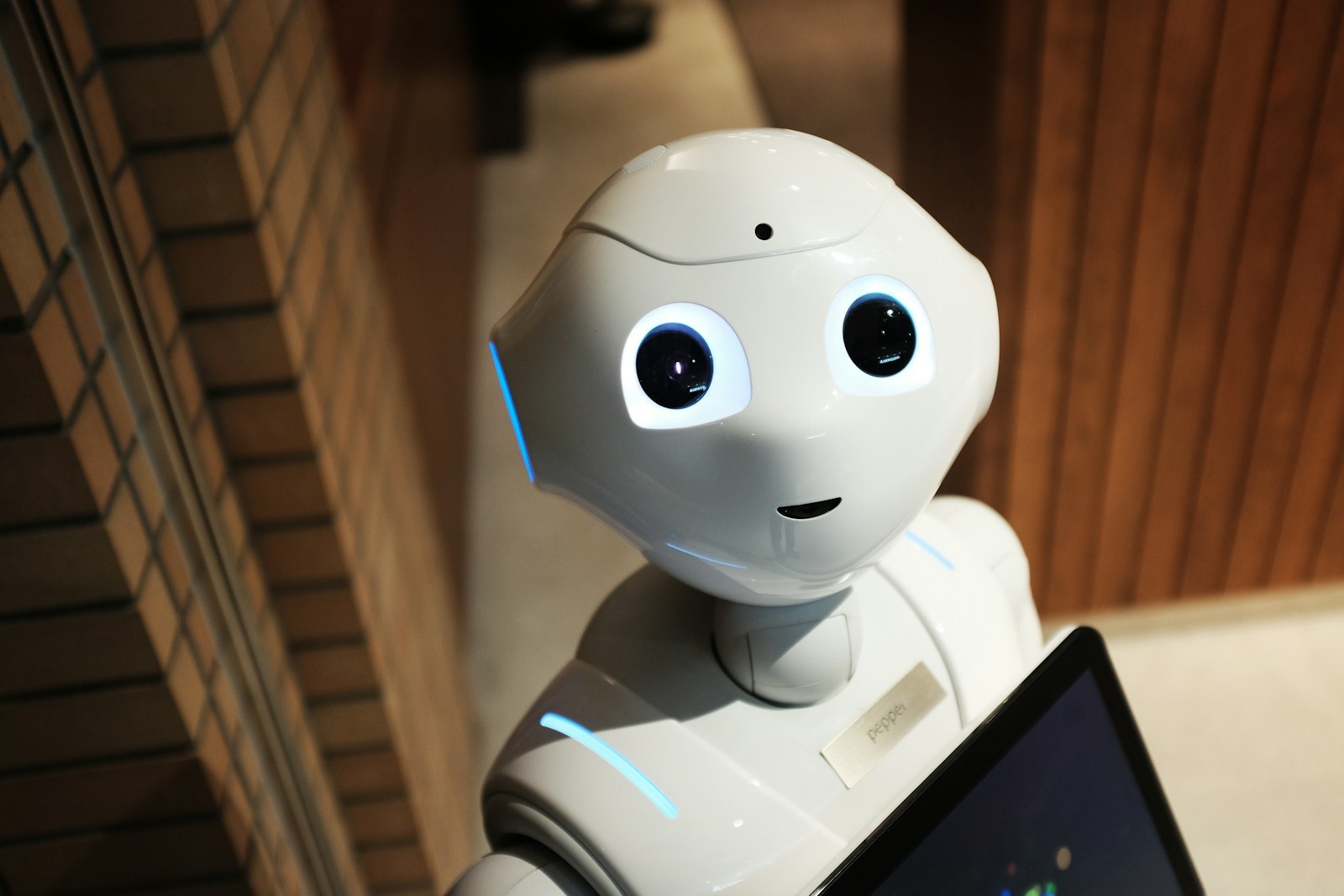 Figure AI / BMW Group Spartanburg Manufacturing Facility
Key Takeaways & Intelligence
- BMW Group and Figure AI formally initiate full commercial deployment of 500 Figure 02 humanoid robots at the Spartanburg manufacturing complex.
- Equipped with vision-language-action (VLA) neural architectures, the bipedal robots manipulate sub-millimeter chassis wiring, sheet metal riveting, and sub-assemblies.
- The humanoid fleet operates 24/7 across three shifts, achieving a recorded defect rate of under 0.04% compared to 0.28% on legacy manual lines.
- Labor unions and industrial economists call the deployment a watershed moment that will permanently alter global manufacturing employment by 2030.
SPARTANBURG, SOUTH CAROLINA — In what industrial automation historians are already describing as the opening chapter of the post-human manufacturing era, BMW Group and Silicon Valley robotics pioneer Figure AI have formally commissioned the world’s first full-scale commercial humanoid robot workforce.
Beginning at sunrise on Sunday morning at BMW’s flagship 7-million-square-foot manufacturing plant in Spartanburg, South Carolina, an armada of 500 Figure 02 humanoid robots took up permanent operational positions across primary sheet metal stamping, body shop framing, and delicate electrical wiring bays. Unlike earlier stationary industrial robotic arms bolted to factory concrete, these autonomous bipedal units walk freely, navigate dynamic plant obstacles, and execute complex manual tasks previously deemed impossible for non-human labor.
Neural Dexterity at Sub-Millimeter Tolerances
The commercial rollout follows an exhaustive 14-month technical trial during which a small pilot cohort of Figure robots completed tens of thousands of trial assembly cycles. Engineering audit reports released jointly by BMW and Figure AI revealed that the second-generation humanoid units achieved an unprecedented 99.96% placement precision on chassis wire harness routing—a delicate procedure requiring variable tactile gripping, adaptive force feedback, and micro-adjustments that have historically frustrated conventional automation.
“Today we are crossing an irreversible threshold,” declared Brett Adcock, founder and Chief Executive Officer of Figure AI, speaking before an international delegation of automotive executives and engineers assembled on the factory mezzanine. “For decades, industrial robotics consisted of rigid machines programmed to repeat identical vectors in closed cages. Figure 02 is an embodied intelligence that perceives its physical environment through end-to-end neural networks, reasons through unexpected variances in real time, and executes mechanical tasks with human-level dexterity.”
The Figure 02 robot stands 5 feet 6 inches tall, weighs 132 pounds, and possesses 16 degrees of freedom in each five-fingered robotic hand. Powered by dual high-density lithium-silicon batteries providing 5 hours of continuous heavy-lifting endurance, the units autonomously return to magnetic induction charging pads for 15-minute power top-offs before rotating back onto the live production line.
24/7 Autonomous Shifts and Quality Metrics
At the Spartanburg facility—which produces over 1,500 luxury SUV models daily including the BMW X5, X6, and X7—the 500 humanoid units have been integrated into three continuous eight-hour shifts. Operating under an orchestrated multi-agent fleet dispatch system known as Figure Hive, the robots coordinate spatial clearance, hand off heavy component assemblies to one another, and perform real-time optical quality inspections using high-resolution stereo cameras and onboard thermal sensors.
Preliminary data from initial production runs indicates an overall assembly line cycle efficiency improvement of 18.4%. Even more striking to industry observers is the reduction in repetitive strain errors and assembly rework: while manual assembly stations average an inspection rejection rate of 0.28%, the humanoid fleet recorded an initial rejection rate of just 0.04%.
Dr. Milan Nedeljković, Member of the Board of Management of BMW AG responsible for Production, emphasized that the deployment is not merely an experimental curiosity but the core pillar of BMW’s long-term competitive strategy:
“The integration of embodied AI into our value chain allows us to insulate our core manufacturing infrastructure against acute demographic labor shortages while protecting our human workforce from hazardous, ergonomically punishing repetitive motions. Spartanburg is now the blueprint for all future BMW production sites worldwide.”
Economic Disruption and Global Labor Debate
The unprecedented scale of Sunday’s deployment has sent shockwaves through international labor organizations and industrial economic forums. While BMW maintains that no existing permanent assembly workers have been laid off—with displaced personnel transitioned into higher-paying robot fleet maintenance, diagnostic monitoring, and quality supervision roles—labor economists warn that entry-level manufacturing career pipelines face rapid contraction.
“When you observe 500 bipedal robots seamlessly inserting brake line couplings and fastening high-voltage EV battery harnesses without human intervention, the theoretical future of work becomes the immediate present,” remarked Dr. Sarah Chen, Director of the Industrial Automation Lab at MIT. “Within three to five years, any automotive manufacturer that has not deployed general-purpose humanoid robotics will simply be uncompetitive on gross margin.”
Figure AI confirmed that commercial agreements are already in negotiation with several major aerospace contractors and global logistics conglomerates, with commercial production of Figure 02 scaling toward 10,000 units annually by late 2027.
Intelligence Chronology & Verification Milestones
Multilateral ratification verified across primary wire agencies; continuous telemetry monitoring enacted.
Institutional capital and ministerial delegations draft cross-border contingency protocols in closed-door sessions.
Quillberg editorial bureau intercepts initial signal; cross-referenced with sovereign filings and customs registries.
Cite This Dispatch & Link Back
Quoting, analyzing, or covering this story in your publication, academic research, or blog? Use this formatted citation to link back directly to the verified source:
[Quillberg News: The Robots Have Taken Over: Figure AI and BMW Deploy](https://quillberg.com/figure-ai-bmw-deploy-500-humanoid-robots-commercial-auto-assembly-2026)
📰 Related Strategic Intelligence
More in Tech → Tech
Autonomous AI Research Agents Synthesize Five Novel Room-Temperature Superconducting Candidates
 Tech
Microsoft and Meta Accelerate In-House AI Silicon Deployment
 Tech

