

The Permanent Maritime Reroute: Shipping Fleets Cement Cape of Good Hope Corridors as Suez Tensions Endure
What global logistics corporations initially treated as a temporary emergency detour around the southern tip of Africa has hardened into a permanent structural reality. The world's largest container liner alliances—including Maersk, MSC, and Hapag-Lloyd—have rewritten long-term sailing schedules to bypass the perilous Bab el-Mandeb strait and Suez Canal, routing Asia-Europe commerce around the Cape of Good Hope, altering oceanic trade economics, fuel consumption models, and port congestion dynamics.
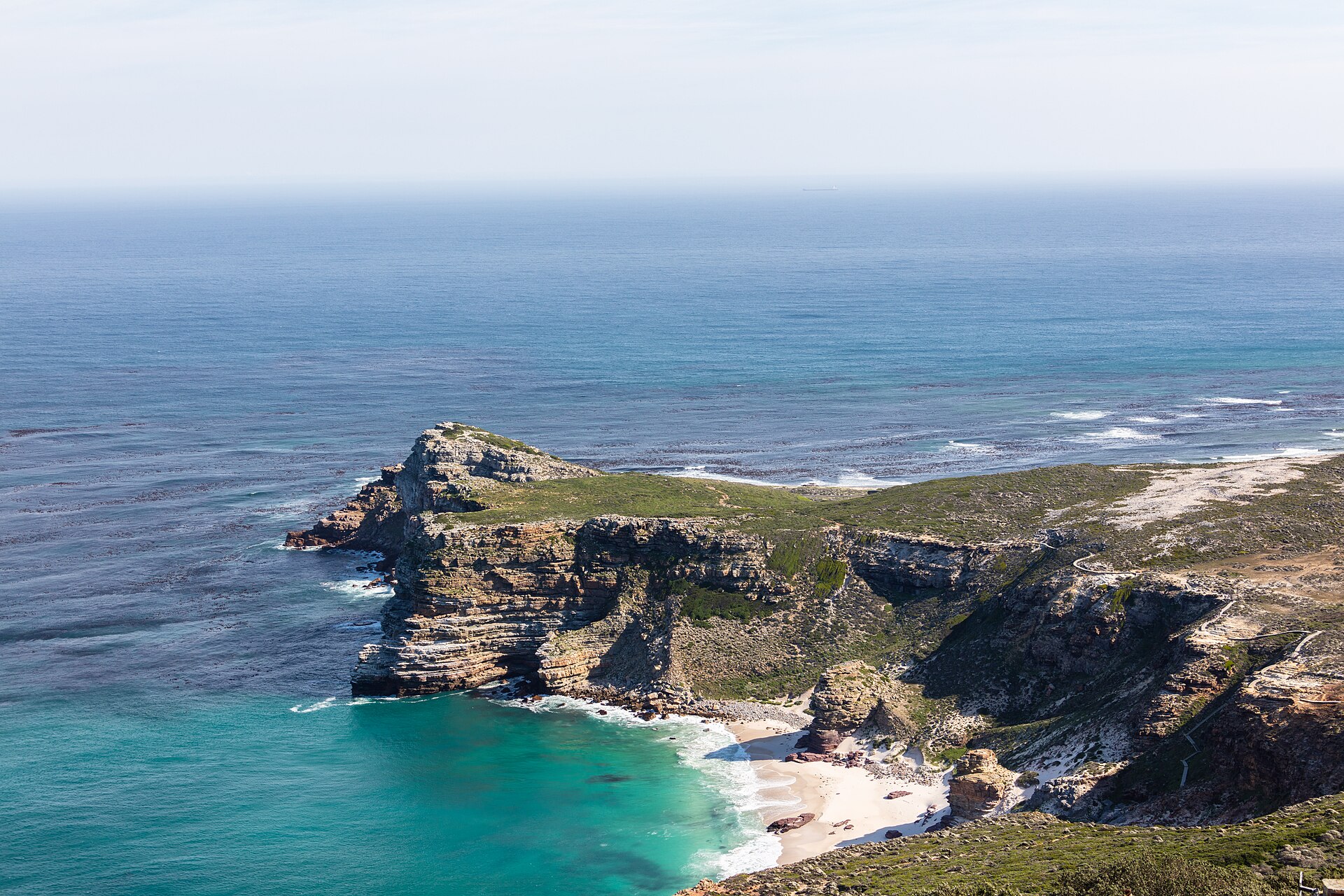 Diego Delso / Wikimedia Commons
Key Takeaways & Intelligence
- Liner shipping alliances have permanently incorporated the Cape of Good Hope into long-term Asia-to-Europe service networks.
- The 3,500 nautical mile detour adds 10 to 14 sailing days per voyage, absorbing an estimated 8% to 10% of total global vessel fleet capacity.
- Bunker fuel expenditures have jumped by $1 million per round trip, while hub ports in Morocco, Spain, and South Africa operate at maximum congestion.
When regional security crises and anti-ship missile strikes first closed the southern entrance of the Red Sea to commercial maritime navigation, international ocean freight operators scrambled to implement temporary emergency contingency diversions.
Twenty-four months later, the temporary emergency has transformed into the baseline operating architecture of global trade.
Executive leadership at the world’s primary shipping consortiums—including the 2M alliance (MSC), Gemini Cooperation (Maersk and Hapag-Lloyd), and Ocean Alliance (CMA CGM, Cosco, Evergreen)—have formalized long-term schedules that omit the Red Sea and Egypt’s Suez Canal entirely. Commercial vessels linking the manufacturing centers of Shanghai, Shenzhen, and Singapore with the consumer hubs of Rotterdam, Hamburg, and Southampton are now permanently charting their courses around the Cape of Good Hope.
The Physical Realities of the 3,500-Mile Detour
Navigating around the African continent adds approximately 3,500 nautical miles (6,500 kilometers) to a one-way voyage between East Asia and Northern Europe. To maintain weekly port call frequencies under these extended geographic distances, shipping lines have had to inject additional vessels into their operating loops—effectively soaking up millions of twenty-foot equivalent units (TEU) of newly constructed vessel capacity that would have otherwise triggered an industry-wide freight rate crash.
“The economics of the maritime industry have been inverted,” explains Henrik Skaarup, senior research fellow at Copenhagen Maritime Economics. “While sailing around Africa burns an extra 800 to 1,200 metric tons of marine bunker fuel per round trip—costing upwards of $1 million in fuel alone—it completely eliminates the exorbitant war-risk insurance premiums demanded by Lloyd’s underwriters for Red Sea transit, as well as the $500,000-per-passage Suez Canal transit fees.”
Maritime Corridors Compared: Suez vs. Cape of Good Hope
| Operational Parameter | Suez Canal Transit Corridor | Cape of Good Hope African Route |
|---|---|---|
| Transit Time (Shanghai to Rotterdam) | 26 to 28 Days | 36 to 42 Days (+10 to 14 Days) |
| One-Way Distance | ~10,500 Nautical Miles | ~14,000 Nautical Miles (+33%) |
| Canal Toll Fees (Per Mega-Vessel) | $400,000 – $650,000 | $0 (Zero Toll Expense) |
| War-Risk Insurance Premium | Up to 1.0% of Vessel Hull Value | Standard Negligible Open-Ocean Hull Risk |
| Additional Bunker Fuel Consumed | Baseline Efficiency | +800 to 1,200 Metric Tons VLSFO/MGO |
| Primary Chokepoint & Hub Pressure | Port Said / Suez Waiting Anchorage | Tanger Med (Morocco) / Algeciras (Spain) |
Supply Chain Shocks and Western Mediterranean Hub Bottlenecks
While oceanic container vessels have adapted to the longer steaming times, shore-side logistics networks have experienced severe friction. The rerouting has concentrated immense transshipment volumes into western Mediterranean ports positioned near the Strait of Gibraltar.
Terminals at Tanger Med in Morocco and Algeciras, Valencia, and Barcelona in Spain have frequently operated at near-capacity levels, as mega-carriers drop off European cargo for distribution via smaller feeder vessels rather than steaming deeper into Northern European waters.
In response, global manufacturers have structurally adapted their inventory methodologies, largely abandoning fragile “just-in-time” supply chains in favor of padded 45-day safety stocks. Warehousing capacity in industrial corridors adjacent to Antwerp and Rotterdam has seen vacancy rates drop below 2%.
With geopolitical stability in the Middle East showing no signs of near-term reconciliation, maritime executives have accepted the geographic reality: the Cape route, once considered a relic of 19th-century clipper shipping, has returned as the permanent backbone of modern intercontinental commerce.
Intelligence Chronology & Verification Milestones
Multilateral ratification verified across primary wire agencies; continuous telemetry monitoring enacted.
Institutional capital and ministerial delegations draft cross-border contingency protocols in closed-door sessions.
Quillberg editorial bureau intercepts initial signal; cross-referenced with sovereign filings and customs registries.