

The $780B AI Infrastructure Squeeze: Why Tech Hyperscalers Are Turning to Nuclear SMRs to Power Megawatt Data Centers
As sovereign generative artificial intelligence models and trillion-parameter reasoning architectures push data center power draws from tens of megawatts into the multi-gigawatt territory, commercial electric utilities are hitting hard physical grid limits. Tech giants Microsoft, Google, and Amazon are pivoting capital expenditures toward advanced nuclear power—signing multi-decade off-take agreements and financing Small Modular Reactors (SMRs) to secure carbon-free baseload electricity capable of running 24 hours a day, 365 days a year.
 Associated Press / File
Key Takeaways & Intelligence
- Hyperscalers are confronting a critical power wall as next-generation frontier training clusters require dedicated 500MW to 1GW continuous feeds.
- Multi-billion-dollar off-take contracts with Kairos Power, Constellation Energy, and Westinghouse signal that intermittent renewables alone cannot satisfy hyperscale uptime requirements.
- Small Modular Reactors (SMRs) provide factory-fabricated, scalable nuclear power directly adjacent to compute campuses, bypassing protracted five-year regional grid interconnection queues.
The bottleneck governing the trajectory of artificial intelligence is no longer scarce high-bandwidth memory or advanced photolithography stepper allocation. It is raw electrical power.
Inside hyperscale data campuses stretching across Northern Virginia, Central Ohio, and the desert corridors of Arizona, utility interconnections that previously negotiated 30 to 50 megawatts are now requesting 500 megawatts to well over a gigawatt for single computing clusters. Faced with overloaded regional utility transmission lines, five-year interconnection queues, and statutory zero-carbon mandates, the world’s largest technology operators—Microsoft, Alphabet, Amazon Web Services, and Meta—have converged on a single industrial solution: advanced civil nuclear energy.
The Physical Limits of Intermittent Renewables
For the past decade, corporate sustainability roadmaps were anchored by solar power purchase agreements (PPAs) and utility-scale onshore wind farms. That financial calculus worked seamlessly for asynchronous cloud workloads, web indexing, and video streaming.
Frontier AI model training and low-latency inference pipelines operate under fundamentally different physics. GPU clusters must run uninterrupted at 95% to 98% utilization for months at a time. A sudden cloud cover drop over a photovoltaic field or a calm afternoon across a wind farm forces data center operators to pull load from local spinning-reserve gas peaker plants or face catastrophic compute failure.
“You cannot run a billion-dollar, synchronous parallel training run across two hundred thousand interconnected accelerators on intermittent sunshine and seasonal breezes,” says Dr. Elena Rostova, principal grid architect at Cambridge Energy Systems. “Hyperscalers require 99.999% baseload availability. When you filter out coal and fossil gas due to corporate carbon covenants, only advanced nuclear and deep geothermal survive the engineering screen.”
The Small Modular Reactor (SMR) Revolution
Rather than undertaking decade-long capital projects to construct massive 1,100-megawatt conventional gigawatt-scale pressurized water reactors, tech balance sheets are backing Small Modular Reactors (SMRs). Designed to produce between 50 and 300 megawatts electrical (MWe) per unit, SMRs are prefabricated in controlled factory environments, transported by standard rail or barge, and assembled modularly on-site.
This architecture offers two decisive strategic advantages:
- Behind-the-Meter Deployment: By co-locating SMR modules on private campus land directly adjacent to the server halls, hyperscalers bypass regional transmission congestion and avoid public utility grid connection queues.
- Modular Scalability: An operator can commission a single 80MW module to power an initial server pod, subsequently adding twin units as compute capacity expands over the decade.
Capital Commitments & Commercial SMR Architectures
| Reactor Design & Vendor | Technology Type | Electrical Capacity | Primary Hyperscaler Partner | Commercial Operation Target |
|---|---|---|---|---|
| Kairos Power Hermes | Molten Fluoride Salt Cooled (FHR) | 50 MWe (up to 500 MWe fleet) | Alphabet / Google | 2030 – 2035 |
| Westinghouse eVinci / AP300 | Micro-reactor / SMR PWR | 5 MWe / 300 MWe | Amazon Web Services | 2029 – 2032 |
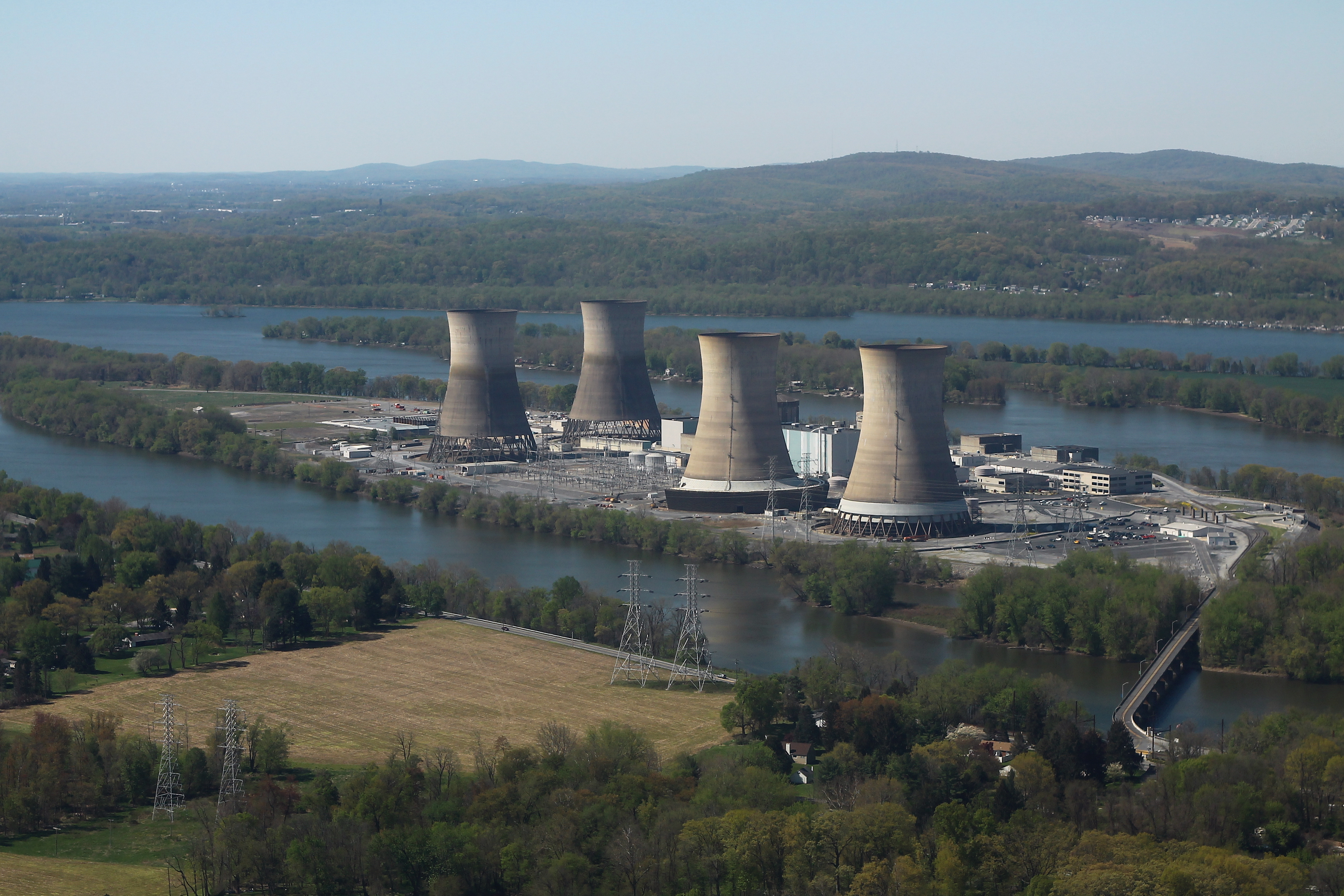
| Constellation / Three Mile Island Unit 1 | Traditional PWR Restart | 835 MWe Dedicated Offtake | Microsoft Corporation | 2028 |
| NuScale VOYGR | Light Water SMR (Natural Circulation) | 77 MWe per module (up to 924 MWe) | Multi-tenant Data Co-ops | 2030 |
| TerraPower Natrium | Sodium-Cooled Fast Reactor (SFR) | 345 MWe (with Molten Salt Storage) | Private Venture Syndicates | 2030 |
Regulatory Hurdles and Fuel Supply Realities
Despite the billions pledged by tech treasuries, significant technical and geopolitical friction points remain. The primary constraint centers on nuclear fuel enrichment. Many advanced fourth-generation SMR designs require High-Assay Low-Enriched Uranium (HALEU), enriched between 5% and 20% uranium-235. Commercial production of HALEU remains concentrated in state-controlled Russian facilities, compelling Western governments and domestic processors like Centrus Energy to rapidly stand up sovereign enrichment centrifuges.
Furthermore, national nuclear regulators—most notably the U.S. Nuclear Regulatory Commission (NRC) and European atomic safety boards—operate on safety review frameworks established for massive traditional water-cooled reactors. Reviewing novel molten-salt and gas-cooled designs has historically taken up to four years per site license.
Nevertheless, with tech balance sheets holding over $350 billion in collective cash reserves and generative AI market valuations tied directly to compute expansion, the pressure to accelerate regulatory approvals is intense. The era of computing as a digital abstraction is over; artificial intelligence has permanently transformed into a heavy industrial power discipline.
Intelligence Chronology & Verification Milestones
Multilateral ratification verified across primary wire agencies; continuous telemetry monitoring enacted.
Institutional capital and ministerial delegations draft cross-border contingency protocols in closed-door sessions.
Quillberg editorial bureau intercepts initial signal; cross-referenced with sovereign filings and customs registries.