Intel Slapped With New Shareholder Class-Action Lawsuit Alleging Hidden Foundry
Institutional investors and pension funds file federal securities fraud lawsuits in California, alleging Intel leadership concealed multi-billion-dollar manufacturing losses and slowing PC demand before a historic 28.6% stock crash.
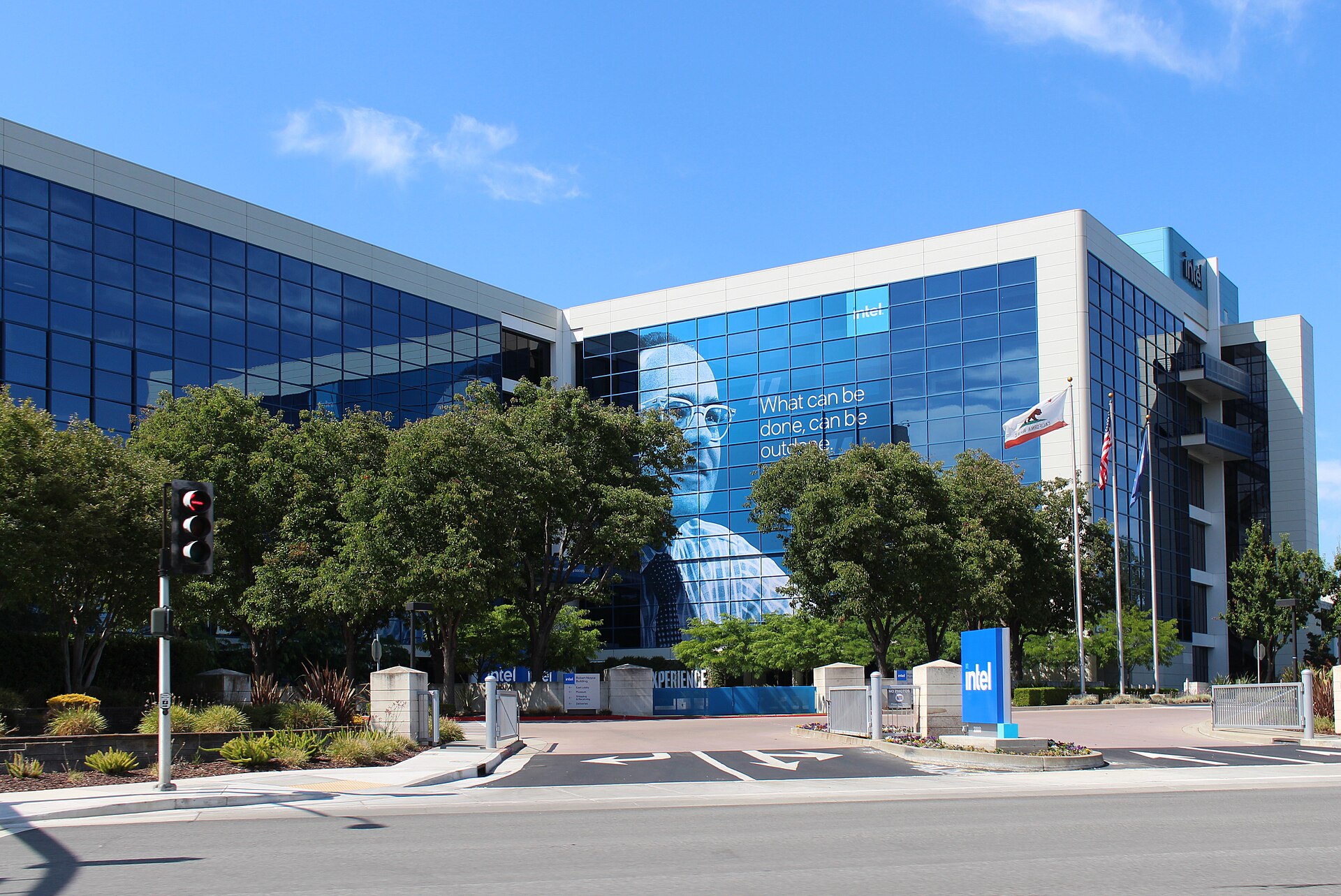 Wikimedia Commons / Corporate Architecture
Key Takeaways & Intelligence
- A major institutional pension fund filed a federal securities class action against Intel in the Northern District of California.
- The lawsuit accuses executives of misleading investors during a $23 billion capital offering about underlying PC demand and manufacturing yields.
- Intel's stock plummeted 28.6% on October 30, wiping out approximately $140 billion in shareholder market valuation.
- Plaintiffs allege Intel concealed the true extent of foundry operating deficits, which topped $7 billion in prior cycles.
- Top shareholder litigation firms Pomerantz and Levi & Korsinsky launched parallel investigations into potential SEC disclosure fraud.
SAN JOSE, Calif. — Embattled semiconductor pioneer Intel Corporation has been hit with a major federal securities fraud class-action lawsuit filed by institutional shareholders, accusing corporate leadership of systematically concealing deep manufacturing deficits, deteriorating personal computer demand, and unviable foundry economics prior to a catastrophic 28.6% single-day stock collapse.
The complaint, filed in the U.S. District Court for the Northern District of California on behalf of a public employees’ retirement fund and a certified class of institutional investors, names Intel Chief Executive Officer Lip-Bu Tan, Chief Financial Officer David Zinsner, and board directors as defendants.
The lawsuit alleges that Intel made materially false, misleading, and incomplete public statements to prop up its valuation ahead of a massive $23 billion capital and stock offering in August 2026, where shares were sold to institutional funds at premium valuations near $95.
The $140 Billion Market Eradication
The legal challenge follows the seismic collapse of Intel shares on October 30, 2026, when management delivered shockingly weak fourth-quarter revenue guidance and admitted that chronic manufacturing capacity constraints, margin contractions, and inventory backlogs were crippling its core client computing division.
In a single trading session, Intel shares cratered 28.6%, vaporizing roughly $140 billion in market capitalization and triggering the steepest single-day decline in the company’s 58-year corporate history.
Defendant:              Intel Corporation, Lip-Bu Tan (CEO), David Zinsner (CFO)
Filing Court:           U.S. District Court, Northern District of California (San Jose)
Class Period:           August 2026 Capital Offering through November 2026
Key Allegations:        Securities Exchange Act Sections 10(b) and 20(a) violations
Damages Claimed:        Recoverable shareholder losses exceeding tens of billions
Catalyst:               28.6% single-day stock plunge on October 30, 2026 ($140B wiped)
Concealing the Foundry Quagmire
At the core of the plaintiffs’ legal claims is Intel’s multi-billion-dollar internal foundry transition. While leadership repeatedly assured Wall Street that its standalone foundry unit was hitting critical operational milestones and attracting lucrative external hyperscaler contracts, plaintiffs allege the division was hemorrhaging cash at unsustainable levels.
The complaint cites internal engineering memos and whistleblower disclosures alleging that:
- Defect density rates on Intel’s advanced 18A and 14A process nodes were significantly worse than disclosed to financial analysts.
- Commercial client PC demand was contracting sharply across enterprise and consumer segments, creating a hidden inventory bubble.
- Operating losses within the manufacturing unit were subsidized through accounting maneuvers that obscured persistent negative gross margins.
“Investors were told that Intel’s manufacturing turnaround was gaining unstoppable momentum, justifying a multi-billion-dollar equity valuation,” said lead litigation counsel Michael Strauss in a press briefing following the filing. “In reality, insiders knew that the foundry was burning through billions in operational cash flow while commercial customers were actively canceling evaluation commitments.”
Mounting Legal and Regulatory Pressure
The class-action filing comes as prominent shareholder protection firms, including Pomerantz LLP, Levi & Korsinsky, and Robbins Geller Rudman & Dowd, confirmed independent investigations into whether Intel executives committed intentional disclosure fraud under SEC Rule 10b-5.
Intel issued a brief statement stating that it adheres to strict compliance and financial disclosure standards and intends to defend itself vigorously against the allegations. However, with credit rating agencies placing Intel’s long-term corporate debt on negative watch and activist investors clamoring for a complete spinoff or sale of its manufacturing operations, the legal battle adds existential pressure to an American industrial icon fighting for relevance in the artificial intelligence era.
Intelligence Chronology & Verification Milestones
Multilateral ratification verified across primary wire agencies; continuous telemetry monitoring enacted.
Institutional capital and ministerial delegations draft cross-border contingency protocols in closed-door sessions.
Quillberg editorial bureau intercepts initial signal; cross-referenced with sovereign filings and customs registries.
Cite This Dispatch & Link Back
Quoting, analyzing, or covering this story in your publication, academic research, or blog? Use this formatted citation to link back directly to the verified source:
[Quillberg News: Intel Slapped With New Shareholder Class-Action Lawsuit Alleging Hidden Foundry](https://quillberg.com/intel-hit-with-major-shareholder-securities-fraud-lawsuit-over-hidden-foundry-losses-2026)