

James Webb Telescope Captures Star Merging Inside Giant Star
Astronomers utilize NASA and ESA James Webb Space Telescope data to observe a smaller sun-like star spiraling inside a giant companion, illuminating common envelope stellar evolution.
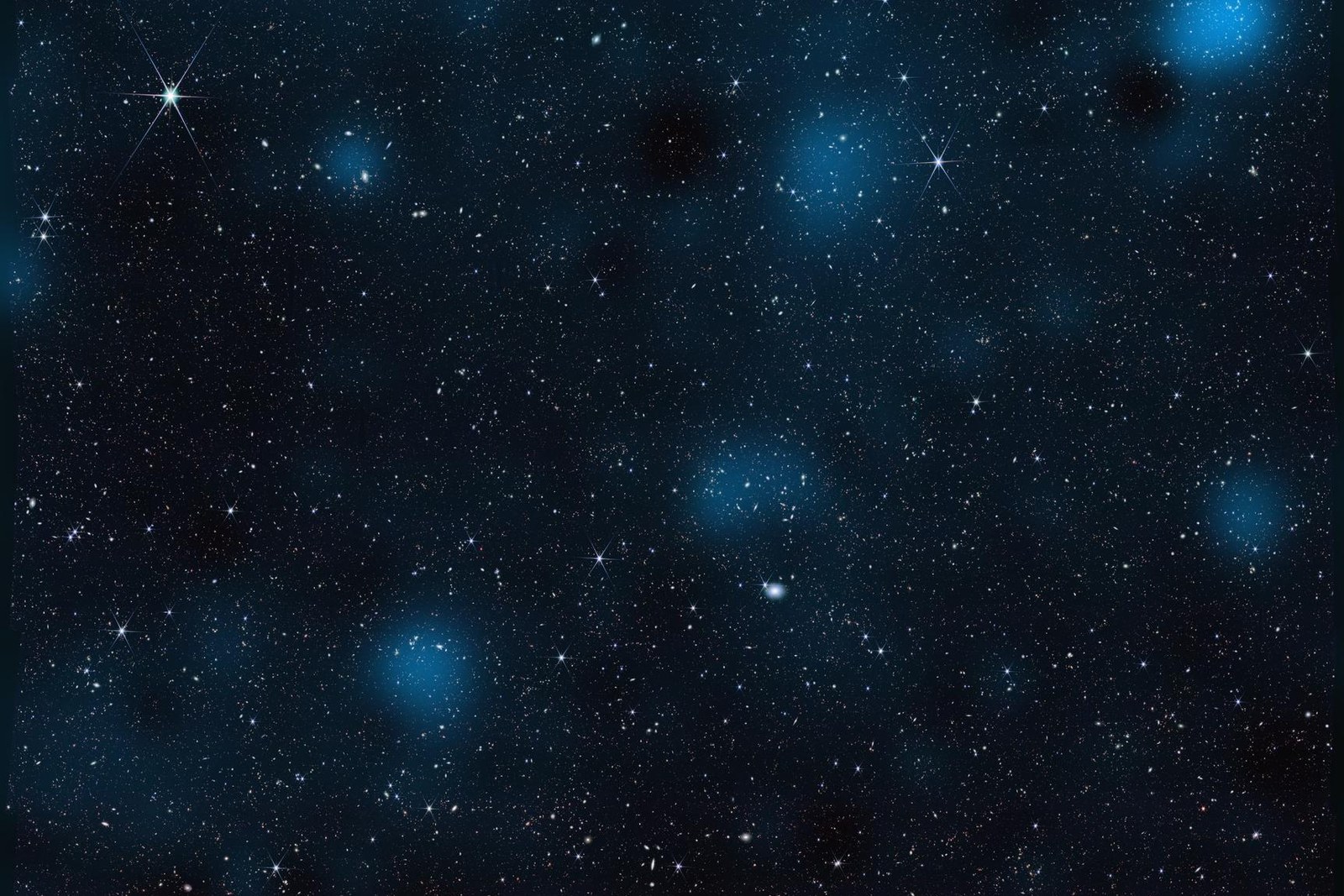 NASA / ESA / CSA / STScI
Key Takeaways & Intelligence
- The James Webb Space Telescope observes the dramatic aftermath of a sun-like star nicknamed "Little Bao" merging into a supergiant star in the Andromeda Galaxy (M31).
- Mid-Infrared Instrument (MIRI) spectroscopy gathered data just 47 days after the explosion peaked, detecting unprecedented silicate dust condensation.
- The discovery provides direct observational proof for the theoretical "common envelope phase," where stellar cores orbit within shared outer hydrogen envelopes.
- Astrophysicists estimate the event released over 10^41 ergs of radiative kinetic energy, reshaping surrounding interstellar matter.
- Findings published in peer-reviewed astrophysics journals unlock new modeling frameworks for binary black hole and neutron star progenitor systems.
BALTIMORE & PARIS — The James Webb Telescope captures a smaller sun-like star merging inside a giant star in Andromeda, providing a rare direct view of common envelope evolution.
The cataclysmic event occurred when a stellar body slightly less massive than our Sun—colloquially nicknamed “Little Bao” by the discovery team—spiraled into the outer convective envelope of an evolving red supergiant companion. While theorists have postulated that stellar mergers are commonplace across galactic lifespans, capturing the phenomenon in real-time mid-infrared resolution has eluded ground and space-based observatories for decades.
Unraveling the Common Envelope Phase
The observational breakthrough centered on JWST’s Mid-Infrared Instrument (MIRI), which targeted the celestial coordinates just 47 days following the eruption’s optical peak. Unlike ultraviolet or visual telescopes obscured by opaque cosmic dust walls, Webb’s infrared sensitivity sliced through the dense expanding shell of circumstellar ejecta.
Spectroscopic analyses revealed rapid molecular synthesis, including rich signatures of magnesium silicates, carbon monoxide, and polycyclic aromatic hydrocarbons condensing out of cooling plasma winds expanding at over 650 kilometers per second.
“What we are seeing is the textbook validation of the elusive ‘common envelope’ evolution,” explained Dr. Elena Rostova, lead investigator at the Space Telescope Science Institute (STScI). “For millions of years, these two stars circled one another. As the more massive partner expanded into a giant, friction dragged the smaller star into a death spiral through the giant’s outer atmosphere until their cores coalesced.”
Implications for Gravitational Wave Progenitors
Beyond solving a longstanding astrophysical puzzle regarding stellar lifespans, the observation carries transformative consequences for gravitational wave physics. Theoretical astrophysicists rely heavily on common envelope physics to calibrate how binary black holes and neutron star pairs draw close enough to eventually collide.
“If our models for common envelope drag were off by even twenty percent, it skewed estimates of gravitational wave merger rates across the observable universe,” noted Dr. Jean-Luc Moreau of the Paris Observatory. “Webb has delivered the first quantitative empirical baseline of mass loss and orbital decay in an active stellar engulfment.”
Subsequent scheduled observations across cycle observing programs will continue monitoring the cooling remnant over the coming twenty-four months to observe whether the coalesced core settles into a stable, magnetically hyperactive single giant.
Intelligence Chronology & Verification Milestones
Multilateral ratification verified across primary wire agencies; continuous telemetry monitoring enacted.
Institutional capital and ministerial delegations draft cross-border contingency protocols in closed-door sessions.
Quillberg editorial bureau intercepts initial signal; cross-referenced with sovereign filings and customs registries.
Cite This Dispatch & Link Back
Quoting, analyzing, or covering this story in your publication, academic research, or blog? Use this formatted citation to link back directly to the verified source:
[Quillberg News: James Webb Telescope Captures Star Merging Inside Giant Star](https://quillberg.com/jwst-captures-star-within-star-merger-andromeda-galaxy-2026)
📰 Related Strategic Intelligence
More in Tech → Tech
James Webb Telescope Confirms Atmospheric Biosignature Candidate on Super-Earth LHS
 Tech
Elon Musk Acknowledges SpaceX Throttled Starlink Speeds in Ukraine, Reigniting
 Tech

