

Pharmaceutical Giants Leverage Orbital Microgravity to Synthesize Cancer Biologics
An investigative deep dive into the orbital biopharmaceutical revolution: how zero gravity eliminates convection and sedimentation, enabling pharmaceutical giants to synthesize flawless cancer-fighting protein crystals and transform grueling multi-hour chemotherapy infusions into rapid two-minute injections.
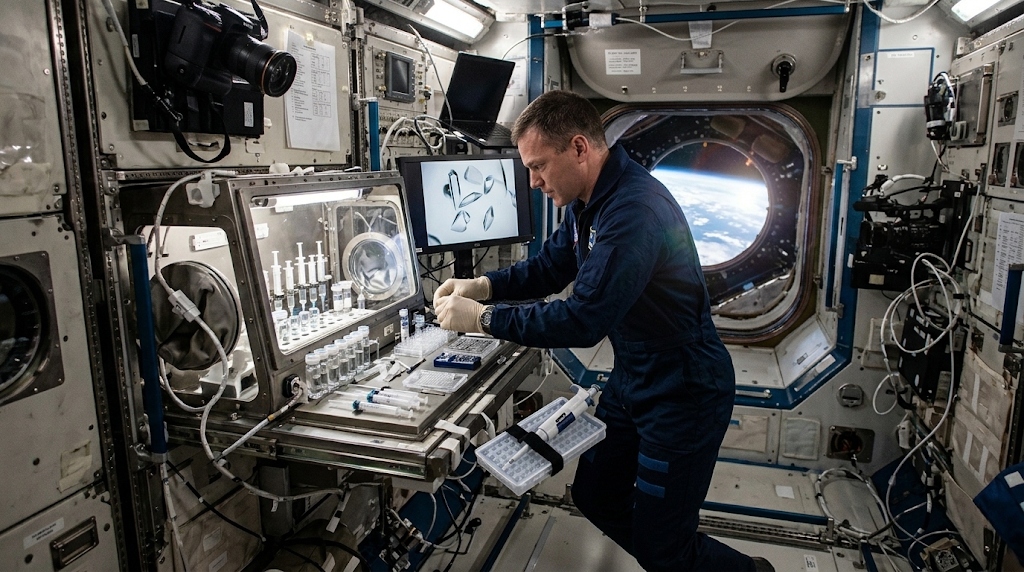 Representative
Key Takeaways & Intelligence
- Global pharmaceutical leaders, including Merck, Bristol Myers Squibb, and Eli Lilly, are expanding commercial manufacturing pipelines aboard low-Earth orbit platforms.
- The absence of gravitational sedimentation and thermal convection in orbit allows therapeutic proteins and monoclonal antibodies to self-assemble into structurally immaculate, uniform crystal lattices.
- Orbital crystallization promises to replace prolonged 3-to-4 hour hospital intravenous (IV) infusions with simple 2-minute subcutaneous injections administered at home.
- Uncrewed autonomous space capsules from commercial pioneers like Varda Space Industries and Redwire are successfully completing orbital synthesis and atmospheric re-entry with intact pharmaceutical payloads.
- With orbital launch costs plunging below $1,000 per kilogram, low-Earth orbit is transitioning from an exploratory scientific outpost into an indispensable sovereign biomanufacturing domain.
CAPE CANAVERAL & BASEL — Pharmaceutical giants leverage orbital microgravity to synthesize cancer biologics, taking advantage of zero gravity to produce flawless protein crystals.
For decades, the International Space Station (ISS) was heralded primarily as an outpost for human endurance, celestial observation, and geopolitical cooperation. Today, the vantage point of low-Earth orbit (LEO) is undergoing a profound commercial pivot. The world’s largest pharmaceutical conglomerates—alongside nimble space-biotech startups—are turning to the physics of weightlessness to crack one of modern oncology’s most intractable barriers: the synthesis of stable, highly concentrated macromolecular biologic drugs.
The stakes could hardly be higher. Biologic therapies, particularly monoclonal antibodies, represent the cutting edge of cancer care, commanding over $200 billion annually in global healthcare expenditure. Yet manufacturing and delivering these complex proteins on Earth remains fraught with thermodynamic handicaps. In orbit, those handicaps simply dissolve.
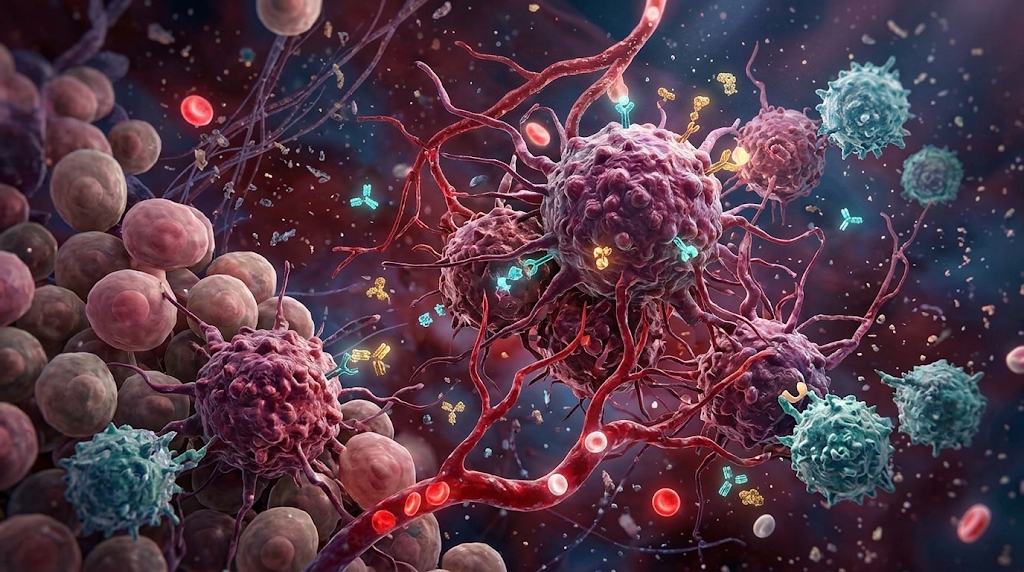
1. The Physics of Weightlessness: Vanishing Convection and Sedimentation
To understand why drugmakers are spending millions to send test tubes into orbit, one must examine the molecular physics of crystallization.
On Earth, the force of gravity is an aggressive disruptor of protein assembly. As therapeutic proteins precipitate out of solution to form solid crystals, two inescapable gravitational forces interfere:
- Buoyancy-Driven Convection: Differences in solution temperature and solute concentration create swirling fluid currents that collide with the delicate growing faces of crystals.
- Sedimentation: Heavier crystals sink prematurely to the bottom of the vessel, crowding together and triggering malformations, dislocations, and uneven crystal sizing.
Under these terrestrial conditions, monoclonal antibodies form polydisperse, fragile, and irregular clusters.
In microgravity, however, buoyancy-driven currents cease entirely. The fluid medium enters a pure diffusion-limited regime. Protein molecules gently migrate toward the crystal lattice purely via Brownian motion, docking one by one in perfect geometric symmetry without mechanical stress.
The resulting microcrystals are not only dramatically larger and structurally immaculate—yielding ultra-high-resolution X-ray diffraction maps for drug discovery—but they also exhibit remarkably uniform particle size distributions that cannot be replicated in any cleanroom on Earth.
2. The Clinical Transformation: From Hospital IV Infusions to 2-Minute Injections
The most immediate and profound beneficiary of orbital crystallization is the cancer patient.
Currently, blockbuster immunotherapies such as Keytruda (pembrolizumab) and Opdivo (nivolumab) require patients to visit specialized cancer infusion clinics every few weeks. Because concentrated liquid biologics have an alarming tendency to aggregate into viscous, jelly-like solutions that can trigger immunogenic reactions or clog standard needles, they must be heavily diluted in saline bags and administered through slow intravenous (IV) drip lines lasting between two and four hours.
This clinical reality imposes an immense burden on healthcare systems, drives up clinical overhead, and consumes exhausting hours of vulnerable patients’ lives.
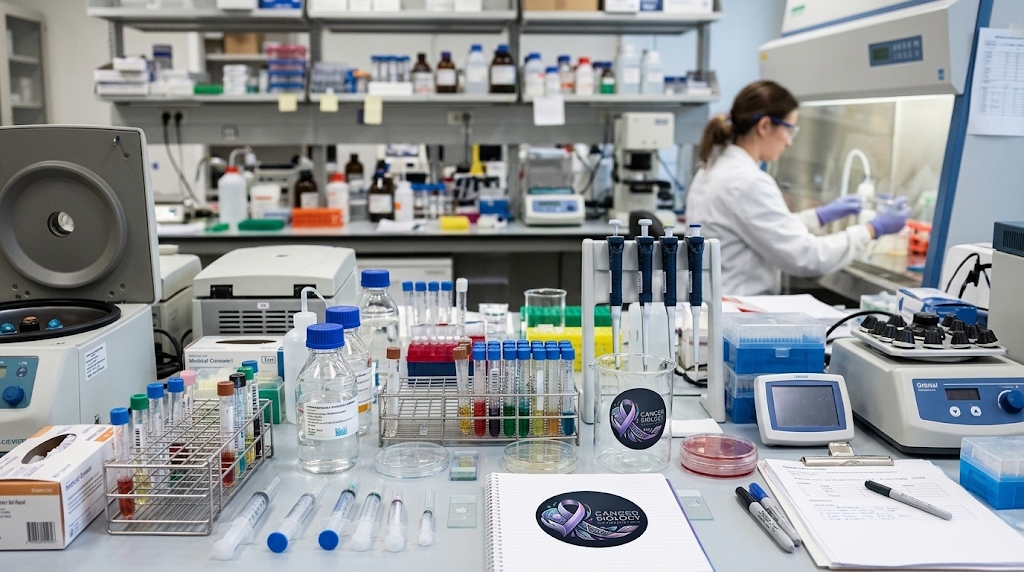
Microgravity biomanufacturing unlocks an elegant alternative: crystalline suspensions.
By precipitating monoclonal antibodies into uniform, microscopic crystals in space, researchers can formulate suspensions with orders of magnitude lower viscosity than liquid equivalents of identical dosage.
“Instead of an IV bag taking three hours in an oncology ward, we are formulating an ultra-dense, low-viscosity slurry that can be delivered via a standard autoinjector under the skin in less than 120 seconds,” explains Dr. Marcus Chen, a molecular pharmacologist collaborating with commercial orbital payload teams. “Patients can self-administer their lifesaving immunotherapies at their kitchen table. That represents a fundamental paradigm shift in human quality of life.”
3. The Industrial Leap: From ISS Gloveboxes to Autonomous Factories
While initial proof-of-concept experiments required astronauts to manipulate pipettes manually in the Destiny and Columbus laboratory modules, the sector is rapidly pivoting toward uncrewed, high-throughput commercial space factories.
A new generation of aerospace biomanufacturing leaders is proving that humans are no longer required in orbit to produce pharmaceutical-grade batches:
- Varda Space Industries: Has successfully demonstrated end-to-end orbital pharmaceutical manufacturing using custom-engineered autonomous capsules. Its microgravity crystallization reactors synthesize small-molecule drugs and biologics in orbit before sealing the product in a precision reentry capsule that braves atmospheric temperatures of 2,700°C to touch down under parachutes in the Utah desert.
- Redwire Space: Operates industrial crystal-growth facilities aboard the ISS, recently fulfilling long-term contracts with major biopharma partners to formulate next-generation therapeutic candidates.
- Axiom Space & Orbital Reef: Commercial orbital platforms currently under development are dedicating entire pressurized modules specifically to cGMP-certified pharmaceutical production facilities.
“The unit economics of biopharmaceuticals make them uniquely suited for space manufacturing,” says aerospace analyst Sarah Thorne. “Unlike bulk metals or semiconductor wafers, a single ten-liter batch of concentrated monoclonal antibody crystals can hold an economic value of tens of millions of dollars. When the product is worth $50,000 per gram, a $2,000 launch cost per kilogram is practically negligible.”
4. Regulatory Frontiers and the Sovereign Space Biotech Race
As orbital pharmaceutical production matures, the regulatory landscape is scrambling to keep pace.
The U.S. Food and Drug Administration (FDA) and the European Medicines Agency (EMA) have initiated active working groups with space agencies to establish cGMP (current Good Manufacturing Practice) guidelines for microgravity facilities. Key regulatory questions include validating how cosmic radiation exposure affects therapeutic shelf life, certifying sterilization protocols for automated fluidic systems, and maintaining an unbroken cold chain from orbital splashdown to clinical distribution.
Furthermore, a geopolitical dimension has emerged. The European Space Agency, Japan’s JAXA, and China’s Tiangong space station have all launched dedicated national programs to secure orbital biomanufacturing sovereignty, recognizing that patents born from microgravity crystallization could dominate next-generation oncological therapeutics well into the 2030s.
What began as an exotic curiosity of the space age has transformed into a critical healthcare frontier. In the silent, weightless expanse of low-Earth orbit, science is proving that the ultimate cure for our terrestrial ailments may be forged among the stars.
Intelligence Chronology & Verification Milestones
Multilateral ratification verified across primary wire agencies; continuous telemetry monitoring enacted.
Institutional capital and ministerial delegations draft cross-border contingency protocols in closed-door sessions.
Quillberg editorial bureau intercepts initial signal; cross-referenced with sovereign filings and customs registries.
Cite This Dispatch & Link Back
Quoting, analyzing, or covering this story in your publication, academic research, or blog? Use this formatted citation to link back directly to the verified source:
[Quillberg News: Pharmaceutical Giants Leverage Orbital Microgravity to Synthesize Cancer Biologics](https://quillberg.com/microgravity-pharma-space-crystallization-cancer-biologics)
📰 Related Strategic Intelligence
More in Tech → Tech
SpaceX Dragon Splashes Down Bearing Historic Microgravity Haul
 Tech
Autonomous AI Research Agents Synthesize Five Novel Room-Temperature Superconducting Candidates
 Tech

