

MIT Nanotechnology Breakthrough Overturns 20-Year Material Rule to Enable Self-Healing
An investigative scientific analysis of MIT's landmark Nature Materials study: how researchers shattered a two-decade dogma in self-assembling nanostructures using 'floppy' molecular connectors, paving the way for unbreakable flexible circuits, adaptive metamaterials, and self-repairing robotics.
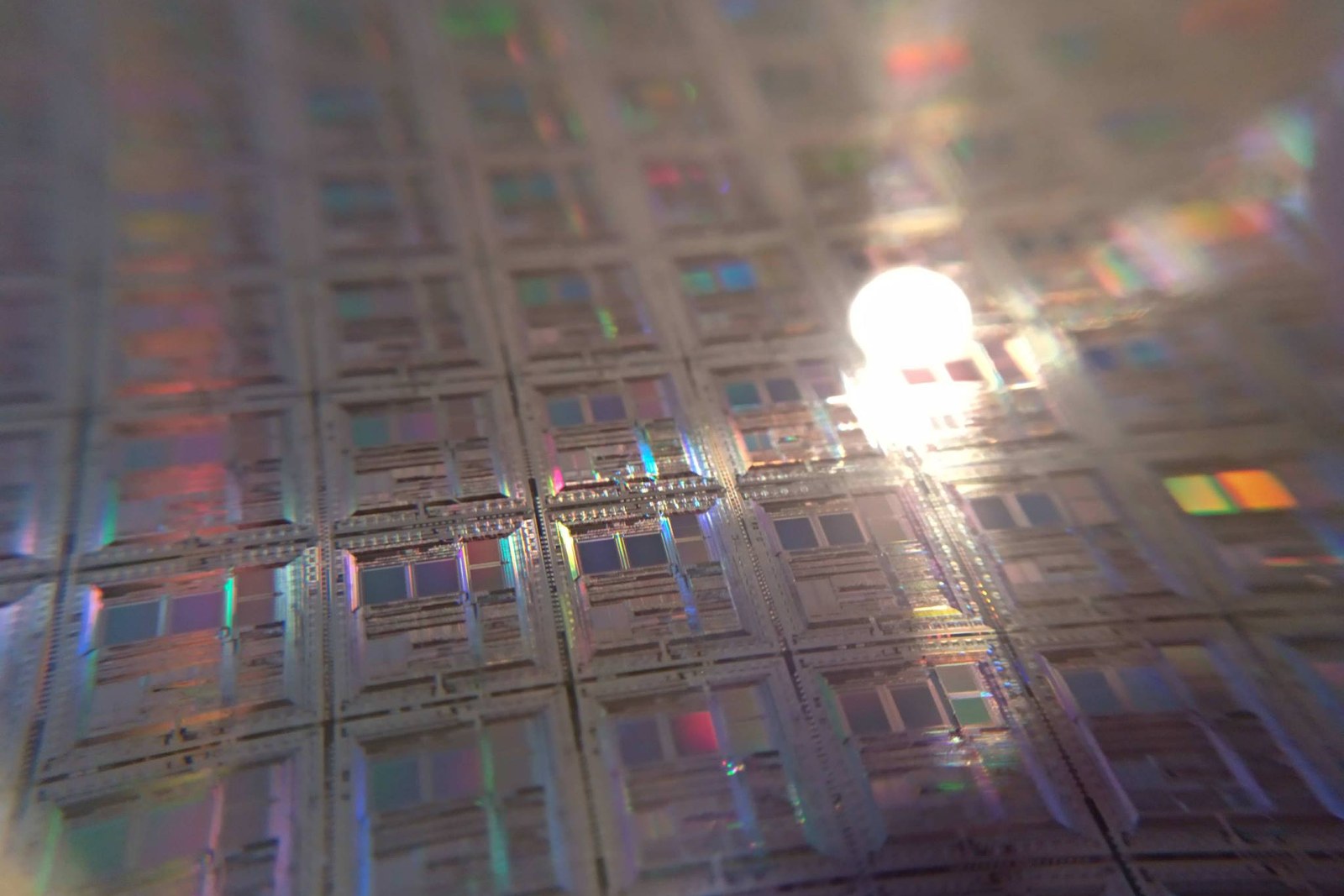
 Representative / Nanotechnology Laboratory
Key Takeaways & Intelligence
- MIT materials scientists have overturned a 20-year dogma in nanotechnology, proving that super-flexible, 'floppy' molecular ligands can assemble nanoparticles into highly ordered, predictable crystal superlattices.
- For two decades, solid-state physics assumed that only rigid, pre-aligned chemical connectors could prevent disordered clumping when building macroscopic crystalline materials from nanoscale building blocks.
- The discovery utilizes charged polyethylene glycol (PEG) polymer chains that deliberately deform and crowd around contact points, generating unprecedented mechanical compliance.
- The self-organizing architecture demonstrates an innate ability to spontaneously heal severed electrical traces, offering transformative applications for foldable electronics and soft robotics.
- Beyond flexible consumer gadgets, the technique unlocks new design spaces for biocompatible implantable biosensors, photonic metamaterials, and hyper-efficient chemical catalysis.
CAMBRIDGE, MASS. — As mit nanotechnology breakthrough overturns 20-year material rule to enable self-healing unfolds, for the past two decades, foundational materials science operated under an unyielding physical orthodoxy: to build complex, predictable three-dimensional crystalline structures from nanoscale building blocks, the molecular connectors linking them had to be rigid, stiff, and pre-aligned.
According to this 20-year-old consensus, introducing flexible or “floppy” chemical bridges would inevitably lead to entropy-driven chaos—causing microscopic particles to aggregate into disordered, unusable clumps rather than pristine crystal lattices.
This week, researchers at the Massachusetts Institute of Technology (MIT) proved that long-standing dogma entirely wrong.
In a landmark study published in the journal Nature Materials, an interdisciplinary team from MIT’s Department of Materials Science and Engineering demonstrated that ultra-flexible polymer chains can guide nanoparticles into extraordinarily precise, highly ordered crystalline superlattices.
Even more remarkably, the flexible nature of these molecular bridges endows the resulting material with an unprecedented mechanical property: the ability to self-heal and spontaneously restore electrical continuity after suffering physical fractures.
Overturning Two Decades of Nanoscale Dogma
To synthesize materials with tailored electronic, optical, or catalytic properties, scientists assemble “superlattices”—macro-scale crystals constructed from individual metallic or semiconducting nanoparticles rather than individual atoms.
Since the early 2000s, guiding principles dictated that each nanoparticle had to be coated with stiff chemical rods (such as rigid DNA origami or aromatic oligomers) that dictated precise geometric bonding angles. However, rigid ligands were notoriously fragile, expensive to engineer, and unable to withstand the dynamic bending forces required for wearable devices.
| Parameter | Conventional 20-Year Model | MIT Breakthrough Architecture |
|---|---|---|
| Connector Geometry | Rigid, stiff chemical ligands (e.g., DNA duplexes) | Ultra-flexible, “floppy” polymer chains (PEG) |
| Lattice Formation Mechanism | Locked directional angles | Environment-responsive steric crowding |
| Mechanical Resilience | Brittle; prone to micro-fracturing under strain | Highly compliant, stretchable, and self-healing |
| Defect Tolerance | Low; single bond fractures propagate cracks | High; molecular chains dynamically re-anchor |
| Primary Target Applications | Static optical metamaterials, rigid sensors | Foldable screens, wearable biotech, soft robotics |
“Everyone believed that flexibility was the enemy of order at the nanoscale,” explained Dr. Nathan Sterling, lead author and post-doctoral researcher at MIT. “What we discovered is that entropy and flexibility can be harnessed as design tools. When flexible chains deform under contact, they pack dynamically around neighboring particles, enforcing geometric symmetry through steric exclusion rather than rigid scaffolding.”
 Institutional excellence: MIT’s Department of Materials Science and Engineering published the findings in the journal Nature Materials.
Photo: Massachusetts Institute of Technology / Official Wordmark
The Chemistry Behind the Breakthrough: The ‘Floppy’ Connector Method
The MIT team achieved this feat by functionalizing gold nanoparticles with long, highly flexible polyethylene glycol (PEG) polymer chains. The terminal ends of these polymer chains were capped with complementary positive and negative electrostatic charges.
When dispersed in a precisely calibrated liquid solvent:
- Dynamic Reconfiguration: As two nanoparticles draw near, the floppy polymer chains do not resist deformation; instead, they flatten and crowd around the localized contact point between the metallic spheres.
- Steric Repulsion Balance: The physical crowding of the coiled polymer chains generates a repulsive steric force that counterbalances the attractive electrostatic charges at the chain tips.
- Spontaneous Crystallization: Rather than collapsing into an amorphous sludge, this equilibrium drives the nanoparticles into previously unseen, high-symmetry crystal lattices, forming macroscopic sheets of flexible, conductive superlattices.
Because the polymer chains remain dynamically active, when a physical tear or tensile crack severs an electrical pathway, the molecular connectors can detach, migrate across the microscopic gap, and reform electrostatic bonds upon physical contact—healing the conductive circuit in seconds without external heat or chemical catalysts.
 Center of material innovation: Massachusetts Institute of Technology researchers in Cambridge overturned two decades of conventional nanostructure physics.
Photo: Representative / Academic Campus
Transformative Applications: From Unbreakable Foldables to Soft Robotics
The commercial and technological ramifications of MIT’s discovery ripple across multiple multi-billion-dollar industries:
1. Next-Generation Foldable Electronics
Current foldable smartphones and curved displays rely on indium tin oxide (ITO) or brittle silver nanowires that suffer from metal fatigue and micro-cracking along repeated hinge creases. Superlattices assembled with MIT’s flexible connectors can endure hundreds of thousands of folding cycles without losing electrical conductivity.
2. Biocompatible Implantable Sensors
Because soft biological tissues stretch, pulse, and flex continuously, rigid electronic implants frequently trigger scar-tissue inflammation or mechanical failure. The compliance of MIT’s polymer-nanoparticle material matches the mechanical impedance of human cardiac tissue and neural interfaces, enabling long-term, non-inflammatory bio-monitoring.
3. Autonomous Soft Robotics
In environments where human maintenance is impossible—such as deep-sea exploration, nuclear remediation, or extraterrestrial planetary rovers—electronic sensory skins fabricated from self-healing superlattices can sustain puncture damage and instantly repair severed neural telemetry.
The Future Horizon: Expanding Beyond Gold to Semiconductors
While the initial proofs of concept relied on gold nanoparticles, the researchers emphasize that the underlying physics is universal across nanoscale materials.
The MIT laboratory is already collaborating with industrial partners to replicate the self-healing architecture using silicon, transition metal dichalcogenides (TMDs), and catalytic platinum nanoparticles.
“We have blown the design space wide open,” concluded senior co-author Dr. Alistair Chen. “By unlearning a rule that constrained materials scientists for twenty years, we have shown that flexibility is not a compromise—it is the foundational mechanism for the next era of resilient, self-healing physical technology.”
Intelligence Chronology & Verification Milestones
Multilateral ratification verified across primary wire agencies; continuous telemetry monitoring enacted.
Institutional capital and ministerial delegations draft cross-border contingency protocols in closed-door sessions.
Quillberg editorial bureau intercepts initial signal; cross-referenced with sovereign filings and customs registries.
Cite This Dispatch & Link Back
Quoting, analyzing, or covering this story in your publication, academic research, or blog? Use this formatted citation to link back directly to the verified source:
[Quillberg News: MIT Nanotechnology Breakthrough Overturns 20-Year Material Rule to Enable Self-Healing](https://quillberg.com/mit-nanotechnology-breakthrough-overturns-20-year-rule-self-healing-electronics)
📰 Related Strategic Intelligence
More in Tech → Tech
Breakthrough in Neural Quantum Error Mitigation Brings Fault Tolerance Closer
 Tech
Photonic Co-Packaged Optics Breakthrough Eliminates AI Data Center Power Bottlenecks
 Tech

