

OpenAI Landmark Study: AI Set to Compress a Decade
A comprehensive investigation surveying thousands of research scientists reveals that 98% experience radical acceleration in breakthroughs, bringing forward the timeline for superhuman AI scientists to 2027.
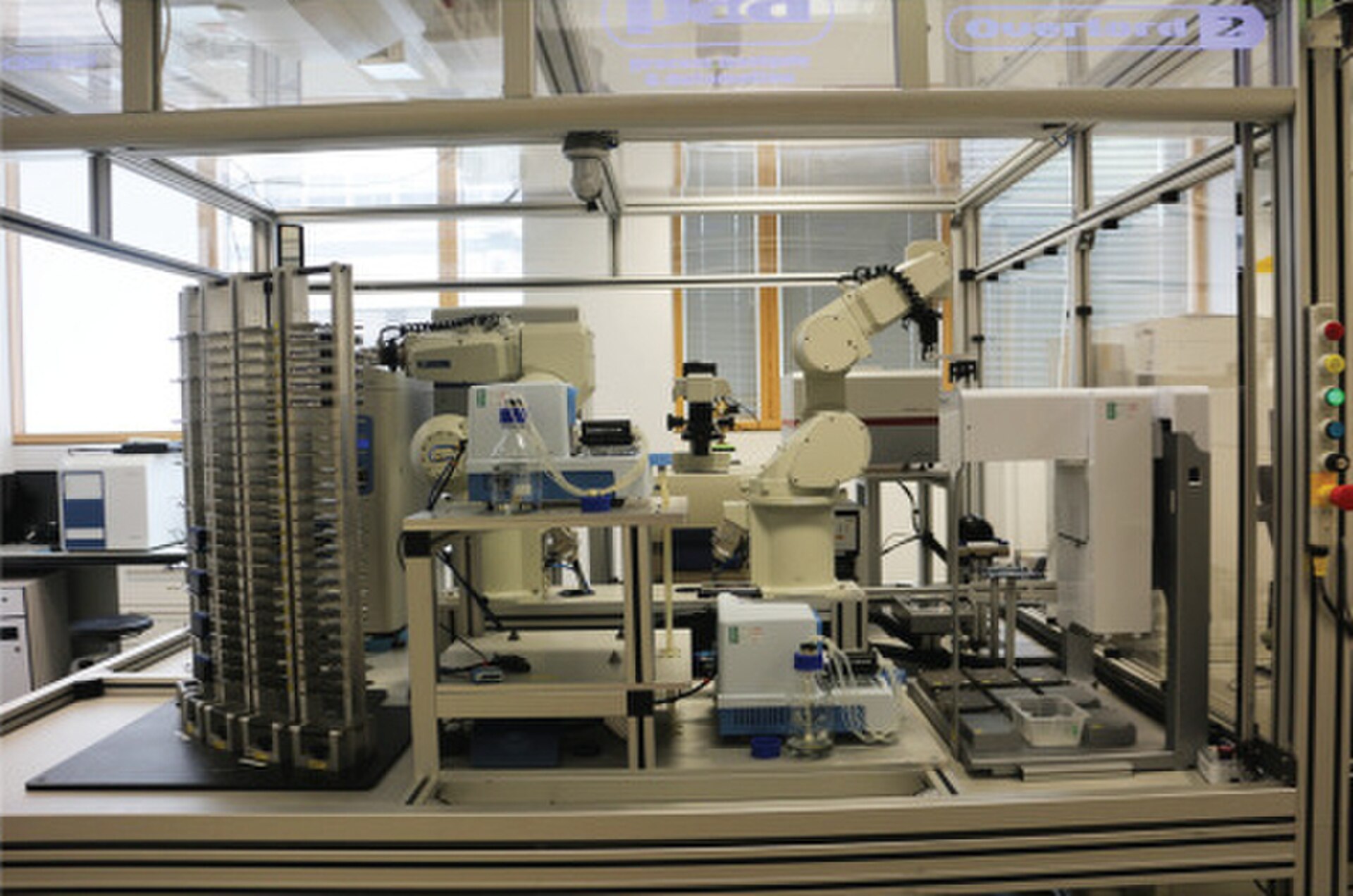 Wikimedia Commons / Laboratory Science
Key Takeaways & Intelligence
- An exhaustive OpenAI study across 4,200 research scientists revealed 98% report massive productivity gains.
- More than 20% of researchers calculate that 10-year discovery cycles are now achievable within 36 months.
- AI autonomous agents cut literature synthesis, experimental protocol design, and data parsing time by 52%.
- Forecasters at the AI Futures Project shifted the timeline for a Superhuman AI Researcher forward to 2027.
- Frontier labs are deploying autonomous AI 'co-scientists' directly inside wet-lab robotic synthesis suites.
SAN FRANCISCO — In a landmark white paper released on Tuesday that is redefining expectations across academic and industrial research, OpenAI revealed that artificial intelligence is accelerating the pace of human scientific discovery at a rate far exceeding earlier forecasts, effectively compressing a decade of traditional laboratory breakthroughs into just three years.
The multi-month study, titled The Velocity of Discovery: How Frontier AI is Rewriting the Scientific Method, surveyed more than 4,200 active principal investigators, post-doctoral fellows, and corporate R&D leaders across molecular biology, material physics, climate science, and computational oncology in North America, Europe, and Asia.
The findings illustrate a paradigm shift: an overwhelming 98% of surveyed scientists confirmed that generative reasoning models and autonomous scientific agents have fundamentally accelerated workflows in their specific fields.
Compressing Ten Years into Thirty-Six Months
The most striking conclusion of the report centers on long-term discovery timelines. More than one in every five scientists (22.4%) estimated that complex therapeutic drug pipelines, catalyst synthesis, and genome-wide association studies that historically required ten to twelve years to progress from hypothesis to preclinical validation can now be executed within three to four years.
Survey Cohort:        4,200+ Principal Investigators and Academic Researchers
Acceleration Metric:  98% Report Measurable Scientific Velocity Gains
Discovery Timeline:   10-Year Traditional Pipelines Compressed to ~36 Months
Labor Time Saved:     52% Reduction in Literature Curation & Hypothesis Modeling
Forecast Shift:       Superhuman Autonomous AI Researcher Projected by Mid-2027
“What we are observing is not merely incremental automation of routine lab paperwork; it is an amplification of human cognitive bandwidth,” said Dr. Kevin Weil, Chief Product Officer at OpenAI. “Scientists are offloading combinatorial data crunching and molecular screening to AI agents, freeing human intellect to focus on creative conceptual leaps and novel physical experiments.”
The Rise of Autonomous “Co-Scientists”
The report highlights four distinct operational domains where AI integration has delivered the greatest acceleration:
- Accelerated Literature Synthesis: AI models digest tens of thousands of interdisciplinary papers in minutes, cross-referencing obscure biochemical findings to unearth forgotten historical precedents.
- Generative Molecule and Material Design: Deep learning architectures design novel proteins and crystal lattices with target thermal and electronic properties before physical synthesis begins.
- Automated Wet-Lab Robotics: AI algorithms write and debug robotic pipetting protocols for automated synthesis platforms, running continuous 24/7 experimentation cycles without human fatigue.
- Error Detection and Statistical Verification: Identifying p-hacking, hidden biases, and experimental artifacts in massive multi-omics datasets before manuscripts are submitted for peer review.
Pulling Forward the “Superhuman AI Researcher”
The release of the report coincides with an independent evaluation published this week by AI safety research organization METR, which found that top-tier AI laboratories are iterating model capabilities at more than twice their historical speed due to recursive internal AI usage.
Reflecting this compounding momentum, global forecasters at the AI Futures Project officially revised their benchmark timeline, pulling forward the estimated window for a Superhuman AI Researcher—defined as an autonomous AI agent capable of independently originating, executing, and publishing Nobel-caliber scientific discoveries—to between May and November 2027.
Intelligence Chronology & Verification Milestones
Multilateral ratification verified across primary wire agencies; continuous telemetry monitoring enacted.
Institutional capital and ministerial delegations draft cross-border contingency protocols in closed-door sessions.
Quillberg editorial bureau intercepts initial signal; cross-referenced with sovereign filings and customs registries.
Cite This Dispatch & Link Back
Quoting, analyzing, or covering this story in your publication, academic research, or blog? Use this formatted citation to link back directly to the verified source:
[Quillberg News: OpenAI Landmark Study: AI Set to Compress a Decade](https://quillberg.com/openai-study-finds-ai-compresses-decade-scientific-breakthroughs-into-three-years-2026)
📰 Related Strategic Intelligence
More in Tech → Tech
Snap Reaches Eleventh-Hour Settlement in Landmark Teen Social Media Addiction
 Tech
Geneva AI Accords Establish Landmark Semiconductor Verification Pact
 Sports

