

Middle East Aviation Security Under Strain: Regional Carriers Reroute Air Corridors Amid Drone and Missile Defense Alerts
Following temporary operational interruptions and elevated air defense readiness across key Arabian Gulf hubs—including Riyadh's King Khalid International Airport—international civil aviation authorities and regional super-connector airlines are navigating the most complex airspace rerouting challenge in decades. With critical air corridors constrained over Iraq, Jordan, and the Red Sea, carriers are burning millions in extra jet fuel to guarantee passenger safety.
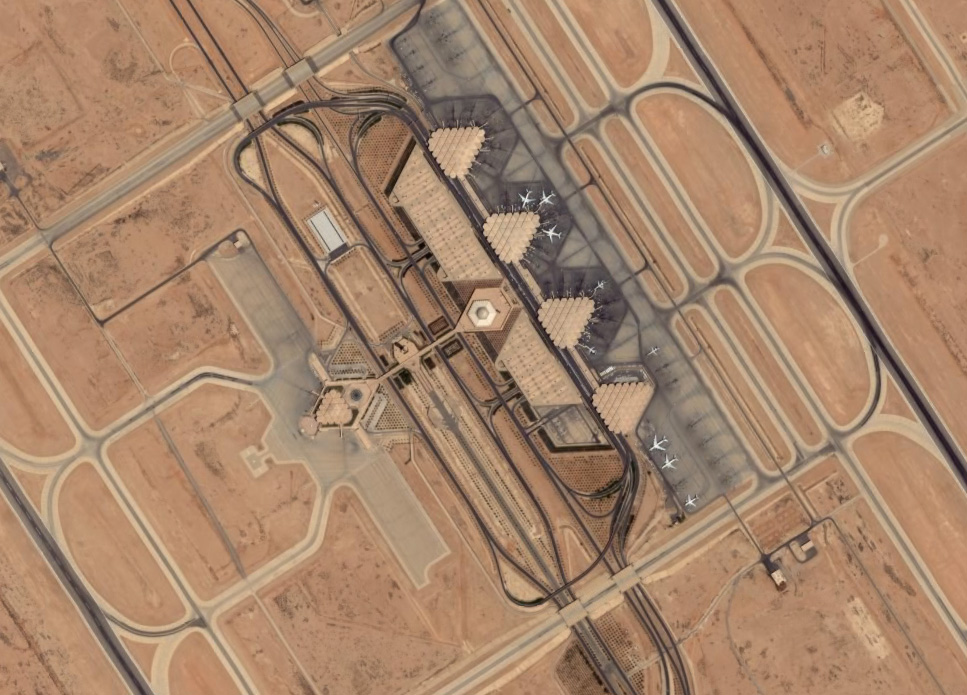 Saudi Press Agency / SPA
Key Takeaways & Intelligence
- Civil aviation regulators enforce stringent buffer zones following regional air defense activations, narrowing transit corridors.
- Long-haul flights between Europe and the Gulf/Asia are absorbing 45 to 90 minutes of additional flight time, driving up fuel burn.
- Air traffic control centers in Turkey, Cyprus, and Egypt face unprecedented congestion as hundreds of diverted widebody jets crowd remaining safe routes.
For decades, the skies above the Middle East served as the indispensable geographical super-highway connecting Europe, North America, Africa, and Asia. Mega-hubs in Dubai, Doha, and Riyadh grew into the operational nerve centers of global aviation, shuttling tens of millions of passengers annually through high-altitude transit corridors.
Today, that aerial crossroads is being navigated under the highest security alert protocols in modern commercial aviation history.
Following recent regional security incidents that prompted temporary tactical holding patterns at Riyadh’s King Khalid International Airport (RUH) and surrounding airspace sectors, the International Civil Aviation Organization (ICAO), the European Union Aviation Safety Agency (EASA), and the U.S. Federal Aviation Administration (FAA) have reinforced stringent conflict-zone risk notices.
The Shrinking Sky: Funneling Hundreds of Widebody Aircraft
Commercial airlines operate under zero-tolerance safety mandates when navigating zones where sovereign armed forces maintain active surface-to-air missile (SAM) batteries, anti-ballistic missile interception shields, and electronic jamming systems.
With direct transit corridors over portions of the Levant, Iraq, and the southern Red Sea subject to active conflict advisories or periodic military closures, global carriers have been funneled into two narrow detour routes:
- The Northern Arc (Via Turkey and the Caucasus): Flights routing between London, Paris, Frankfurt, and Gulf hubs are forced to detour north over the Black Sea, Turkey, and northern Iran/Azerbaijan before descending south into the Persian Gulf.
- The Southern Arc (Via Egypt and Saudi Arabia): Westbound flights from Southeast Asia bypass Red Sea chokepoints by tracking south of Yemen through the Arabian Sea, entering Saudi airspace, and crossing central Egypt into the Mediterranean.
Flight Route Corridors Under Pressure
| Air Corridor Route | Pre-Crisis Flight Path | Rerouted Conflict-Bypass Path | Average Added Flight Duration | Operational Airspace Challenge |
|---|---|---|---|---|
| London (LHR) to Dubai (DXB) | Direct via Iraq & Northern Gulf | Diverted North via Turkey & Caucasus | +45 to 60 Minutes | Severe ATC sector saturation in Ankara & Istanbul |
| Frankfurt (FRA) to Riyadh (RUH) | Direct via Jordan & Northern Saudi | Detoured via Egyptian airspace corridor | +35 to 50 Minutes | Crowded Cairo flight information region (FIR) |
| Paris (CDG) to Doha (DOH) | Direct trans-Middle East track | Extended route via Turkey and central Gulf | +40 to 65 Minutes | High fuel burn; crew flight duty period (FDP) limits |
| Singapore (SIN) to London (LHR) | Trans-Arabian Peninsula corridor | Extreme southern detour or Central Asian route | +60 to 90 Minutes | Substantial jet fuel penalty; payload weight restrictions |
The Financial and Operational Toll on Airlines
For global network carriers—including Emirates, Qatar Airways, Saudia, Turkish Airlines, and British Airways—these diversions impose staggering operational overheads.
Carrying 60 to 90 minutes of reserve fuel on an ultra-long-haul Boeing 777-300ER or Airbus A350-1000 increases the gross takeoff weight of the aircraft, which in turn causes the engines to burn even more fuel per nautical mile. Furthermore, extended flight times create domino delays that breach pilot Flight Duty Period (FDP) legal limits, forcing airlines to reposition replacement flight crews at costly outstations.
At the same time, regional air traffic control agencies are operating under relentless pressure. Ankara Center in Turkey and Nicosia FIR in Cyprus have witnessed traffic volumes jump by over 30% during peak night-time European departure banks, requiring strict slot management to prevent mid-air holding stacks.
Despite the profound logistical friction, regional aviation leaders emphasize that safety architectures have proven exceptionally resilient. Real-time tactical datalinks between civil civil aviation ministries and sovereign military air defense coordination desks ensure that whenever tactical threats are detected, commercial airliners are routed safely hundreds of miles away from harm.
Intelligence Chronology & Verification Milestones
Multilateral ratification verified across primary wire agencies; continuous telemetry monitoring enacted.
Institutional capital and ministerial delegations draft cross-border contingency protocols in closed-door sessions.
Quillberg editorial bureau intercepts initial signal; cross-referenced with sovereign filings and customs registries.