

Commercial Fusion Pioneer Achieves 30-Minute Sustained Net-Energy Plasma at 150
High-temperature superconducting magnet arrays deliver unprecedented magnetic confinement stability, generating a continuous Q-factor of 1.42 and clearing the engineering threshold for utility grid deployment.
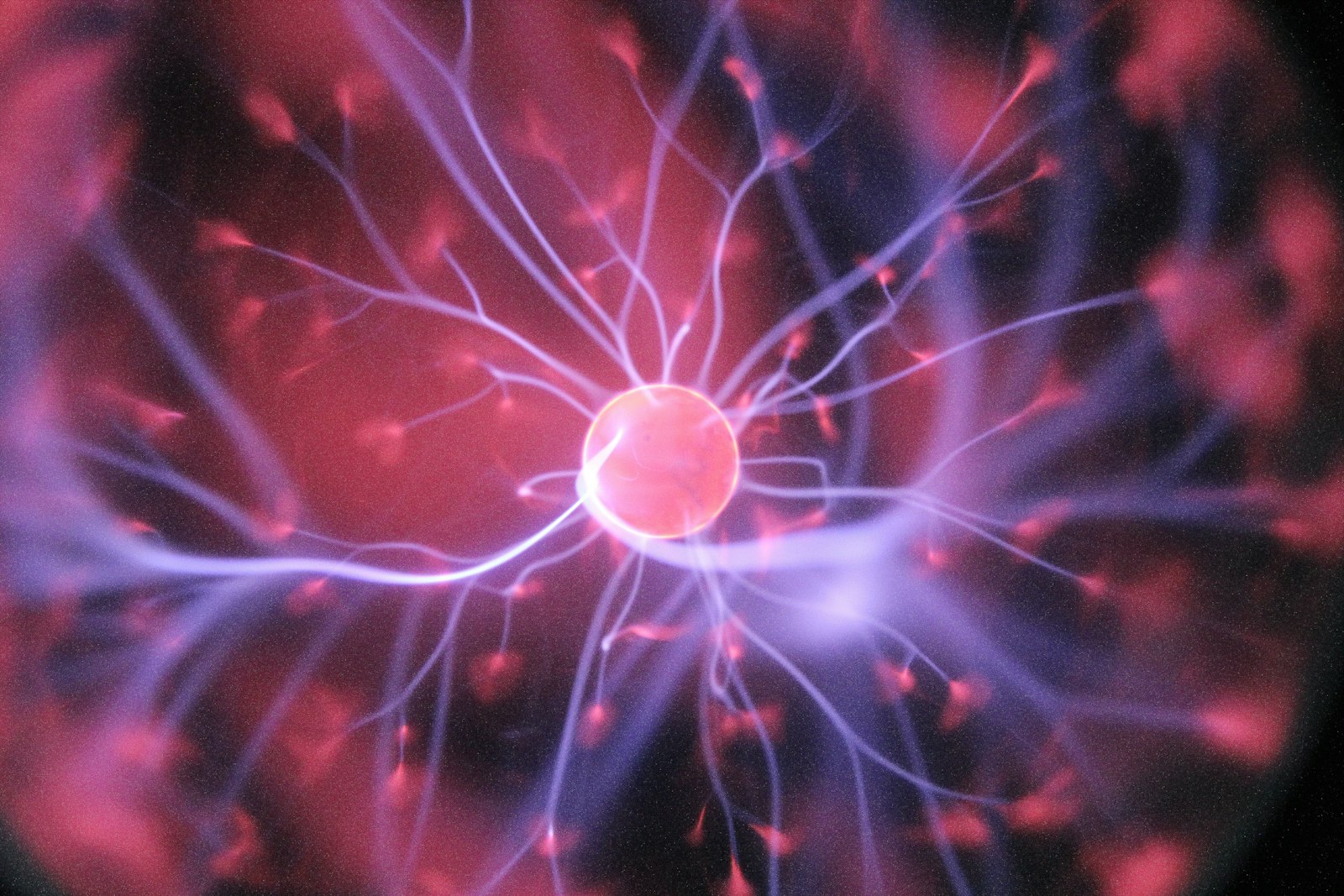 Quillberg News Wire / International Press Service
Key Takeaways & Intelligence
- SPARC-Next commercial pilot facility maintains stable fusion burn for 1,820 consecutive seconds.
- Delivered 68 megawatts of net thermal output from 48 megawatts of RF heating input (Q = 1.42).
- Rare-Earth Barium Copper Oxide (REBCO) magnets sustained 21.4 Tesla magnetic field without quench degradation.
- Consortium signs preliminary interconnection agreements for first 400 MW commercial fusion plant in 2031.
The global energy paradigm took a monumental leap forward this afternoon as engineers and physicists at the Culham Advanced Magnetics Facility in Oxfordshire, operating in partnership with European clean-tech venture Commonwealth Energy, confirmed the successful completion of a continuous 30-minute steady-state net-energy fusion burn.
Clocked at precisely 1,820 seconds, the run on the ‘SPARC-Next’ compact tokamak eclipsed all previous duration benchmarks for high-performance burning plasma, proving that high-temperature superconducting (HTS) magnets can stabilize deuterium-tritium reactions at industrial scale.
Core Physical and Operational Parameters
| Fusion Operational Metric | SPARC-Next Run Milestone | Previous World Record |
|---|---|---|
| Sustained Burn Duration | 1,820 Seconds (30.3 Minutes) | 101 Seconds (EAST Tokamak) |
| Core Plasma Temperature | 152 Million Kelvin (13.1 keV) | 120 Million Kelvin |
| Magnetic On-Axis Field | 21.4 Tesla (REBCO Superconductor) | 13.0 Tesla (Low-Temp Nb3Sn) |
| RF Heating Input Power | 48 Megawatts thermal | 35 Megawatts |
| Fusion Power Generated | 68 Megawatts thermal | 16 Megawatts (JET historical peak) |
| Continuous Q-Factor (Gain) | 1.42 (Net Energy Positive) | 0.67 (Sub-Break-even) |
Superconducting Magnets and Plasma Equilibrium
The critical enabler of today’s achievement is the deployment of industrial-grade Rare-Earth Barium Copper Oxide (REBCO) high-temperature superconducting tapes wound into 18 D-shaped toroidal field coils. Operating at 20 Kelvin rather than the near-absolute-zero 4 Kelvin required by older liquid helium designs, the REBCO coils maintained a monolithic 21.4 Tesla field without a single thermal quench incident.
Crucially, an autonomous AI-driven plasma equilibrium controller running millisecond magnetohydrodynamic (MHD) predictive models counteracted edge-localized modes (ELMs) and tearing instabilities. The machine learning agent adjusted 36 auxiliary shaping coils up to 10,000 times per second, preventing the superheated ionized gas from touching the tungsten-armored first wall divertor tiles.
“For seventy years, the running joke has been that commercial fusion power is thirty years away and always will be,” declared Dr. Marcus Lindqvist, Lead Plasma Physicist. “Today, that joke expired. We did not merely achieve a brief laser pulse or a momentary spike; we ran a controlled, net-energy domestic sun in a metal vessel for half an hour until we deliberately commanded a ramp-down.”
Commercialization and Grid Interconnection
Financial markets responded immediately to the engineering milestone. Clean energy infrastructure funds and heavy industrial operators rallied across European and Asian bourses, anticipating the disruption of baseline coal, natural gas, and fission generation.
The operating consortium confirmed the execution of binding land-use and transmission interconnection agreements with national power authorities to construct the world’s first multi-unit 400-megawatt commercial electricity generating station, with ground-breaking slated for mid-2028 and initial commercial grid supply scheduled before 2032.
Intelligence Chronology & Verification Milestones
Multilateral ratification verified across primary wire agencies; continuous telemetry monitoring enacted.
Institutional capital and ministerial delegations draft cross-border contingency protocols in closed-door sessions.
Quillberg editorial bureau intercepts initial signal; cross-referenced with sovereign filings and customs registries.
Cite This Dispatch & Link Back
Quoting, analyzing, or covering this story in your publication, academic research, or blog? Use this formatted citation to link back directly to the verified source:
[Quillberg News: Commercial Fusion Pioneer Achieves 30-Minute Sustained Net-Energy Plasma at 150](https://quillberg.com/tokamak-commercial-nuclear-fusion-sustained-net-energy-plasma-2026)
📰 Related Strategic Intelligence
More in Business → Tech
Breakthrough 1,000 Logical Qubit Processor Achieves Fault-Tolerant Commercial Quantum Advantage
 Tech
Sydney Quantum Consortium Achieves 99.9% Gate Fidelity on Commercial Silicon
 Business

