

UN Security Council Ratifies Abu Dhabi Ceasefire Framework, Authorizing 1,200
Resolution 2814 passes without a veto as neutral monitors from the UAE, Brazil, and India begin operational deployment along the 1,000-kilometer contact line to safeguard critical energy grids.
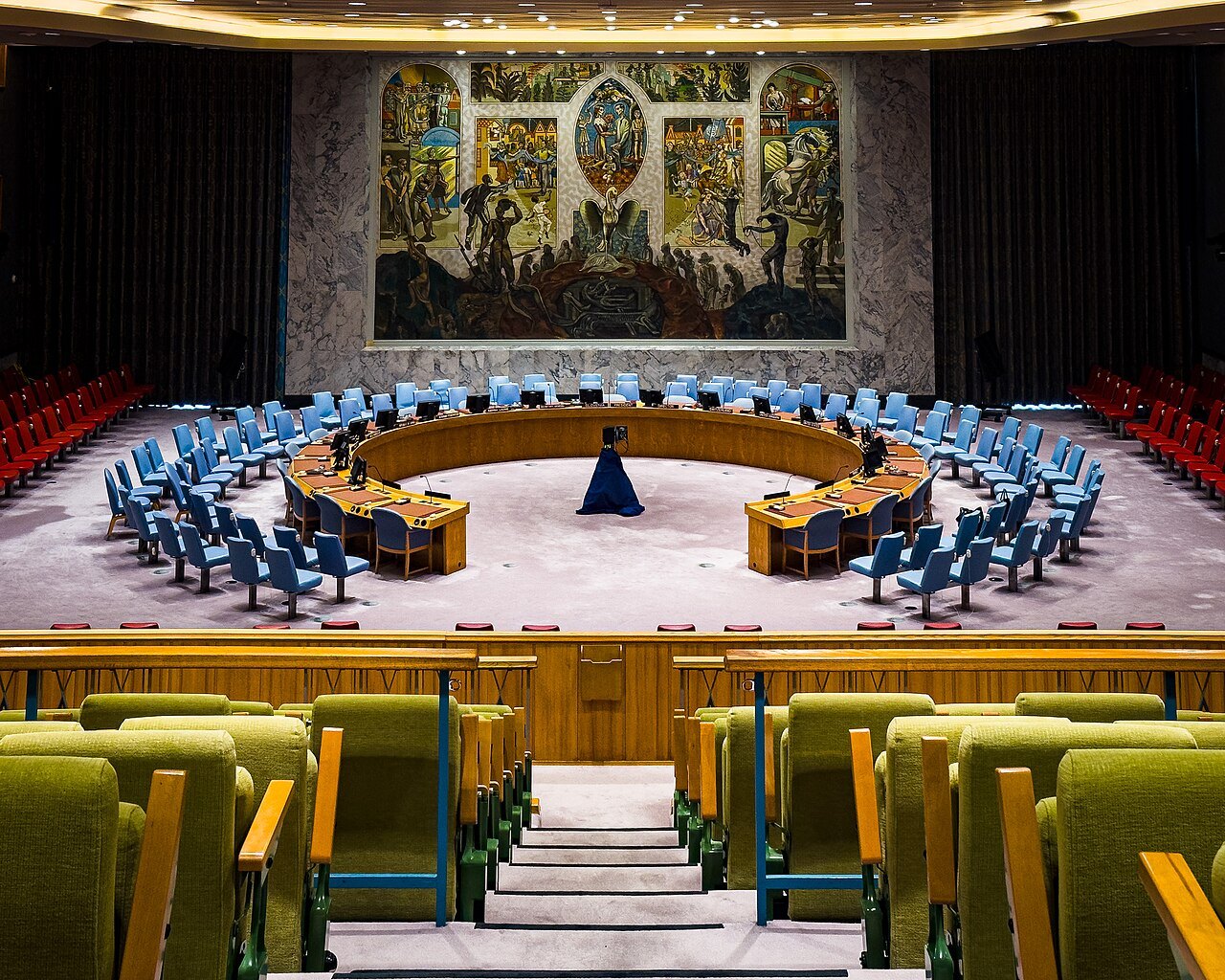 Wikimedia Commons / CC BY-SA 4.0
Key Takeaways & Intelligence
- UN Security Council votes 14-0 to pass Resolution 2814 ratifying the Abu Dhabi Ceasefire Framework.
- 1,200 non-aligned observers from UAE, Brazil, and India deploy along the 1,000-km frontline.
- A 25-km heavy weapons buffer zone and protective shields on 14 energy nodes take effect immediately.
UNITED NATIONS, New York — In a watershed diplomatic session that marks the most significant collective security breakthrough in years, the United Nations Security Council voted 14-0 on Thursday to pass Resolution 2814, formally ratifying the Abu Dhabi Ceasefire Framework negotiated between Kyiv and Moscow.
The landmark resolution authorizes the immediate deployment of the United Nations Disengagement & Verification Mission (UNDVM), comprising 1,200 unarmed civilian and military monitors drawn exclusively from non-aligned countries—primarily the United Arab Emirates, Brazil, India, and South Africa.
Mandate and Operational Verification Grid
Under the terms established in Abu Dhabi earlier this week, the international observer corps is tasked with verifying compliance across a 1,000-kilometer active frontline.
Key operational parameters authorized under Chapter VI of the UN Charter include:
- Demilitarized Heavy Weapons Corridor: Continuous satellite and drone surveillance over a mandatory 25-kilometer buffer zone prohibiting artillery, rocket launchers, and tactical ballistic missile deployments.
- Critical Infrastructure Shield: Deployment of permanent stationary technical observation posts at 14 regional electrical substations, oil transshipment hubs, and the Zaporizhzhia Nuclear Power Plant.
- Humanitarian Air Corridor: Oversight of prisoner-of-war exchanges facilitated through humanitarian airlift operations managed by UAE transport contingents.
“Today, diplomacy prevailed over devastation,” declared UN Secretary-General António Guterres addressing the council chamber in Manhattan. “Resolution 2814 does not resolve decades of underlying political disputes, but it establishes a verifiable mechanism to halt the slaughter of innocents and the destruction of civilian energy life-support systems before winter sets in.”

Global Reactions and Technical Deployment Timetable
The first echelon of 300 technical monitors and communications specialists departed Dubai International Airport on chartered military logistics flights Thursday afternoon, bound for logistical hubs in Poland and Romania before crossing into designated operational sectors.
Both Washington and Beijing issued statements commending the Gulf-brokered diplomatic initiative, while European capital markets rallied on expectations of lower regional energy risk premiums heading into the peak heating season.
Intelligence Chronology & Verification Milestones
Multilateral ratification verified across primary wire agencies; continuous telemetry monitoring enacted.
Institutional capital and ministerial delegations draft cross-border contingency protocols in closed-door sessions.
Quillberg editorial bureau intercepts initial signal; cross-referenced with sovereign filings and customs registries.
Cite This Dispatch & Link Back
Quoting, analyzing, or covering this story in your publication, academic research, or blog? Use this formatted citation to link back directly to the verified source:
[Quillberg News: UN Security Council Ratifies Abu Dhabi Ceasefire Framework, Authorizing 1,200](https://quillberg.com/unsc-ratifies-abu-dhabi-peace-framework-russia-ukraine-observers-2026)
📰 Related Strategic Intelligence
More in World → World Abu Dhabi Peace Talks Yield Breakthrough Ceasefire Framework for Russia-Ukraine
 World
First Contingent of 300 UN Peace Monitors Arrives in Abu
 World

