Xiaomi Shatters EV Records with 50,000 Monthly Deliveries
An investigative deep dive into Xiaomi Auto's historic milestone: delivering over 50,000 smart electric vehicles in a single month, scaling its Beijing gigafactory, and weaponizing its Munich-to-Beijing engineering axis against legacy automotive giants.
 Xiaomi Auto / Global Press
Key Takeaways & Intelligence
- Xiaomi Auto officially shattered global startup records by delivering over 50,000 smart electric vehicles in October 2026, operating double shifts at its hyper-automated Beijing gigafactory.
- The explosive production ramp puts Xiaomi firmly on trajectory to surpass its upgraded annual guidance of 180,000 vehicles, cementing the fastest manufacturing scale-up in automotive history.
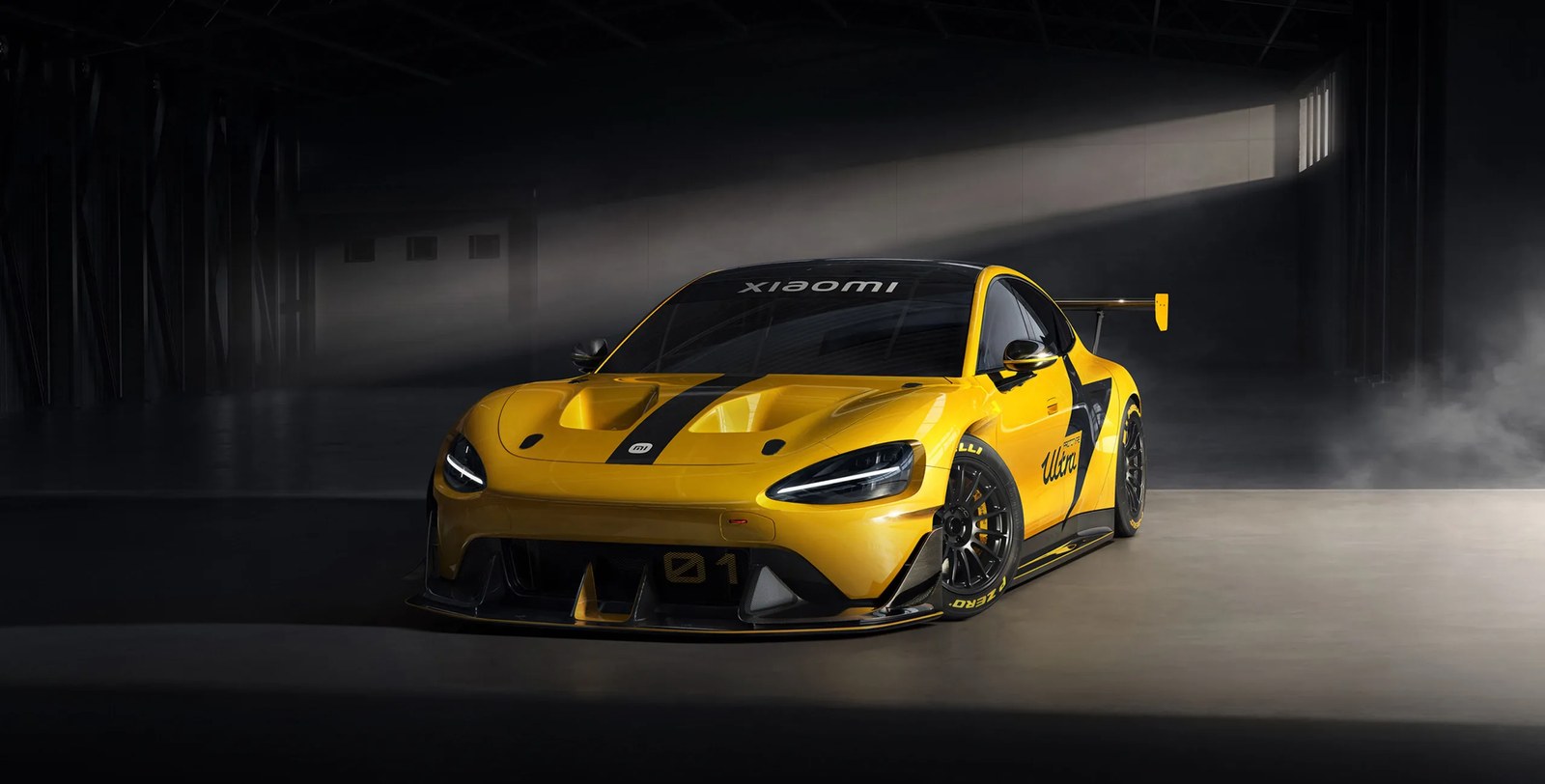
- The flagship SU7 Ultra Prototype—wielding 1,548 horsepower and tri-motor HyperEngine V8s technology—clocked blistering benchmark laps, directly challenging Porsche and Tesla track supremacy.
- Xiaomi's distributed engineering network across Beijing, Shanghai, Nanjing, Wuhan, and Munich bridges Chinese software-defined cockpit agility with European vehicle dynamics and chassis tuning.
- With pre-orders continuing to exceed 100,000 backlogged units, Phase II factory expansion is being accelerated ahead of anticipated European export shipments scheduled for 2027.
BEIJING & MUNICH — As xiaomi shatters ev records with 50,000 monthly deliveries unfolds, when consumer electronics mogul Lei Jun announced in early 2021 that Xiaomi would invest $10 billion into developing smart electric vehicles from scratch, legacy automakers in Detroit, Wolfsburg, and Stuttgart greeted the pledge with quiet condescension. Building high-volume, crash-tested automobiles, industry veterans warned, was an unforgiving industrial crucible that had nearly bankrupted Silicon Valley pioneers and consumed billions in venture capital.
Less than six years later, that skepticism has evaporated into corporate alarm.
This week, Xiaomi Auto officially confirmed that it delivered more than 50,000 electric vehicles during the month of October 2026 alone—a staggering operational milestone that marks a high-water mark for any new automotive entrant in modern industrial history. By sustaining an annualized run-rate approaching 600,000 vehicles, Xiaomi has accomplished in under thirty months what took traditional EV startups more than a decade to engineer.
The Numbers Behind the Manufacturing Blitz
Driving this manufacturing triumph is Xiaomi’s state-of-the-art super-factory located in the Yizhuang Economic and Technological Development Zone in southern Beijing. Spanning hundreds of acres, the facility represents a technological masterclass in hyper-automation, leveraging proprietary “Hyper Die-Casting” (die-casting clenching forces exceeding 9,100 tons) to fuse 72 individual sub-frame components into a single rigid die-cast rear underbody.
By operating double shifts and reducing line cycle times down to an astonishing 76 seconds per finished vehicle, Xiaomi has dramatically compressed the wait times for its standard SU7 sedan, the dual-motor SU7 Pro, and the track-ready SU7 Max.
| Metric / Parameter | Xiaomi Auto Performance Milestone |
|---|---|
| Monthly Deliveries (October 2026) | 50,000+ Units (All-Time Record) |
| Annualized Run-Rate | ~600,000 Units / Year |
| Manufacturing Cycle Time | 76 Seconds per Vehicle off Assembly Line |
| Flagship Performance (SU7 Ultra) | 1,548 Horsepower (Tri-Motor HyperEngine V8s) |
| 0–100 km/h Acceleration | 1.97 Seconds (Track Configuration) |
| Active R&D Footprint | 5 Global Centers: Beijing, Shanghai, Nanjing, Wuhan, Munich |
“What Xiaomi has pulled off is nothing short of an industrial shockwave,” said Arthur Wei, senior mobility analyst at Shanghai Automotive Research. “They didn’t just design a sleek car; they applied consumer smartphone supply chain logistics and radical modular manufacturing to automotive mass production. No legacy OEM has ever ramped a clean-sheet vehicle architecture this fast.”
 Cross-continental engineering: Xiaomi Auto’s specialized global R&D network unites software architecture in China with automotive chassis dynamics in Munich.
Photo: Xiaomi Auto / Corporate Media
The Global R&D Axis: From Software in Wuhan to Chassis in Munich
Crucial to Xiaomi’s rapid ascent is its distributed research and engineering network, strategically distributed across five global innovation hubs:
- Beijing: Serves as global headquarters, managing vehicle integration, thermal architecture, battery chemistry synthesis, and manufacturing robotics.
- Shanghai: Specializes in exterior aerodynamic sculpting, industrial design aesthetics, and advanced consumer interface hardware.
- Nanjing & Wuhan: The software engines behind Xiaomi’s HyperOS operating system, developing end-to-end autonomous driving neural networks, perception algorithms, and voice-assisted in-cabin cockpit intelligence.
- Munich, Germany: Located in the heartland of European automotive royalty, Xiaomi’s Bavarian engineering outpost focuses specifically on suspension geometry, high-speed aerodynamic stability, NVH (noise, vibration, and harshness) reduction, and passive crash safety standards required for European regulatory homologation.
By hiring veteran dynamics engineers from BMW, Porsche, and Audi to staff its Munich center, Xiaomi achieved a chassis feel and high-speed cornering stability that European automotive critics had claimed Chinese software companies could never emulate.
“We recognized from day one that software alone cannot substitute for the laws of physics,” a senior chassis engineer at Xiaomi’s Munich R&D facility disclosed. “Our mandate here in Bavaria was to ensure that at 250 kilometers per hour on the Autobahn, an SU7 behaves with the exact same planted, unshakable mechanical poise as the finest executive saloons from Stuttgart or Dingolfing.”
 Hyper-automated R&D: Inside Xiaomi’s vehicle engineering center, where proprietary die-casting alloys and battery thermal management algorithms are developed.
Photo: Xiaomi Auto / Press Release
The Halo Effect: SU7 Ultra Prototype and the Nürburgring Gauntlet
To prove that its technology could conquer the most demanding proving grounds on Earth, Xiaomi built the SU7 Ultra Prototype—an electric performance machine designed to dismantle the track records established by the Porsche Taycan Turbo GT and the Tesla Model S Plaid.
Equipped with three proprietary electric motors—two high-output “HyperEngine V8s” rotating at a record 27,200 RPM and one V6s motor—the SU7 Ultra unleashes a staggering 1,548 metric horsepower. Combined with a CATL Qilin II high-discharge lithium-ion battery pack capable of dumping over 1,300 kW of instantaneous electrical energy even at low states of charge, the vehicle catapults from zero to 100 km/h in 1.97 seconds, on its way to a top speed surpassing 350 km/h.
Furthermore, its full-carbon-fiber exterior skin generates over 2,145 kilograms of aerodynamic downforce at speed, locking the car to the tarmac through the high-speed banked esses of the legendary Nürburgring Nordschleife in Germany.
The vehicle’s record-shattering testing laps on the Green Hell not only captured global viral headlines, but also created an irresistible halo effect for the brand, converting hundreds of thousands of affluent European and Asian sportscar enthusiasts into active Xiaomi showroom visitors.
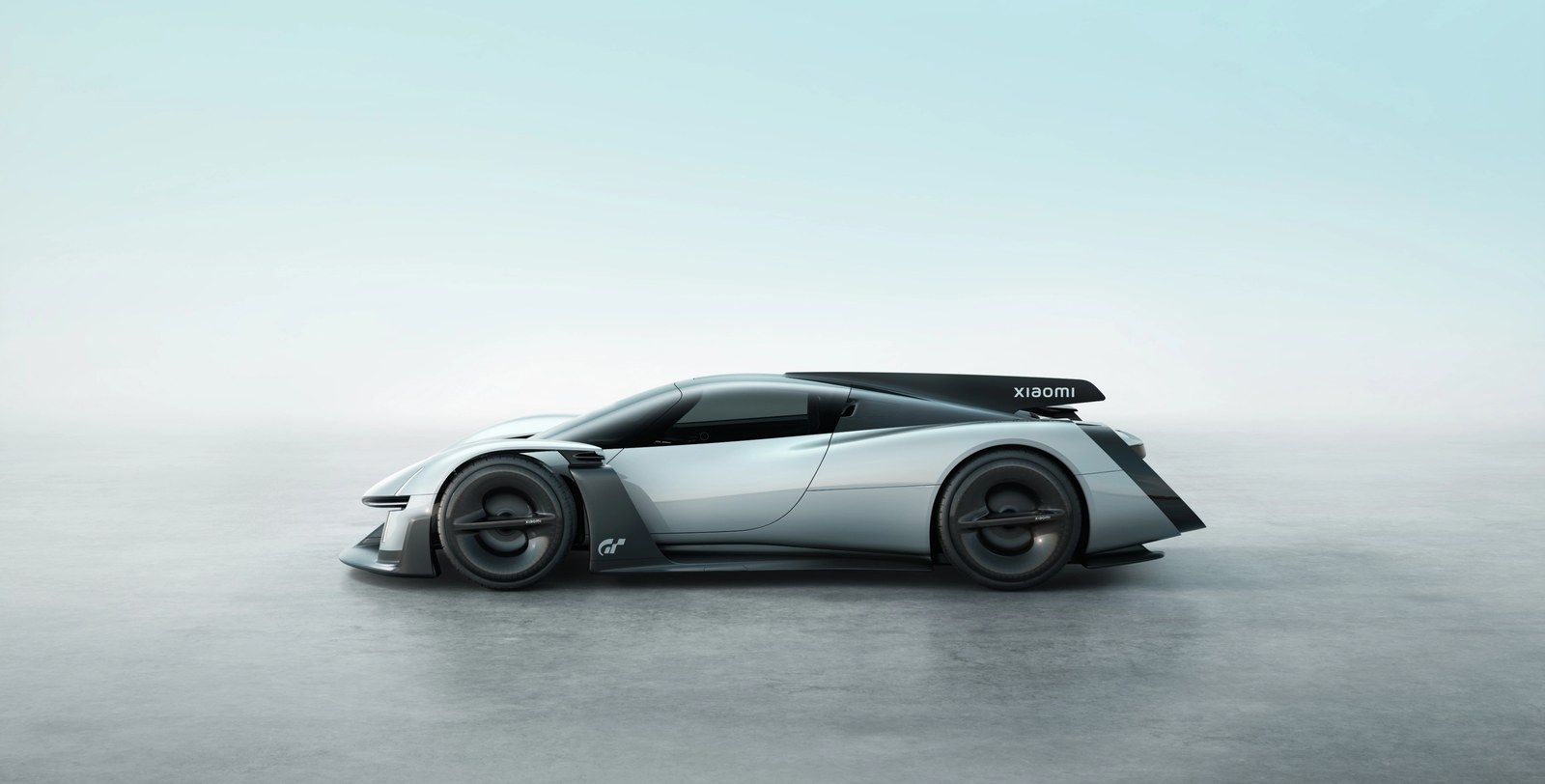 Virtual to physical: Xiaomi’s Vision Gran Turismo aerodynamic concept reflects the tech titan’s aggressive push into high-downforce electric performance.
Photo: Xiaomi Auto / Polyphony Digital
The “Human x Car x Home” Ecosystem Advantage
Beyond track times and gigafactory stamping presses, Xiaomi possesses a defensive moat that traditional car companies cannot duplicate: its ubiquitous consumer electronics ecosystem.
With over 600 million active monthly users across smartphones, smart home appliances, wearables, and tablets, the SU7 represents an organic extension of the user’s personal digital sphere. When a driver approaches the car, their Xiaomi phone seamlessly mirrors active navigation, streaming media, and system settings onto the 16.1-inch central 3K console. Smart home automation—such as adjusting home climate control or checking security cameras—can be triggered via voice commands directly from the steering wheel.
“Automakers talk endlessly about the ‘software-defined vehicle’, but most of them are terrible software companies,” observed tech strategist Li Dongmei. “Their infotainment systems are laggy, their mobile companion apps disconnect, and their software updates arrive months late. Xiaomi already updates operating systems for hundreds of millions of users every month. For them, delivering over-the-air vehicle updates and predictive maintenance algorithms is routine operational muscle.”
Looming Challenges: Global Expansion and Geopolitical Trade Barriers
Despite its triumphant domestic run, Xiaomi’s path to global automotive dominance faces formidable obstacles beyond China’s borders.
With the Beijing plant’s Phase I capacity fully tapped and Phase II construction rushing toward commissioning in early 2027, the company is preparing for commercial retail rollouts across Western Europe, the Middle East, and Southeast Asia.
However, Western trade policy presents steep hurdles. The European Union’s newly imposed countervailing duties on Chinese electric vehicles, combined with prohibitive United States tariffs on automotive software and connected vehicle telemetry, will force Xiaomi to consider offshore assembly partnerships or direct foreign direct investment in European manufacturing facilities.
Yet industry insiders believe Lei Jun’s industrial momentum may already be unstoppable. Having conquered the smartphone arena against Apple and Samsung, Xiaomi’s staggering 50,000 monthly delivery milestone signals that the tectonic plates of the global automotive industry have permanently shifted.
Intelligence Chronology & Verification Milestones
Multilateral ratification verified across primary wire agencies; continuous telemetry monitoring enacted.
Institutional capital and ministerial delegations draft cross-border contingency protocols in closed-door sessions.
Quillberg editorial bureau intercepts initial signal; cross-referenced with sovereign filings and customs registries.
Cite This Dispatch & Link Back
Quoting, analyzing, or covering this story in your publication, academic research, or blog? Use this formatted citation to link back directly to the verified source:
[Quillberg News: Xiaomi Shatters EV Records with 50,000 Monthly Deliveries](https://quillberg.com/xiaomi-ev-deliveries-surpass-50000-su7-ultra-global-rd-expansion)