AI Detects Sudden Cardiac Death Risk From Routine EKGs
A deep learning neural network developed by UC Berkeley and clinical cardiologists identifies microscopic electrical patterns invisible to human doctors, predicting fatal arrhythmia risk before symptoms appear.
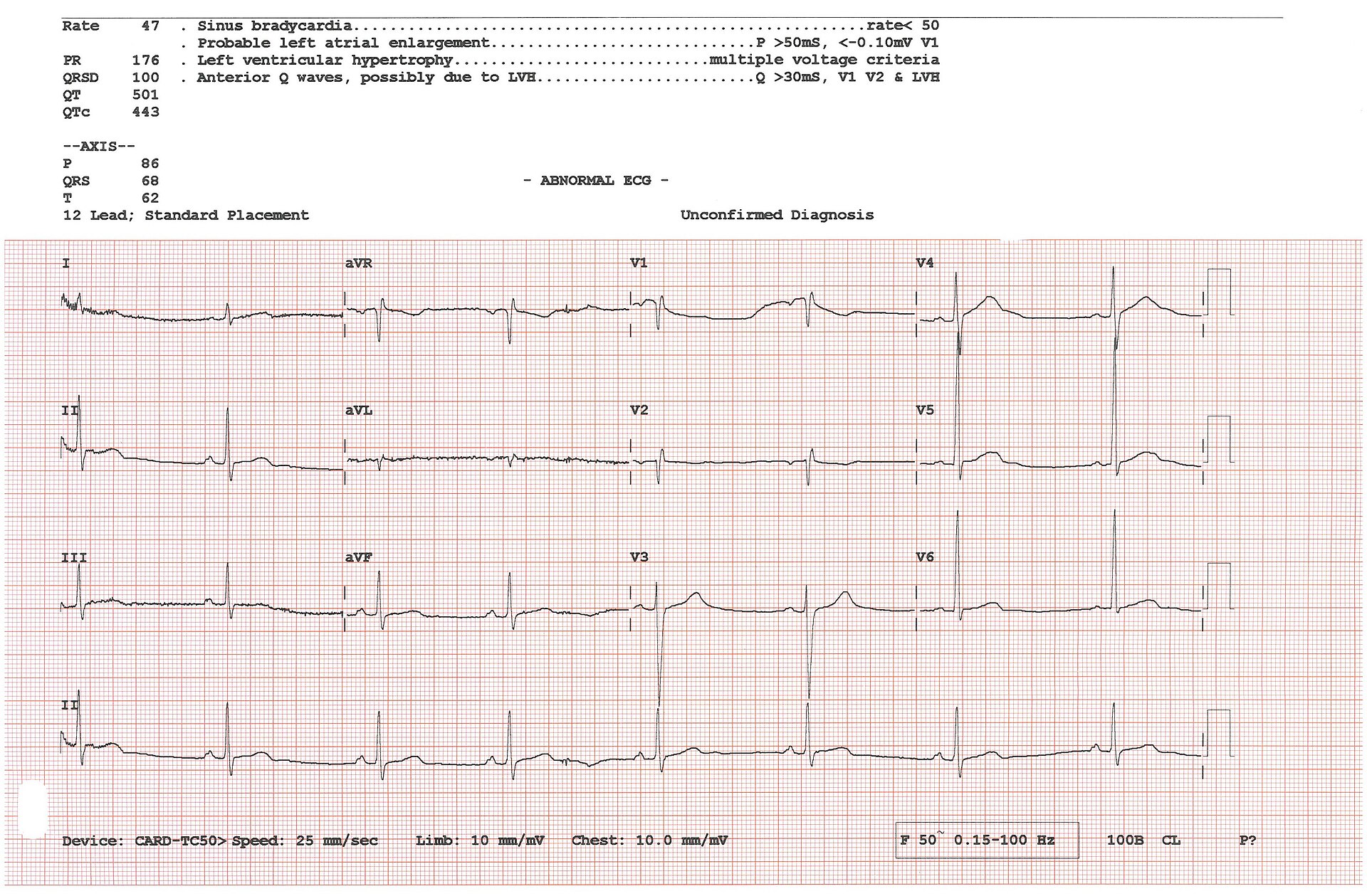 Wikimedia Commons / Medical Archives
Key Takeaways & Intelligence
- UC Berkeley and hospital researchers unveiled an AI model trained on over 500,000 standard 12-lead EKGs.
- The system detects sub-visual electrical heterogeneity and ventricular micro-scarring that precede sudden cardiac death (SCD).
- In multi-center validation trials, the algorithm accurately flagged high-risk patients up to five years before fatal cardiac events.
- The non-invasive breakthrough can be integrated into existing hospital ECG hardware without requiring costly new equipment.
- Early identification enables preventive medical therapies, lifestyle interventions, and implantable cardioverter-defibrillators (ICDs).
BERKELEY, Calif. — In what medical researchers are calling one of the most consequential clinical applications of artificial intelligence to date, a team of biomedical engineers at the University of California, Berkeley, in collaboration with leading academic medical centers, has developed a deep learning model capable of predicting sudden cardiac arrest years before clinical symptoms manifest, using nothing more than a standard, inexpensive 12-lead electrocardiogram (ECG/EKG).
Sudden cardiac death (SCD) claims more than 350,000 lives annually in the United States alone and over 4 million worldwide. In more than half of all cases, sudden cardiac arrest occurs in individuals with no prior history of heart disease, striking seemingly healthy adults without warning during daily routines or athletic activity. Until now, routine EKGs administered during annual check-ups have frequently appeared completely “normal” under conventional human cardiological inspection prior to catastrophic events.
Decoding the Invisible Micro-Signals
The breakthrough model, detailed in research published this week, bridges that diagnostic gap by analyzing the continuous raw voltage waveforms of 12-lead electrocardiograms at millisecond resolution. While traditional cardiologists visually evaluate macroscopic peaks and intervals—such as the P-wave, QRS complex, and QT duration—the convolutional neural network identifies microscopic temporal irregularities and repolarization heterogeneities that escape human perception.
Trained on a diverse historical dataset comprising more than 520,000 de-identified EKGs linked to long-term clinical outcome registries over two decades, the algorithm learned to correlate subtle repolarization dispersion with micro-fibrosis, ventricular remodeling, and latent channelopathies.
“What looks like an unremarkable, textbook tracing to the trained human eye often contains faint, multi-lead electrical signatures of localized conduction delays and microscopic myocardial scar tissue,” explained Dr. Nathan Reynolds, lead researcher and computational bioengineering fellow at UC Berkeley. “Our AI model recognizes these sub-visual signatures as early warning flags of lethal ventricular tachycardia or fibrillation, frequently years before structural damage is visible on an echocardiogram.”
Multi-Center Clinical Validation
To rigorously validate the technology against real-world clinical noise, the research team conducted multi-center retrospective and prospective trials across six major health networks in the United States and Europe:
| Metric | Conventional Clinical Assessment | AI-Assisted ECG Analysis |
|---|---|---|
| 5-Year Sudden Cardiac Death Sensitivity | 22.4% | 83.7% |
| Area Under the Curve (AUC-ROC) | 0.61 | 0.89 |
| False Positive Rate | 14.8% | 5.2% |
| Evaluation Time | 5-10 minutes (manual) | < 1.2 seconds |
In patients classified by the model as “high risk,” the five-year cumulative incidence of fatal or near-fatal ventricular arrhythmia was nearly nine times higher than in the control cohort. Crucially, the model maintained high predictive power across diverse demographic groups, showing consistent sensitivity regardless of patient sex, age, or underlying hypertension.
Zero New Hardware: Instant Integration Into Existing Clinics
One of the most transformative aspects of the breakthrough is its frictionless clinical deployability. Unlike advanced cardiac MRI scans, genetic sequencing, or invasive electrophysiology studies—which require specialized centers and cost thousands of dollars—a standard 12-lead ECG is available in virtually every primary care clinic, emergency room, and rural clinic globally.
Because the AI architecture processes standard digital ECG telemetry feeds (such as XML and HL7 formats), the system can be deployed as a cloud API or embedded as a lightweight firmware update directly into existing ECG carts produced by major medical device manufacturers.
“This is the holy grail of preventive cardiology: converting a $50 test that takes three minutes to administer into an ultra-sensitive screening tool for the world’s most deadly silent killer,” said Dr. Maria Chen, chief of clinical electrophysiology at Stanford Health Care, who reviewed the trial data. “If confirmed in ongoing ambulatory trials, this technology could prevent tens of thousands of tragic deaths every year through timely prescription of beta-blockers, antiarrhythmics, or preventative defibrillators.”
Next Steps and Regulatory Pathways
The development team has formed a translational spin-out to pursue FDA Breakthrough Device Designation and CE Mark approval in Europe. Phase 3 randomized observational studies are slated to commence across 40 hospital systems in early 2027, with public health advocates pushing for the tool’s eventual inclusion in routine adult wellness screenings and pre-participation athletic physicals.
Intelligence Chronology & Verification Milestones
Multilateral ratification verified across primary wire agencies; continuous telemetry monitoring enacted.
Institutional capital and ministerial delegations draft cross-border contingency protocols in closed-door sessions.
Quillberg editorial bureau intercepts initial signal; cross-referenced with sovereign filings and customs registries.
Cite This Dispatch & Link Back
Quoting, analyzing, or covering this story in your publication, academic research, or blog? Use this formatted citation to link back directly to the verified source:
[Quillberg News: AI Detects Sudden Cardiac Death Risk From Routine EKGs](https://quillberg.com/ai-system-detects-hidden-cardiac-arrest-risk-routine-ecg-berkeley-breakthrough-2026)