Allies on High Alert as Intelligence Warns of Russian Orbital Nuclear Weapon 'Sputnik-S'
Western intelligence agencies and NATO allies issued classified alerts warning that Russia has assembled an orbital nuclear-capable satellite designated 'Sputnik-S' that could be launched into low-Earth orbit within months. The potential deployment violates the 1967 Outer Space Treaty and threatens to generate electromagnetic radiation capable of disabling global communication grids.
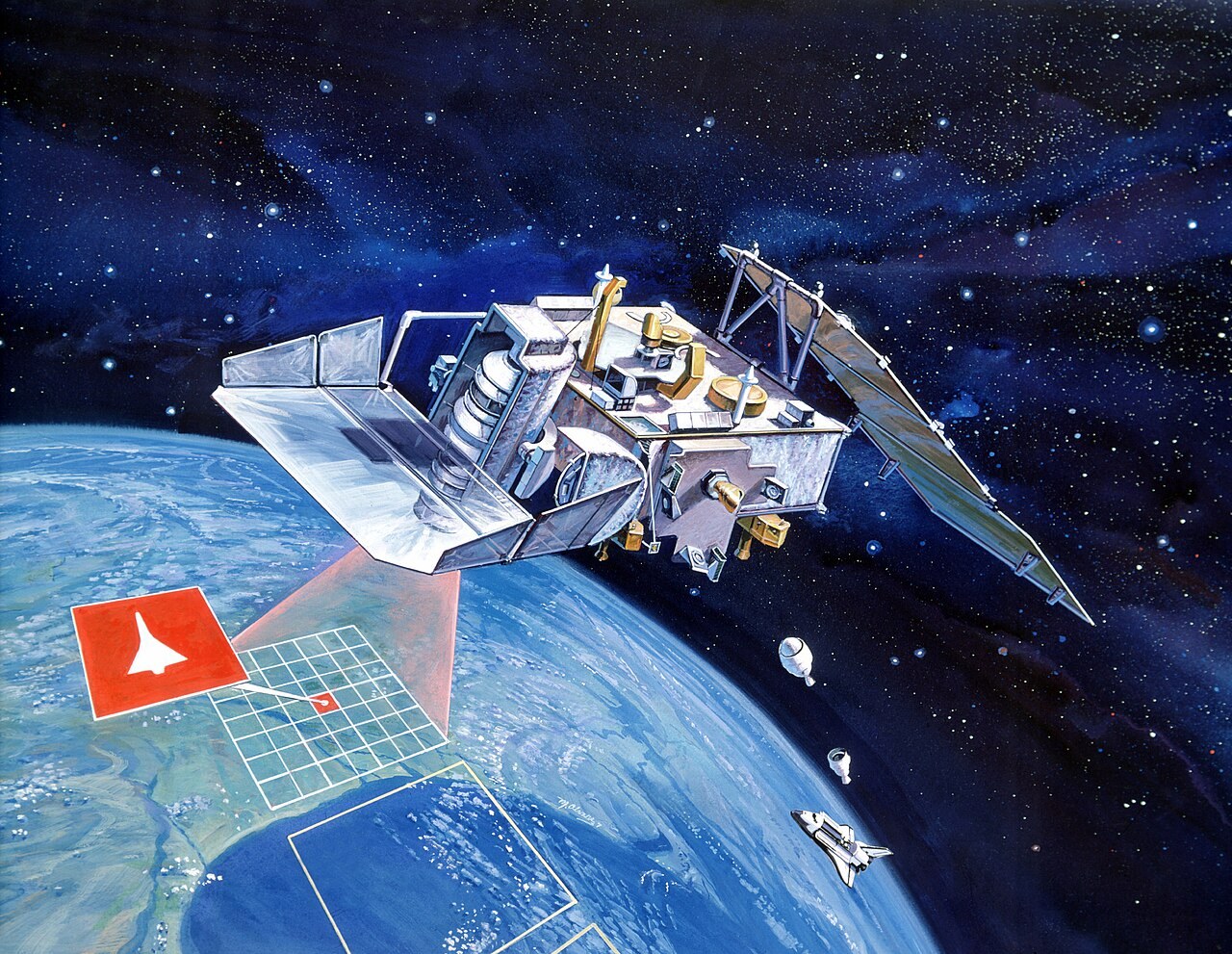 DARPA / Defense Advanced Research Projects Agency / Public Domain
Key Takeaways & Intelligence
- Declassified European intelligence dossiers revealed Russia has assembled an orbital anti-satellite platform designated 'Sputnik-S.'
- Assessments warn the weapon could be launched into low-Earth orbit within a 60-day window, threatening global satellite constellations.
- A detonation in orbit would release catastrophic radiation and electromagnetic pulses, disabling civil, commercial, and military GPS and communications.
- NATO Secretary General Mark Rutte affirmed the alliance will defend 'every inch of Allied territory,' explicitly including space capabilities.
BERLIN & BRUSSELS — Western intelligence agencies and NATO defense commands have raised their threat posture to an unprecedented level following classified intelligence assessments indicating that the Russian Federation has completed assembly of an orbital satellite designated “Sputnik-S” engineered to carry a nuclear payload into low-Earth orbit.
The alarming intelligence dossiers, originally compiled by Germany’s Federal Intelligence Service (BND) alongside Allied military reconnaissance units and reported by major European investigative bureaus, warn that the satellite has been housed at a secure military-industrial installation in the Moscow region and could be launched into orbit within a 60-day operational window.
Unlike terrestrial nuclear warheads designed to strike ground coordinates, military analysts assess that Sputnik-S is configured as an asymmetric space denial weapon. A high-altitude or low-Earth orbit nuclear detonation would produce immense electromagnetic pulse (EMP) fields and high-energy radiation belts that would indiscriminately blind, fry, or permanently disable thousands of commercial and military satellites—crippling global GPS navigation, financial transaction channels, weather forecasting, and military early-warning radar arrays within hours.
Such a deployment would constitute a direct, catastrophic breach of the foundational 1967 Outer Space Treaty and the 1963 Partial Nuclear Test Ban Treaty, which explicitly prohibit placing weapons of mass destruction in Earth’s orbit or stationing them in celestial space.
Speaking at a high-level defense press conference in Berlin, NATO Secretary General Mark Rutte emphasized that the alliance is evaluating deterrence responses to safeguard vital orbital infrastructure.
“NATO will defend every inch of Allied territory, and today that domain irrevocably extends into space,” Rutte declared. “The space domain is indispensable to modern civil society, democratic defense, and economic continuity. Any attempt to weaponize the orbital commons threatens all of humanity and would be met with an unyielding, unified Allied response.”
In Moscow, Kremlin Spokesman Dmitry Peskov dismissed the European reports as baseless Western propaganda fabricated to justify increased defense budgets and militarization of space by NATO powers, insisting that Russia’s space program complies strictly with international civilian conventions.
Nevertheless, defense ministries across Washington, London, Paris, and Tokyo have convened emergency space doctrine consultations, exploring kinetic anti-satellite defense umbrellas and hardened satellite architectures to protect critical orbital assets.