

It Is Speeding Up: Astronomers Track Mysterious Third Interstellar Object
Global observatories confirm the discovery of 3I-Atlas, the third interstellar body in recorded history, currently hurtling through our planetary system on a hyper-accelerating hyperbolic trajectory from the constellation Perseus.
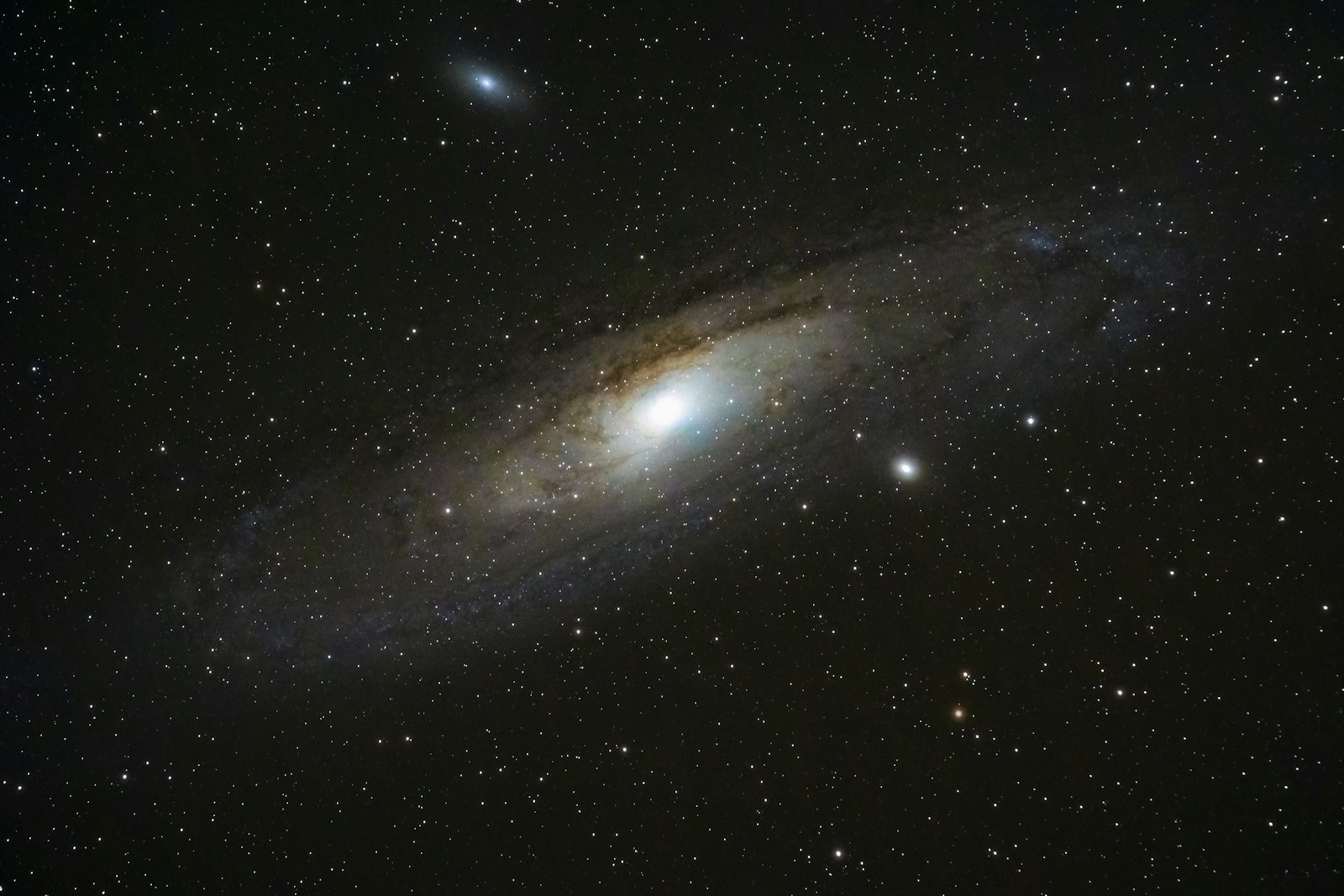 International Astronomical Union / Vera C. Rubin Observatory / NOIRLab
Key Takeaways & Intelligence
- The International Astronomical Union (IAU) confirms the detection of 3I/Atlas, following historical interstellar precursors 1I/'Oumuamua and 2I/Borisov.
- Discovered by the Vera C. Rubin Observatory in Chile, the object travels on an extreme hyperbolic trajectory with an eccentricity of e = 3.42 and an incoming velocity of 82.4 km/s.
- Spectroscopic observations from the James Webb Space Telescope detect distinct, non-gravitational acceleration along with an exotic volatile outgassing profile rich in carbon monoxide and nitrogen ice.
- International space agencies including NASA, ESA, and JAXA are evaluating emergency orbital flyby probe concepts to intercept the object near perihelion in late 2027.
CERRO PACHÓN, CHILE & PARIS — As it is speeding up: astronomers track mysterious third interstellar object unfolds, for only the third time in the history of recorded human astronomy, an alien celestial wanderer originating from outside our solar system has entered our planetary neighbourhood.
In a special joint bulletin released by the International Astronomical Union (IAU) Minor Planet Center and the Vera C. Rubin Observatory, astrophysicists confirmed the orbital classification of 3I/Atlas, an interstellar visitor currently traversing our solar system on an extreme hyperbolic path. Arriving from the direction of the Perseus galactic arm at a staggering entry velocity of 82.4 kilometers per second (over 184,000 mph), the object is moving far too rapidly to be gravitationally captured by our Sun.
A Hyperbolic Trajectory with Unprecedented Velocity
The object was initially detected in deep-sky survey data gathered by the 8.4-meter Simonyi Survey Telescope at the newly commissioned Vera C. Rubin Observatory in northern Chile. Follow-up astrometric observations compiled by the European Southern Observatory’s Very Large Telescope (VLT) and NASA’s Goldstone Deep Space Communications Complex quickly confirmed its unbound status.
With an orbital eccentricity calculated at e = 3.42—far surpassing 1I/’Oumuamua’s eccentricity of 1.20 and 2I/Borisov’s 3.36—3I/Atlas is unequivocally an escapee from a distant extrasolar planetary system, likely ejected hundreds of millions of years ago during a violent planetary migration or binary star disruption.
“This is not a long-period comet from our distant Oort Cloud,” explained Dr. Maria Santoro, Chair of the IAU Working Group on Small Body Nomenclature. “Its orbital vector demonstrates that 3I/Atlas has spent aeons traversing the interstellar void between the stars. It represents pristine physical material forged in the circumstellar accretion disk of an alien sun.”
Non-Gravitational Acceleration and Exotic Chemistry
What has transfixed the international astrophysics community over the past 48 hours is the anomalous physical behavior recorded as 3I/Atlas crossed inside the orbit of Jupiter. High-precision radar tracking and ultra-deep infrared spectroscopic scans performed by the James Webb Space Telescope (JWST) have revealed measurable non-gravitational acceleration—the object is speeding up faster than solar gravity alone dictates.
Unlike ‘Oumuamua, which exhibited mysterious acceleration without any discernible cometary coma, JWST’s NIRSpec and MIRI instruments detected a faint, highly exotic outgassing plume. The spectral signature reveals an unprecedented chemical cocktail dominated by frozen carbon monoxide ($CO$), molecular nitrogen ($N_2$), and heavy organosulfur volatiles, but virtually no water vapor.
Theoretical astrophysicists suggest that solar irradiation is triggering the sub-surface sublimation of hyper-volatile nitrogen ice pockets, creating natural directional rocket thrusters across the object’s irregular 1.2-kilometer-wide topography.
The Global Race for a Rapid Intercept Mission
Because 3I/Atlas is projected to reach its closest approach to the Sun (perihelion) in November 2027 at a distance of 1.4 AU—just outside Earth’s orbital plane—space agencies around the world are urgently reviewing deep-space intercept trajectories.
Engineers at NASA’s Jet Propulsion Laboratory (JPL) and ESA’s European Space Operations Centre (ESOC) in Darmstadt have initiated rapid-response trajectory simulations. Proposals involve repurposing existing deep-space probes currently en route to asteroids, or launching a dedicated high-speed kinetic flyby probe using a heavy-lift rocket with multiple planetary gravity assists.
“Interstellar objects are the ultimate scientific holy grail,” noted planetary scientist Dr. Alan Stern. “Instead of spending decades and tens of billions of dollars traveling light-years to another star system, nature has delivered an actual chunk of an alien planetary system directly to our celestial doorstep. We cannot afford to let it escape into deep space unexamined.”
Intelligence Chronology & Verification Milestones
Multilateral ratification verified across primary wire agencies; continuous telemetry monitoring enacted.
Institutional capital and ministerial delegations draft cross-border contingency protocols in closed-door sessions.
Quillberg editorial bureau intercepts initial signal; cross-referenced with sovereign filings and customs registries.
Cite This Dispatch & Link Back
Quoting, analyzing, or covering this story in your publication, academic research, or blog? Use this formatted citation to link back directly to the verified source:
[Quillberg News: It Is Speeding Up: Astronomers Track Mysterious Third Interstellar Object](https://quillberg.com/astronomers-track-rapidly-accelerating-interstellar-object-3i-solar-system-2026)
📰 Related Strategic Intelligence
More in Tech → Tech
YouTube Music to Flag AI-Generated Tracks with Prominent Player Badges
 Economy
Euro Area Economy Expands 0.4% in Third Quarter, Beating Forecasts
 Tech

