

Cyril Hilsum, Pioneer Behind the Liquid Crystal Display Revolution, Dies
The British physicist whose breakthrough research in the 1970s freed electronics from bulky glass tubes to create flat-screen LCDs has died at 101, leaving a legacy that transformed modern computing.
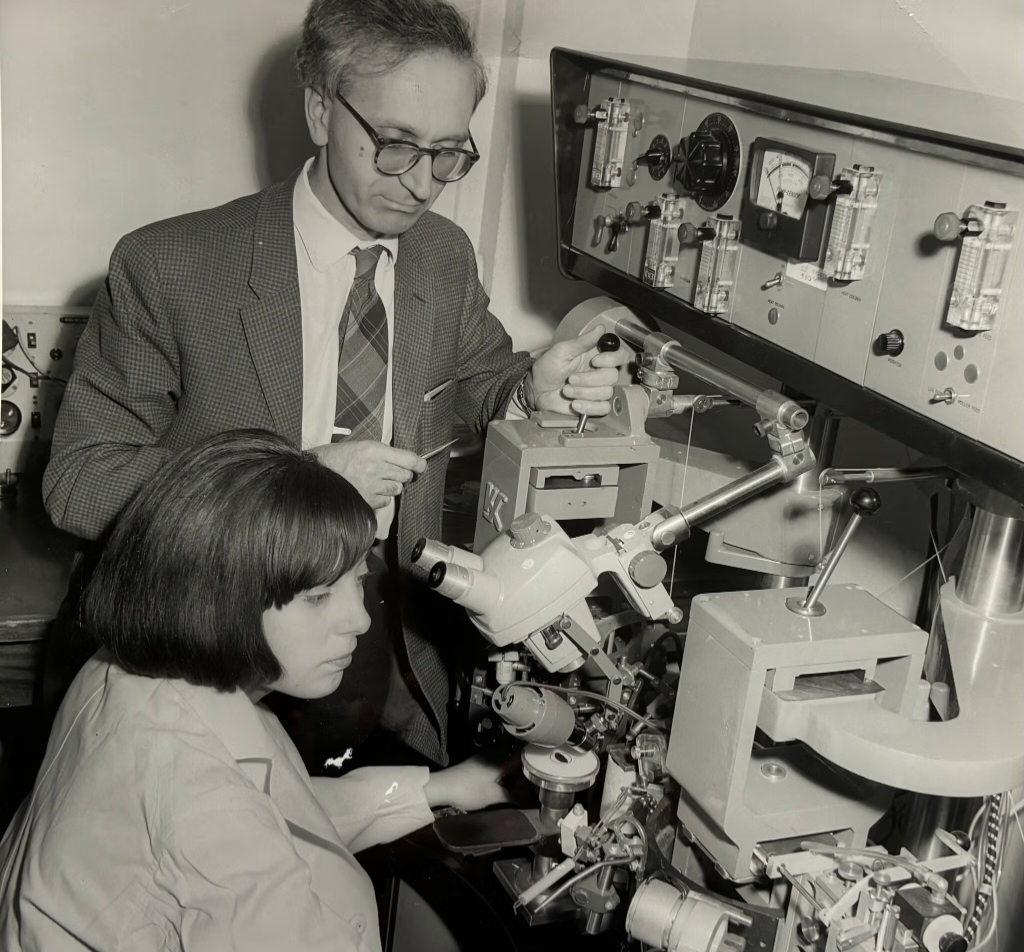 Hilsum Family
Key Takeaways & Intelligence
- Professor Cyril Hilsum CBE FRS FREng, pioneer of liquid crystal displays (LCDs) and compound semiconductors, has passed away at the age of 101.
- In the early 1970s at the UK Royal Radar Establishment, Hilsum spearheaded the multidisciplinary team that discovered stable room-temperature liquid crystals (5CB).
- His innovations liberated electronics from bulky, fragile cathode-ray tubes (CRTs), enabling the creation of digital watches, calculators, laptops, and modern flat-panel screens.
- Hilsum built the UK's first semiconductor laser in 1962, co-developed the RWH theory behind the Gunn diode, and secured his 70th patent at the age of 97.
LONDON / MALVERN — Professor Cyril Hilsum CBE, FREng, FRS, the visionary British physicist widely celebrated as one of the founding architects of modern flat-panel displays, has passed away at the age of 101. His pioneering leadership of the United Kingdom’s liquid crystal research program in the late 1960s and 1970s liberated visual electronics from bulky vacuum tubes, creating the fundamental display architecture that illuminates billions of laptops, watches, medical monitors, and television screens worldwide.
Throughout an extraordinary eight-decade career that bridged defense laboratories and civilian commercial engineering, Hilsum combined rigorous theoretical insight with an acute sense of industrial practicality.
The Quest to Svelte the Screen
In the late 1960s, while directing applied physics at the Royal Radar Establishment (RRE) in Malvern, Worcestershire, Hilsum was tasked by the British Ministry of Defence with solving an urgent military problem. Airborne radar consoles and field gear relied on cathode-ray tubes (CRTs)—heavy, delicate glass vacuum envelopes requiring thousands of volts that were prone to catastrophic failure when subjected to high-g maneuvers or rugged battlefield vibrations.
Convinced that the future of computing lay in solid-state and molecular physics, Hilsum turned his attention to liquid crystals—organic fluids whose optical alignment could be manipulated with modest electric charges. Recognizing that past display attempts had foundered because existing chemical mixtures deteriorated or only functioned at high temperatures, Hilsum mobilized a historic three-way partnership uniting government physicists, synthetic chemists led by Professor George Gray at the University of Hull, and commercial chemical manufacturers.
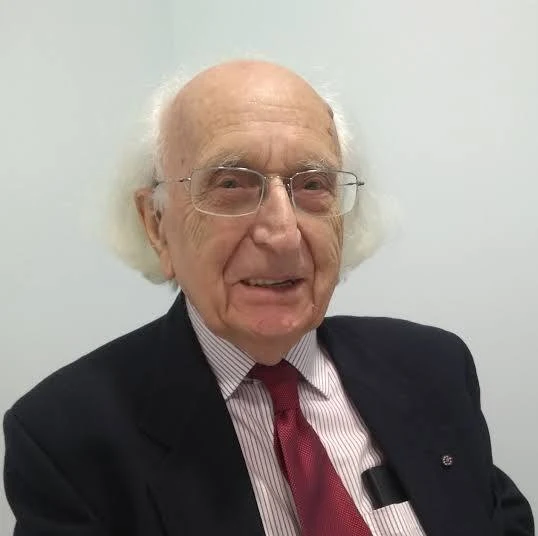
The Chemical Breakthrough That Conquered the Globe
In 1972, Gray’s laboratory delivered the historic breakthrough: 4-cyano-4’-pentylbiphenyl (5CB), the world’s first chemically stable, room-temperature nematic liquid crystal. Hilsum rapidly protected the intellectual property and orchestrated its commercial scaling.
The resulting British patents generated more than £100 million in licensing royalties for the UK government, but their true global dividend was immense. Cyanobiphenyl liquid crystals became the bedrock of the consumer electronics boom of the late 20th century, enabling Casio digital wristwatches, Sharp handheld calculators, and ultimately the featherweight laptop screens that made modern mobile work possible.
Lasers, Microwave Diodes, and a Patent at 97
Hilsum’s brilliance transcended displays. In 1962, he constructed the United Kingdom’s very first operational semiconductor laser. Alongside Brian Ridley and Trevor Watkins, he formulated the Ridley-Watkins-Hilsum (RWH) mechanism, providing the fundamental physics behind the transferred-electron effect that powers the Gunn diode—an essential miniature component in high-frequency radar sensors, speed guns, and microwave communications.
Even in supposed retirement, Hilsum never stopped inventing. Holding more than 70 patents, he transformed a scullery in his London home into an experimental laboratory. At age 97, he was awarded his final patent for an advanced sensor-embedded conductive ink designed for smart packaging.
Hilsum served as President of the Institute of Physics from 1988 to 1990 and received the Royal Society’s Royal Medal in 2007. Following the tragic death of his engineer daughter, Karen Burt, in 1997, he established the Karen Burt Memorial Award to champion newly chartered women in engineering.
Today, every slim electronic screen that illuminates an office desk, cockpit, or living room wall stands as a quiet monument to Cyril Hilsum’s relentless determination to make technology lighter, clearer, and accessible to all.
Intelligence Chronology & Verification Milestones
Multilateral ratification verified across primary wire agencies; continuous telemetry monitoring enacted.
Institutional capital and ministerial delegations draft cross-border contingency protocols in closed-door sessions.
Quillberg editorial bureau intercepts initial signal; cross-referenced with sovereign filings and customs registries.
Cite This Dispatch & Link Back
Quoting, analyzing, or covering this story in your publication, academic research, or blog? Use this formatted citation to link back directly to the verified source:
[Quillberg News: Cyril Hilsum, Pioneer Behind the Liquid Crystal Display Revolution, Dies](https://quillberg.com/cyril-hilsum-lcd-display-inventor-pioneer-dies-aged-101)
📰 Related Strategic Intelligence
More in Tech → Tech
Pharmaceutical Giants Leverage Orbital Microgravity to Synthesize Cancer Biologics
 Tech
Autonomous AI Research Agents Synthesize Five Novel Room-Temperature Superconducting Candidates
 Tech

