

What 11 Million Days of Fitbit Data Can Tell Researchers
A landmark Nature Communications study analyzing 11 million person-days of Fitbit tracking reveals why short 7-day activity snapshots underestimate the true protective power of daily movement.
 Representative / Digital Health & Biometric Wearables
Key Takeaways & Intelligence
- A breakthrough study published in Nature Communications analyzed over 11 million person-days of continuous wearable data from the NIH All of Us Research Program.
- Researchers found that standard 7-day activity snapshots substantially underestimate disease risk correlations due to seasonal variation, acute illness, and temporary behavioral spikes.
- Extending monitoring windows to six months, one year, or longer revealed significantly stronger statistical associations with lower rates of type 2 diabetes, hypertension, and depression.
- Epidemiologists stress that observational correlations demonstrate strong health associations but do not definitively prove that physical activity alone prevents chronic disease.
- The findings establish consumer-grade biometric wearables as rigorous tools for population-scale precision medicine and longitudinal epidemiological discovery.
BOSTON & LONDON — As what 11 million days of fitbit data can tell researchers unfolds, for decades, clinical understanding of human movement relied on crude approximations: self-reported paper questionnaires prone to recall bias or brief seven-day accelerometer trials that captured only a fleeting glimpse of an individual’s lifestyle.
Now, a pioneering study published in Nature Communications has upended those traditional methodologies by analyzing more than 11 million person-days of continuous longitudinal wearable data, demonstrating that short measurement windows systematically underestimate the true relationship between physical activity and long-term chronic disease risk.
Drawing upon the massive dataset compiled by the National Institutes of Health (NIH) All of Us Research Program, the investigation tracked thousands of participants who wore commercial Fitbit devices across multiple continuous years, linking high-resolution sensor metrics—including daily step counts, resting heart rate, and active zone minutes—directly to verified electronic health records (EHR).
The findings establish that human physical behavior is far too volatile for brief tests to capture accurately, providing compelling empirical evidence that sustained, multi-year movement patterns are profoundly more predictive of cardiometabolic and mental health outcomes than previously recognized.
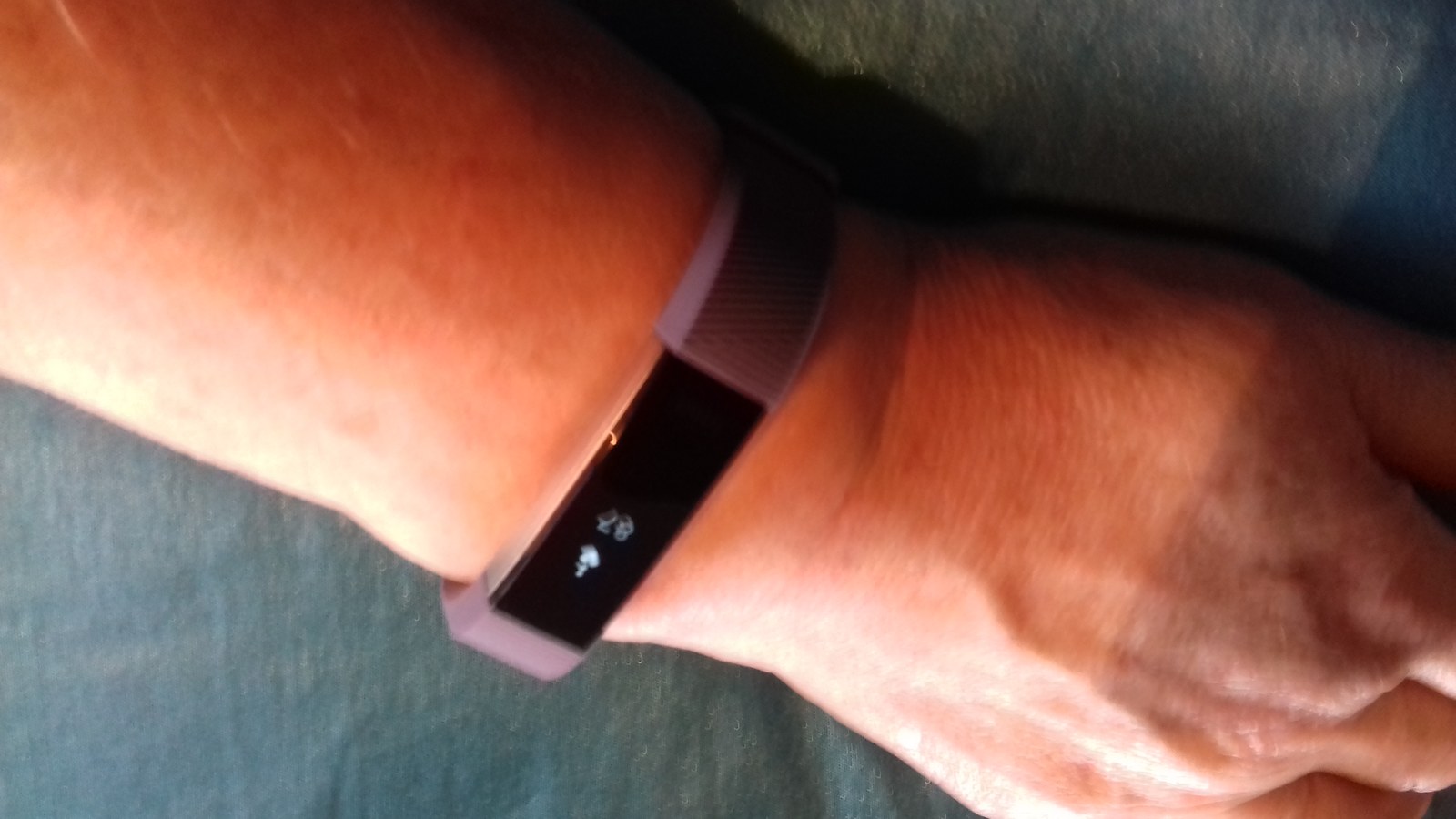 Photo: PamD / Wikimedia Commons (CC BY-SA 4.0)
The Measurement Trap: Why 7 Days Are Not Enough
Historically, standard epidemiology protocols—such as those used in large national health surveys—instructed study participants to wear a research-grade motion tracker on their waist or wrist for a single seven-day period. That single week was assumed to represent an individual’s baseline physical habit for the next decade.
The Nature Communications analysis demonstrates why this assumption is flawed:
- Behavioral Noise and Reactivity: Participants frequently alter their behavior during their first week of wearing an unfamiliar device, temporarily walking more or exercising harder because they are conscious of being monitored.
- Seasonal and Environmental Swings: An activity snapshot recorded during a stormy winter week or an intense summer heatwave bears little resemblance to an individual’s annual movement rhythm.
- Acute Life Disruptions: Sprains, seasonal influenza, vacation travel, or demanding professional deadlines introduce temporary statistical aberrations that skew short-window calculations.
When researchers analyzed data across expanding temporal windows—progressing from 7 days to 30 days, 90 days, 180 days, and full multi-year averages—the statistical noise smoothed out, revealing substantially stronger hazard ratios across key diagnostic categories.
| Health Outcome Analyzed | Short Window (7–30 Days) Association | Long Window (180+ Days) Association | Clinical Interpretation |
|---|---|---|---|
| Type 2 Diabetes | Moderate inverse correlation | Markedly stronger inverse correlation | Chronic glucose regulation mirrors year-round habits |
| Essential Hypertension | Weak-to-moderate correlation | Significantly enhanced inverse association | Long-term vascular tone requires consistent shear stress |
| Major Depressive Disorder | Mild inverse correlation | Robust protective association | Sustained endorphin and neurotrophic benefits compound |
| Sleep Apnea | Inconsistent signal | Strong negative correlation with activity | Weight maintenance and muscle tone reduce airway collapse |
| Gastroesophageal Reflux (GERD) | Borderline significance | Consistent negative association | Upright active posture and metabolic tone mitigate acid events |
Source: Nature Communications analysis of 11 million person-days from the NIH All of Us Research Program dataset.
Association vs. Causation: The Vital Epidemiological Caveat
While the study’s conclusions provide powerful validation for the preventative benefits of habitual movement, public health epidemiologists urge caution against misinterpreting these statistical correlations as definitive proof of causation.
The researchers explicitly highlight several methodological considerations:
- Observational Nature: The All of Us Fitbit dataset is observational. While higher daily steps strongly correlate with lower incidence of metabolic disorders, the study was not a randomized controlled trial (RCT) where participants were assigned mandatory exercise regimens.
- Reverse Causality: In longitudinal research, early subclinical illness can lead individuals to reduce their daily activity long before a formal disease diagnosis appears in hospital records. Thus, some individuals may have walked less because they were already unwell, rather than becoming unwell purely because they walked less.
- The “Healthy Wearable” Bias: Individuals who choose to purchase and consistently wear a smartwatch or fitness tracker for multiple years tend to have higher health literacy, greater socioeconomic resources, and better access to quality nutrition and healthcare than the general public.
Nonetheless, the magnitude of risk reduction observed when evaluating sustained multi-year activity suggests that true physiological adaptations—such as improved insulin sensitivity, lower chronic systemic inflammation, and optimized autonomic heart rate variability—are deeply tied to consistent daily habits rather than sporadic bursts of exercise.
Implications for Clinical Care and Precision Medicine
The study marks a critical watershed in the transition from episodic medicine—where a patient’s health is evaluated once a year during an annual checkup—to continuous, passive digital monitoring:
- Validating Consumer Sensors: The research proves that consumer-grade commercial wearables, despite minor inaccuracies in second-by-second step counting compared to expensive laboratory equipment, possess immense clinical validity when aggregated over longitudinal timeframes.
- Personalized Risk Stratification: In the future, electronic health record algorithms could automatically identify patients whose average daily activity has gradually trended downward over six consecutive months, alerting primary care physicians to intervene before clinical symptoms manifest.
- Refining Public Health Guidelines: Global guidelines that currently recommend 150 minutes of weekly exercise may increasingly emphasize habit consistency and total annual activity volume over rigid weekly quotas.
By transforming eleven million days of passive wrist-worn sensor streams into robust medical knowledge, the study demonstrates that our everyday routines—measured not in days, but in seasons and years—compose the true biological ledger of our health.
Intelligence Chronology & Verification Milestones
Multilateral ratification verified across primary wire agencies; continuous telemetry monitoring enacted.
Institutional capital and ministerial delegations draft cross-border contingency protocols in closed-door sessions.
Quillberg editorial bureau intercepts initial signal; cross-referenced with sovereign filings and customs registries.
Cite This Dispatch & Link Back
Quoting, analyzing, or covering this story in your publication, academic research, or blog? Use this formatted citation to link back directly to the verified source:
[Quillberg News: What 11 Million Days of Fitbit Data Can Tell Researchers](https://quillberg.com/fitbit-long-term-activity-data-health-study-2026)
📰 Related Strategic Intelligence
More in Deep Dives → Tech
Tech Hyperscalers Fund Nuclear Small Modular Reactors for Datacenters
 Deep Dives
The Million-Engineer Deficit: Inside the Global War for Semiconductor Minds
 Tech

