Iran Claims Operational Control Over Critical Strait of Hormuz
Iran’s Revolutionary Guard asserts full operational control over the Strait of Hormuz, demanding prior clearance for Western vessels as U.S. naval forces reject the ultimatum.
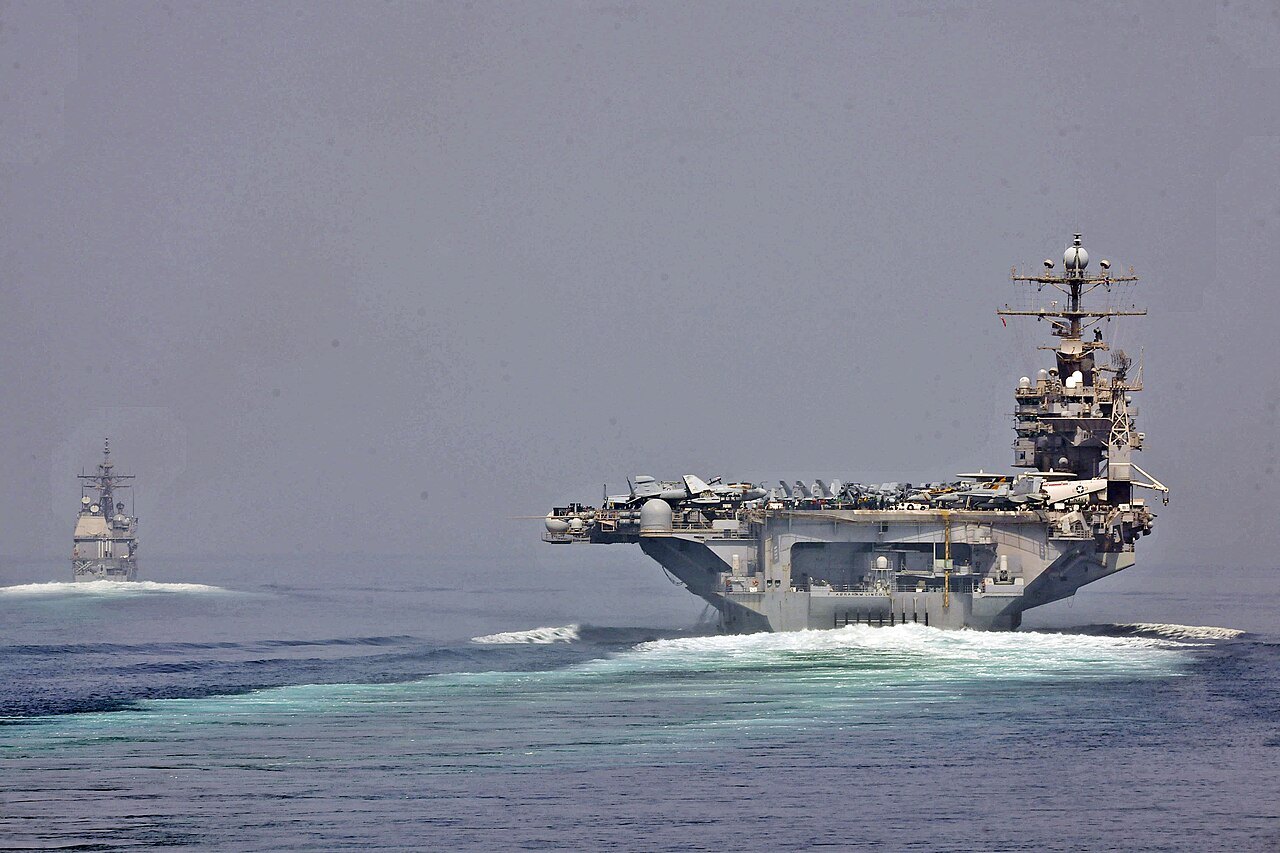 Quillberg News Wire / U.S. Navy / Wikimedia Commons
Key Takeaways & Intelligence
- Iran's Revolutionary Guard Navy announced unilateral operational control over all commercial navigation in the Strait of Hormuz.
- Tehran warned that vessels affiliated with the U.S. and its allies must obtain prior transit coordination to avoid defensive interdiction.
- U.S. Central Command rejected the declaration as unlawful, affirming that international waterways will remain protected by coalition escorts.
- War-risk maritime insurance premiums climbed by 45 basis points as commercial tanker operators reassessed passage schedules.
- The strategic waterway carries approximately 20.8 million barrels of petroleum and refined fuel daily.
TEHRAN & DUBAI — Iran has declared full operational control over the Strait of Hormuz, demanding that commercial and military vessels consult Iranian naval authorities before navigating the chokepoint carrying twenty percent of global petroleum commerce.
The announcement was delivered by senior leadership of the Islamic Revolutionary Guard Corps Navy (IRGCN) across state broadcasting networks, asserting that recent security developments have necessitated strict traffic management protocols along the 33-kilometer-wide maritime passage connecting the Persian Gulf to the Gulf of Oman.
The Scope of Tehran’s Maritime Ultimatum
Under the newly declared Iranian directive, all merchant vessels, crude oil supertankers, and container carriers must register passage telemetry with the Bandar Abbas Naval Traffic Control Center at least forty-eight hours prior to entering territorial waters. Iranian naval commanders claimed that uncoordinated vessels risk entering defensive mine reconnaissance corridors and intercept zones.
Furthermore, IRGC Commander-in-Chief Major General Ahmad Vahidi asserted that Iranian defensive surveillance envelopes now extend 500 kilometers beyond the immediate strait into the northern Arabian Sea, signaling an unprecedented intent to project anti-access/area-denial (A2/AD) capabilities across open international shipping lanes.
| Strategic Parameter | Dimension / Metric | Global Impact |
|---|---|---|
| Waterway Minimum Width | 33 Kilometers (21 Miles) | Extreme Navigational Chokepoint |
| Daily Petroleum Transit | 20.8 Million Barrels | ~20% of Worldwide Petroleum Supply |
| War-Risk Insurance Rate | 0.85% of Hull Valuation | +$420,000 per VLCC Transit |
| Naval Presence | IRGCN Fast-Attack Fleets vs. U.S. Task Force 55 | High Risk of Tactical Miscalculation |
Washington Rebuffs Claims, Maintains Escort Grid
The United States military pushed back unequivocally against Tehran’s assertions. In a statement issued from naval headquarters in Manama, Bahrain, U.S. Central Command (CENTCOM) affirmed that the Strait of Hormuz constitutes an international transit passage governed strictly by the United Nations Convention on the Law of the Sea (UNCLOS).
“The Strait of Hormuz is an international waterway open to all seafaring nations under international law,” said a CENTCOM maritime spokesperson. “Coalition naval forces under Combined Maritime Forces (CMF) will continue robust air and surface patrols to safeguard freedom of navigation and escort commercial energy shipments against unlawful coercion.”
Despite the American security guarantee, commercial shipping conglomerates including Frontline and Euronav reported placing several very large crude carrier (VLCC) transits on temporary hold while maritime risk advisory bodies analyze the credibility of Iranian shore-based missile and drone positioning.
Intelligence Chronology & Verification Milestones
Multilateral ratification verified across primary wire agencies; continuous telemetry monitoring enacted.
Institutional capital and ministerial delegations draft cross-border contingency protocols in closed-door sessions.
Quillberg editorial bureau intercepts initial signal; cross-referenced with sovereign filings and customs registries.
Cite This Dispatch & Link Back
Quoting, analyzing, or covering this story in your publication, academic research, or blog? Use this formatted citation to link back directly to the verified source:
[Quillberg News: Iran Claims Operational Control Over Critical Strait of Hormuz](https://quillberg.com/iran-claims-operational-control-strait-of-hormuz-naval-standoff-2026)