North Korea Tests Strategic Cruise Missile with Submunition Dispersal Warhead
State-run Korean Central News Agency confirmed the DPRK Missile Administration successfully conducted flight tests of an advanced strategic cruise missile equipped with a high-density dispersal warhead capable of devastating five to six hectares in terminal vertical strikes.
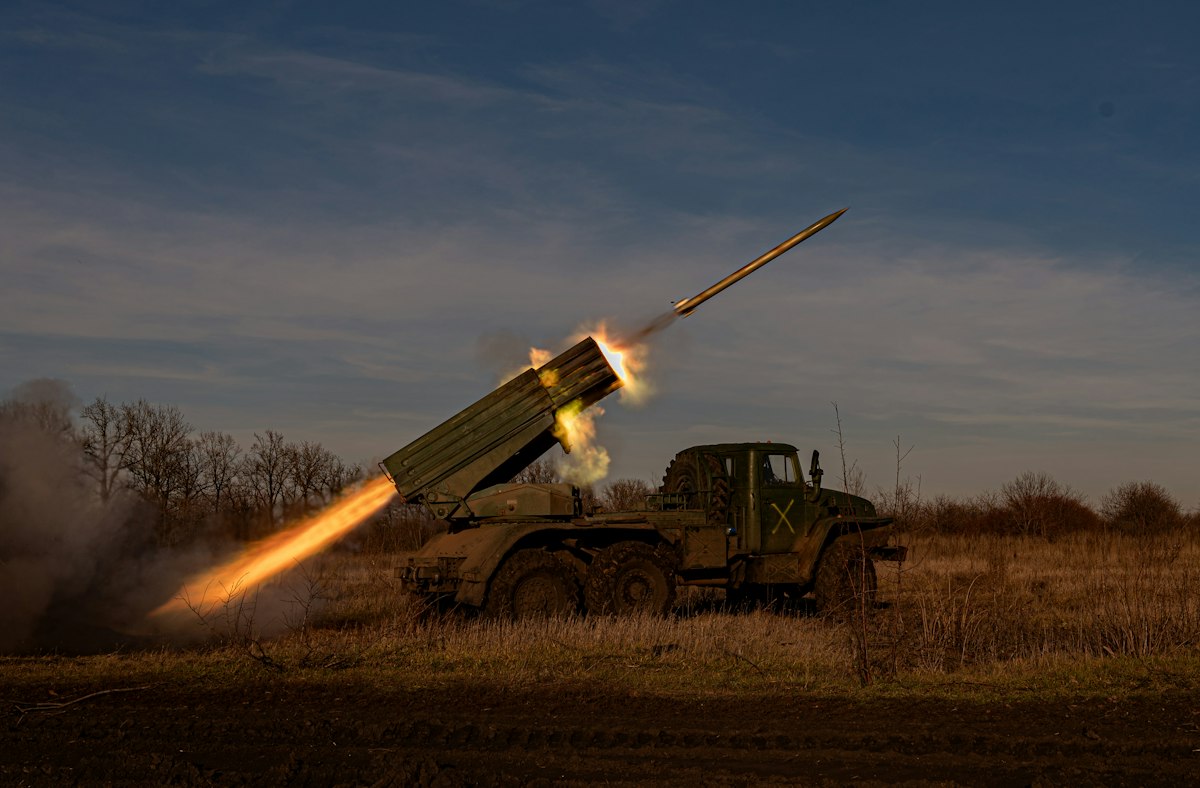 Vony Razom / Unsplash
Key Takeaways & Intelligence
- The DPRK Missile Administration test-fired a modified strategic cruise missile carrying a multi-submunition dispersal warhead.
- Pyongyang's Warhead Institute claimed the munition can 'turn 5 to 6 hectares of fortified target area into ashes' via vertical detonation.
- Defense analysts warn that cruise missiles with cluster warheads pose a lethal threat to South Korean air bases and command bunkers.
In another significant escalation of its tactical strike architecture, North Korea announced on Tuesday that it had successfully conducted an operational test of a strategic cruise missile mounted with a submunition dispersal warhead.
According to a dispatch released by the state-run Korean Central News Agency (KCNA), the test was orchestrated by the DPRK General Missile Administration alongside the Academy of National Defense Science’s specialized Warhead Institute.
The evaluation was aimed at verifying the flight characteristics, low-altitude terrain-hugging guidance, and the detonation sequence of a specialized cluster warhead during an aggressive vertical terminal dive.
Threat Assessment: The Mechanics of the Dispersal Warhead
Unlike standard unitary high-explosive warheads designed to penetrate a single reinforced structure, a dispersal (cluster-style) warhead releases hundreds of secondary shaped charges over an expansive operational footprint.
State media asserted that the newly developed medium-sized dispersal payload is capable of “turning into ashes a target area of 5 to 6 hectares with its highest-density destructive power.”
| Weapon Designation | Platform Type | Guidance / Propulsion | Target Warhead Payload | Claimed Lethal Envelope |
|---|---|---|---|---|
| Hwasal-1Ra | Low-altitude cruise missile | Turbofan, terrain-contour matching | High-density submunition dispersal | 5 to 6 hectares (50,000–60,000 m²) |
| Hwasal-2 | Long-range strategic cruise | Solid booster / Sustained cruise | Tactical nuclear (Hwasan-31) | Precision unitary kinetic detonation |
| Pulhwasal-3-31 | Submarine-launched cruise | Dual-pulse solid rocket motor | Conventional / Low-yield nuclear | Subsurface stand-off delivery |
| KN-23 Mod (Hwasong-11) | Short-range quasi-ballistic | Aero-ballistic pull-up trajectory | Super-large multi-warhead package | Area saturation against runways |
Military analysts in Seoul and Washington noted that mounting cluster munitions onto low-flying cruise missiles is specifically engineered to defeat South Korea’s Kill Chain preemptive strike doctrine and Patriot PAC-3 battery umbrellas. By approaching at altitudes below 100 meters and releasing hundreds of submunitions over airfields like Osan and Gunsan, such weapons could crater runways, ignite fuel reserves, and disable open-air fighter dispersal pads before interception is feasible.
Coordinated Regional Response from Seoul and Tokyo
South Korea’s Joint Chiefs of Staff (JCS) confirmed detecting multiple cruise missile tracks traversing the waters off the Korean Peninsula’s western coast in the early morning hours, adding that South Korean and U.S. intelligence assets were conducting detailed forensic flight path analyses.
“Our military maintains a robust combined defense posture capable of overwhelmingly responding to any North Korean tactical provocation,” the JCS said in an official briefing. “We are tracking Pyongyang’s deployment of cluster munitions with extreme vigilance.”
In Tokyo, the Japanese Ministry of Defense condemned the launch, emphasizing that North Korea’s continuous testing of low-altitude maneuverable missiles threatens regional stability across the Sea of Japan (East Sea). The test comes as trilateral security drills between the United States, South Korea, and Japan expand across the Yellow Sea.
Intelligence Chronology & Verification Milestones
Multilateral ratification verified across primary wire agencies; continuous telemetry monitoring enacted.
Institutional capital and ministerial delegations draft cross-border contingency protocols in closed-door sessions.
Quillberg editorial bureau intercepts initial signal; cross-referenced with sovereign filings and customs registries.
Cite This Dispatch & Link Back
Quoting, analyzing, or covering this story in your publication, academic research, or blog? Use this formatted citation to link back directly to the verified source:
[Quillberg News: North Korea Tests Strategic Cruise Missile with Submunition Dispersal Warhead](https://quillberg.com/north-korea-conducts-strategic-cruise-missile-test-dispersal-warhead)