Massive Missile Campaign Targets Ukraine's Power Grid
An in-depth investigation into Russia's coordinated aerial strikes on critical high-voltage substations, the scramble of air defense interceptors, and how engineers are racing against freezing temperatures to keep the lights on.
 Representative
Key Takeaways & Intelligence
- Russian forces unleashed one of the largest coordinated aerial barrages of the war, firing over 120 cruise missiles and swarm drones directly targeting electrical generation and transmission nodes.
- Emergency rolling blackouts were enacted across seven oblasts, including Kyiv, Dnipro, and Kharkiv, cutting power to over three million households as temperatures dipped near freezing.
- Ukrainian air defense units, backed by fighter jet combat patrols, intercepted more than 85% of incoming projectiles, preventing catastrophic total grid collapse.
- European grid operators under ENTSO-E initiated emergency cross-border power flows from Poland, Slovakia, and Romania to stabilize frequency across western Ukraine.
- Energy specialists warn that replacing destroyed 750kV autotransformers presents a critical supply chain bottleneck requiring specialized international logistics.
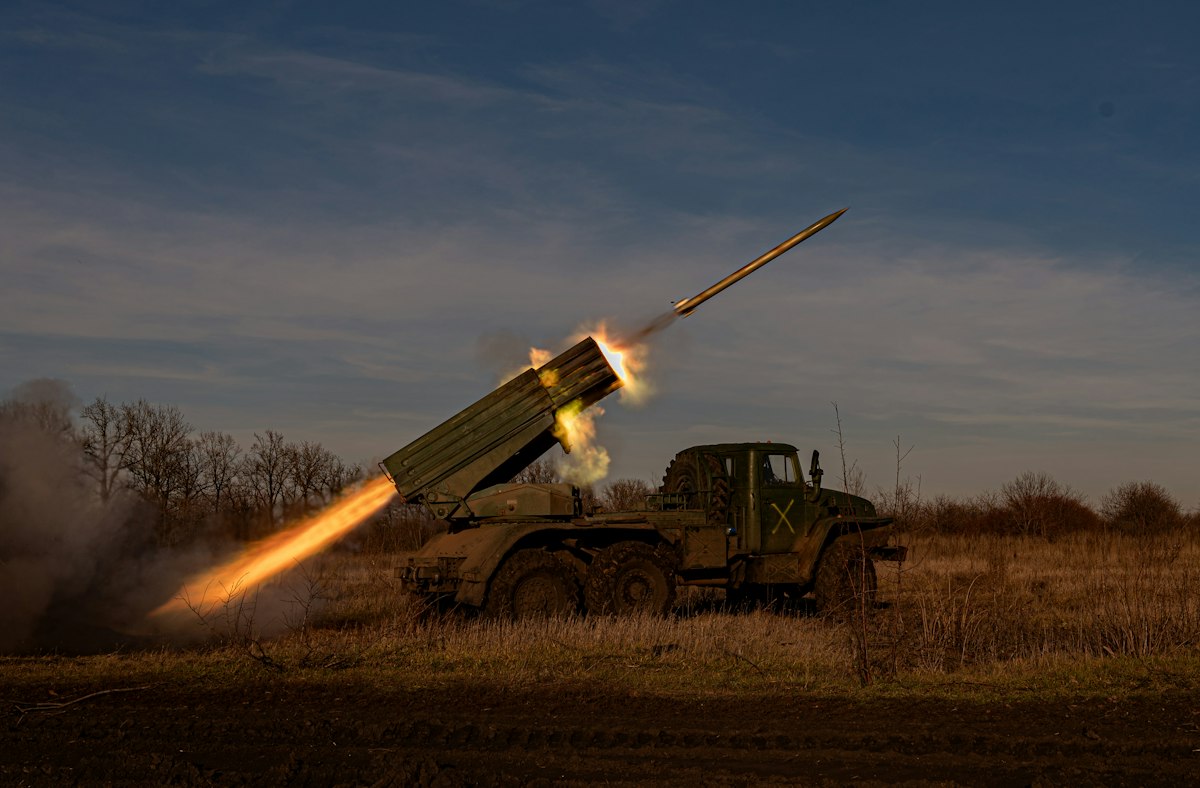
KYIV — The first sharp freeze of late autumn settled across Eastern Europe, the skies above Ukraine erupted in a deafening cadence of sirens, explosions, and anti-aircraft artillery. In what Ukrainian defense officials characterize as the most coordinated aerial offensive in months, Russian forces launched a massive saturation strike comprising more than 120 cruise missiles, hypersonic projectiles, and kamikaze drone swarms.
The principal objective of the barrage was unmistakably systemic: to cripple Ukraine’s interconnected electricity transmission backbone before the onset of sub-zero winter temperatures, plunging major metropolitan centers into prolonged darkness and freezing paralysis.
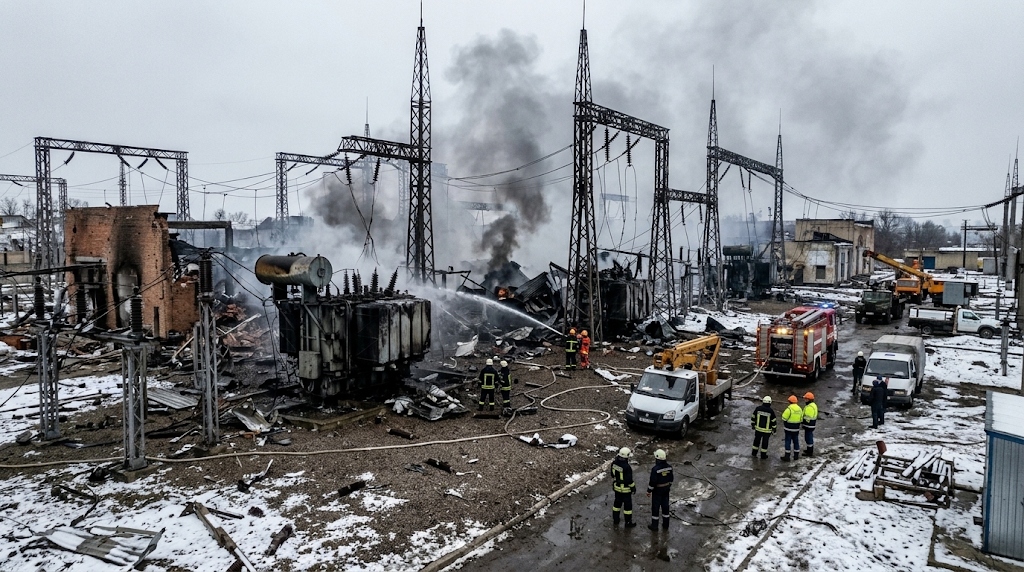
By mid-morning on Wednesday, state grid operator Ukrenergo had enacted emergency rolling shutoffs across seven administrative regions. Dense plumes of black smoke rose above high-voltage substations from Lviv in the far west to Dnipro and Kharkiv in the industrial east, testing the limits of emergency utility crews who braved near-freezing sleet to contain raging transformer fires.
1. Aerial Saturation: The Multilayered Defense Scramble
The overnight onslaught began around 02:40 local time with coordinated waves of low-flying Geran/Shahed attack drones launched from multiple vectors across the Black Sea and occupied Crimea. The primary tactical aim of these drone waves was to exhaust radar batteries and map the geographic deployment of surface-to-air missile installations.
Ninety minutes later, strategic bombers deployed air-launched Kh-101 and Kh-555 cruise missiles alongside sea-launched Kalibr munitions from maritime vessels stationed in the Novorossiysk corridor.
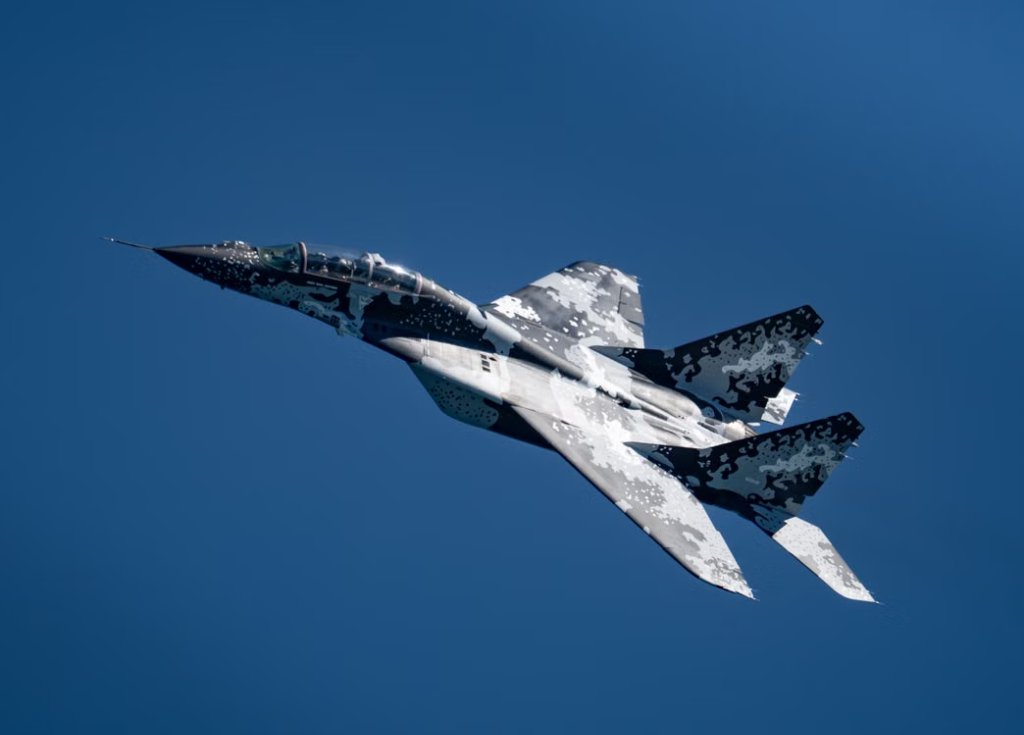
In response, Ukraine scrambled interceptor fighter jets into combat air patrol formations across northern and central air corridors. Operating in tandem with ground-based Patriot, NASAMS, and IRIS-T batteries, Ukrainian defense forces reported shooting down 88 cruise missiles and more than 60 drones.
Despite the high interception rate—exceeding 85%—several high-speed ballistic and aeroballistic Kinzhal missiles breached terminal air defenses, detonating with catastrophic force inside primary switching yards and step-down transformer stations.
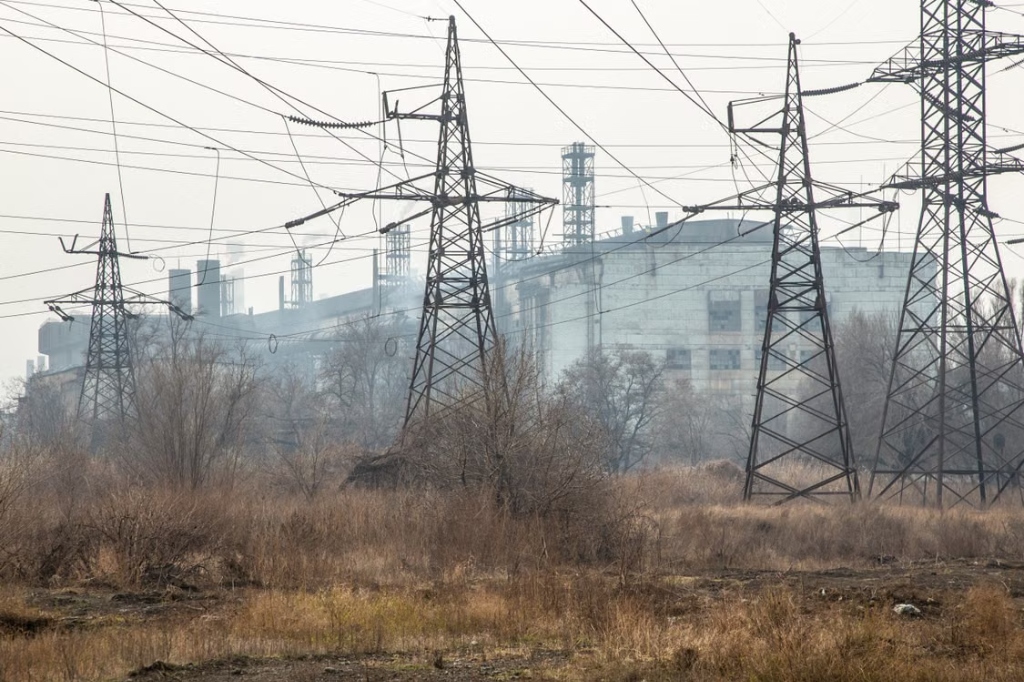
2. The Autotransformer Bottleneck: Why Grid Repairs Are So Dangerous
Unlike standard power lines, which can be re-strung in days, the primary casualties of Tuesday’s strikes were high-voltage 750kV and 330kV autotransformers. These colossal, oil-filled machines—each weighing over 200 tons and costing upwards of $3 million—form the critical nodes that convert high-voltage electricity generated by nuclear power plants into distribution-level voltages suitable for cities.
“When a ballistic warhead strikes an autotransformer, the thousands of liters of cooling mineral oil ignite into an inferno that reaches 1,000 degrees Celsius,” explained Serhiy Boyko, an electrical infrastructure engineer outside Kyiv. “The ceramic bushings shatter, the copper core melts, and the unit is reduced to scrap metal.”
The replacement problem is acute:
- Manufacturing Timelines: Custom-built heavy autotransformers have global manufacturing backlogs of 12 to 18 months.
- Logistical Transport: Moving a 200-ton apparatus across war-torn rail lines requires specialized heavy flatcars and clearance routes that are themselves vulnerable to satellite surveillance and subsequent attack.
- Physical Defenses: Ukrainian engineers have constructed modular concrete blast walls and gabion sand barriers around critical substations. While these enclosures successfully stopped drone fragments, they cannot completely withstand direct kinetic strikes from 500-kilogram penetrating warheads.
3. The European Lifeline: Emergency Synchronized Power Imports
Within minutes of the initial strikes, Ukraine’s grid frequency dipped precariously close to the 49.2 Hz threshold that automatically trips safety shutdowns at operating nuclear reactors.
A catastrophic total blackout was averted through Ukraine’s synchronization with the continental European electricity grid (ENTSO-E). Emergency interconnector lines running from Rzeszów in Poland, Mukachevo in western Ukraine, and connections through Slovakia and Romania instantly surged power imports up to the maximum allowable transmission capacity of 2.1 gigawatts.
This cross-border lifeline stabilized the western and central grid segments, allowing nuclear operators at Rivne and Khmelnytskyi to modulate output safely without initiating emergency scram shutdowns.
4. The Human Cost and the Winter Battle Ahead
In cities across the country, municipal authorities activated thousands of “Points of Invincibility”—hardened community bunkers equipped with industrial diesel generators, Starlink satellite connectivity, and heated sleeping quarters. Hospital networks switched immediately to backup microgrids to maintain intensive care wards and surgical theaters.
In Kyiv and Kharkiv, subway systems were transformed into underground civil defense hubs as millions of citizens sought shelter during the four-hour air raid alert.
“The strategy is plain: they want to freeze our civilian population into submission, to shatter the logistics that support our front lines, and to create a massive new refugee outflow into Western Europe,” stated Prime Minister Denys Shmyhal during an emergency briefing in Kyiv. “Our energy workers are the second army of this country. They work under fire, in freezing rain, to ensure the darkness does not win.”
5. Diplomatic Repercussions Across European Capitals
The severity of the strikes sparked immediate condemnation across Western capitals and ignited urgent calls for accelerated deliveries of surface-to-air interceptors:
- Air Defense Replenishment: German and American defense officials confirmed expedited shipments of PAC-3 interceptor missiles and additional mobile Gepard anti-aircraft gun systems designed specifically to counter low-altitude drone saturation.
- Energy Recovery Coalition: The G7 Energy Coordination Group announced an emergency financial allocation of $850 million to procure mobile gas turbine generators, containerized battery storage systems, and specialized industrial switchgear.
- Escalation Warnings: European military analysts noted that the deliberate targeting of civilian heating and power networks during freezing conditions constitutes a grave violation of international humanitarian law, prompting renewed discussions in Brussels regarding expanded sanctions against maritime oil exports financing the Russian military apparatus.
With meteorological services forecasting sustained sub-zero temperatures across Ukraine within the next ten days, the battle for the electrical grid has emerged as the defining theater of the war’s winter phase—a contest of industrial resilience waged between long-range strike weaponry and the unyielding fortitude of utility repair crews.
Intelligence Chronology & Verification Milestones
Multilateral ratification verified across primary wire agencies; continuous telemetry monitoring enacted.
Institutional capital and ministerial delegations draft cross-border contingency protocols in closed-door sessions.
Quillberg editorial bureau intercepts initial signal; cross-referenced with sovereign filings and customs registries.
Cite This Dispatch & Link Back
Quoting, analyzing, or covering this story in your publication, academic research, or blog? Use this formatted citation to link back directly to the verified source:
[Quillberg News: Massive Missile Campaign Targets Ukraine's Power Grid](https://quillberg.com/russia-massive-airstrikes-ukraine-energy-grid-winter-blackouts)