South Korea Rocked by High-Tech Generative AI Cheating Scandal
A top scorer's confession of using a concealed button-hole camera and real-time multimodal AI during a prestigious tax certification exam prompts emergency security sweeps nationwide.
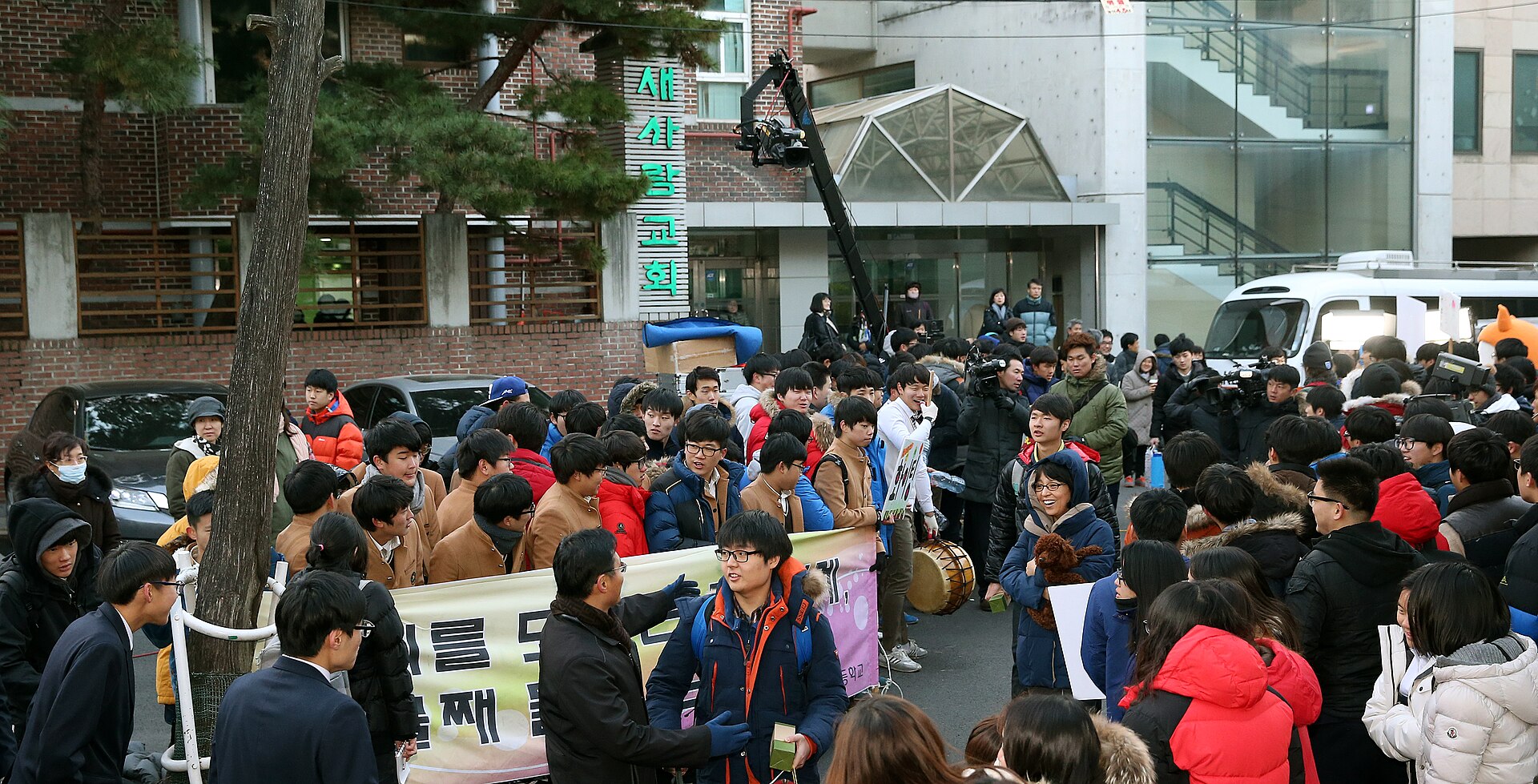 Wikimedia Commons / Republic of Korea Archives
Key Takeaways & Intelligence
- The top scorer in South Korea's national certified tax accountant exam admitted to cheating using an AI-assisted covert setup.
- The candidate wore a button-hole micro-camera transmitting exam pages to an off-site accomplice running a low-latency multimodal LLM.
- Generated answers and legal calculations were fed back via an invisible bone-conduction earpiece.
- The scandal has triggered nationwide panic ahead of the College Scholastic Ability Test (Suneung), South Korea's high-stakes university entrance exam.
- The Ministry of Education and National Police Agency announced mandatory full-body electromagnetic scanning at all state testing halls.
SEOUL — South Korea’s hyper-competitive education and civil service testing sectors have been plunged into turmoil after authorities revealed that the top scorer in the country’s prestigious national Certified Tax Accountant examination confessed to using a sophisticated, covert generative artificial intelligence rig to cheat his way through the exam.
The revelation has sent shockwaves across the country, arriving just days before hundreds of thousands of South Korean high school seniors sit for the Suneung (College Scholastic Ability Test), the grueling eight-hour university entrance exam that dictates college admissions, corporate employment prospects, and social standing.
The Anatomy of an AI-Powered Exam Heist
According to legal filings and statements from the Seoul Metropolitan Police Agency’s cyber investigation division, the suspect—identified only as a male in his late 20s—orchestrated a meticulously engineered operation that bypassed standard proctoring oversight:
- Button-Hole Micro-Camera: A pinhole lens disguised as an ordinary jacket button captured high-resolution still frames of complex tax law essay questions and quantitative accounting ledgers.
- Low-Latency Cellular Uplink: Images were compressed and broadcast via a flat, battery-powered 5G transmitter stitched into the lining of the candidate’s undershirt to an accomplice stationed in a nearby vehicle.
- Multimodal AI Reasoning: The accomplice fed the images into a fine-tuned, low-latency multimodal large language model specialized in Korean commercial tax law, financial accounting regulations, and statutory computation.
- Bone-Conduction Audio Feedback: Step-by-step mathematical answers and essay outlines were whispered into the candidate’s ear canal via a microscopic magnetic bone-conduction transducer resting invisible beneath the eardrum.
The candidate achieved near-perfect marks across multiple grueling sections, outperforming more than 14,000 applicants nationwide. However, the scheme unraveled after internal whistleblowers and digital forensic audits uncovered suspicious synchronized network traffic from inside the test hall, prompting the candidate’s defense attorney to submit an emergency confession to prosecutors.
Nationwide Alarm and Suneung Security Overhaul
In South Korea, where academic integrity and competitive fairness are considered fundamental social contracts, public outrage has been immediate and furious. Editorial boards in Seoul described the breach as an “existential wake-up call” for the global testing industry.
“This is not simple crib notes scribbled on a palm; this is an automated cognitive prosthetics assault on standardized evaluation,” said Professor Kim Hye-won, an educational technology specialist at Yonsei University. “When generative vision models can digest graduate-level tax law problems and return solved equations within four seconds, physical invigilation without active electronic jamming becomes obsolete.”
In response, the South Korean Ministry of Education, in coordination with the Ministry of Science and ICT, announced unprecedented emergency countermeasures across all 1,280 Suneung test sites:
- Radio Frequency (RF) Signal Scanners: Handheld electromagnetic detectors deployed at every classroom entrance to identify unauthorized transmissions across LTE, 5G, and Bluetooth spectra.
- Mandatory Ear Inspections: Proctors equipped with medical otoscopes will visually inspect ear canals for micro-transducers prior to admission.
- Clothing and Accessory Screenings: Severe restrictions on oversized jackets, padded outerwear, and non-standard buttons or eyeglasses.
A Global Dilemma for Standardized Testing
The Seoul scandal mirrors rising anxieties across educational institutions worldwide, from the United States Medical Licensing Examination (USMLE) to the Bar exam in the United Kingdom. As miniaturized wearable cameras, smart glasses, and ultra-fast reasoning models become widely commoditized, testing bodies are grappling with whether paper-and-pencil proctored exams can survive without draconian surveillance measures or Faraday-caged testing bunkers.
Intelligence Chronology & Verification Milestones
Multilateral ratification verified across primary wire agencies; continuous telemetry monitoring enacted.
Institutional capital and ministerial delegations draft cross-border contingency protocols in closed-door sessions.
Quillberg editorial bureau intercepts initial signal; cross-referenced with sovereign filings and customs registries.
Cite This Dispatch & Link Back
Quoting, analyzing, or covering this story in your publication, academic research, or blog? Use this formatted citation to link back directly to the verified source:
[Quillberg News: South Korea Rocked by High-Tech Generative AI Cheating Scandal](https://quillberg.com/south-korea-rocked-by-high-tech-generative-ai-exam-cheating-scandal-2026)