

Japan's JAXA Readies Historic MMX Mission to Retrieve Samples
In an audacious space exploration milestone, the Japan Aerospace Exploration Agency is preparing to launch the Martian Moons eXploration probe, aiming to touch down on Phobos, collect primordial surface regolith, and return extraterrestrial samples to Earth.
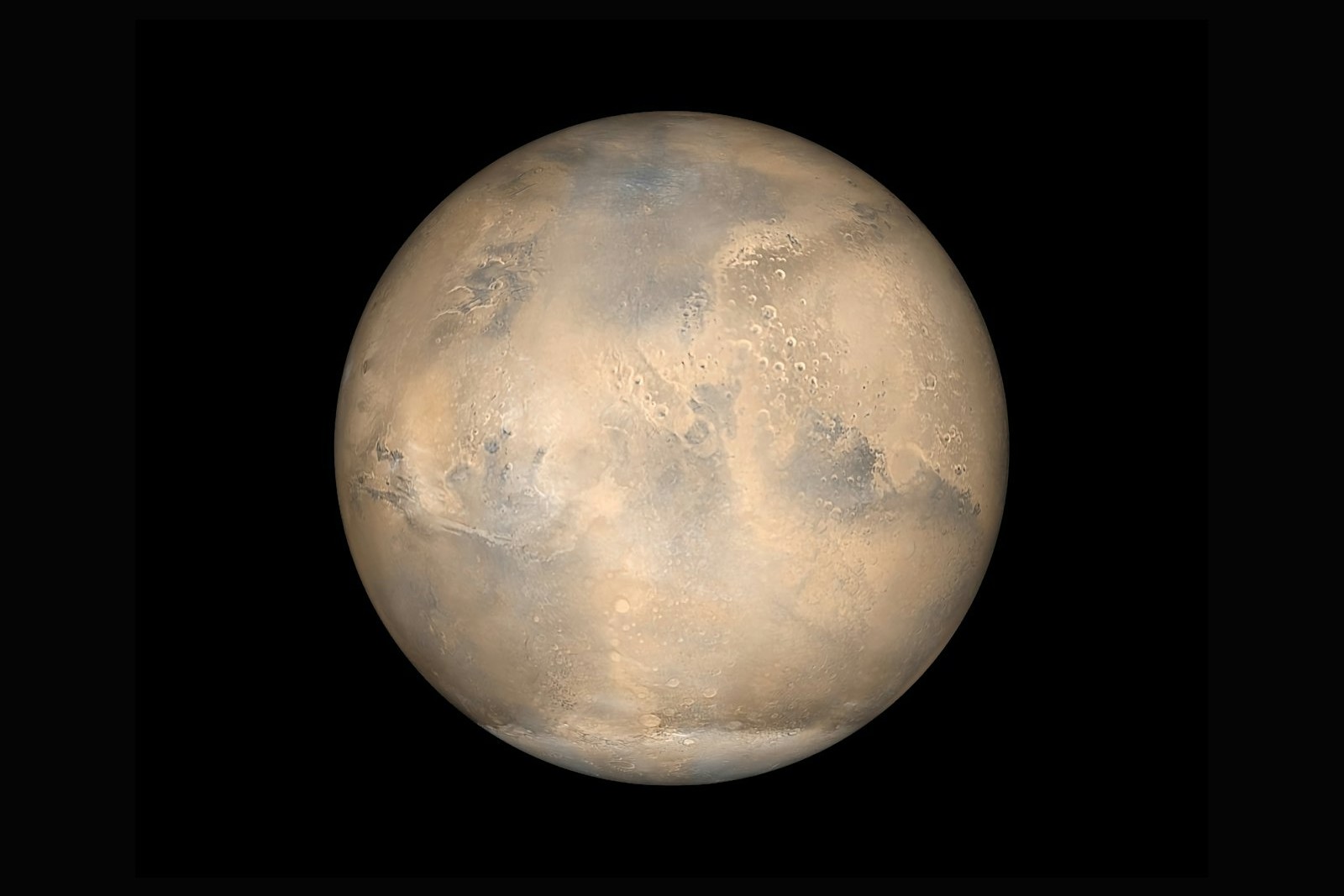 NASA / Unsplash
Key Takeaways & Intelligence
- Japan's space agency (JAXA) has finalized flight readiness reviews for its Martian Moons eXploration (MMX) mission.
- The spacecraft will deploy a German-French rover onto Phobos and collect at least 10 grams of Martian moon regolith.
- Samples returned to Earth in the early 2030s will resolve whether the moons are captured asteroids or ejecta from a giant planetary impact.
Humanity’s quest to understand the origins of the Red Planet is about to take a daring leap forward as the Japan Aerospace Exploration Agency (JAXA) enters final launch preparations for its ambitious Martian Moons eXploration (MMX) flagship mission.
As reported by BBC News, the multi-module robotic spacecraft is engineered to journey to Mars, enter a quasi-satellite orbit around its enigmatic inner moon Phobos, touch down on its microgravity surface to retrieve pristine soil samples, and ferry them back to Earth.
If successful, MMX will become the first space mission in history to return physical samples from the Martian gravitational system, beating both NASA’s and China’s respective Mars sample return architectures to physical delivery.
Resolving a 150-Year Planetary Mystery
Discovered in 1877 by American astronomer Asaph Hall, Mars’s twin satellites—Phobos (22 km across) and Deimos (12 km across)—have long divided the planetary science community into two competing camps:
- The Captured Asteroid Hypothesis: Their dark, carbon-rich surfaces and low bulk densities resemble D-type and C-type asteroids from the outer asteroid belt that were captured by Mars’s early gravitational pull.
- The Giant Impact Hypothesis: The moons formed from a circumstellar debris disk created when a massive protoplanetary body collided with Mars during the solar system’s chaotic infancy, similar to the collision that formed Earth’s Moon.
By analyzing the isotopic ratios of oxygen, carbon, and silicate grains returned by MMX, cosmochemists will be able to confirm whether Phobos is made of primordial asteroidal organic matter or melted Martian mantle crust.
| Mission Component | Contributing Space Agency | Primary Function & Operational Specifications |
|---|---|---|
| MMX Spacecraft Bus | JAXA (Japan) | Three-module propulsion, exploration, and return capsule architecture |
| Corer & Pneumatic Sampler | JAXA (Japan) | Dual sampling tools designed to collect ≥10g of regolith from 2cm depth |
| Ibis Micro-Rover | CNES (France) & DLR (Germany) | Four-wheeled rover to scout surface roughness and mineral composition |
| MEGANE Gamma/Neutron Spectrometer | NASA (United States) | Elemental mapping of hydrogen, silicon, and iron concentrations from orbit |
| Earth Return Capsule (ERC) | JAXA (Japan) | Heat-shielded sample capsule engineered for high-velocity atmospheric reentry |
The Audacity of Microgravity Sampling
Operating around Phobos presents unprecedented orbital dynamics. Because Phobos has less than one-thousandth of Earth’s surface gravity, standard landing maneuvers are impossible; the spacecraft must essentially “dock” with the moon rather than land on it.
JAXA will draw upon the pioneering technical lessons learned from its celebrated Hayabusa and Hayabusa2 asteroid sample return missions, which retrieved pristine grains from near-Earth asteroids Itokawa and Ryugu.
“Phobos is effectively a cosmic time capsule,” explained Dr. Hitoshi Kuninaka, Director General of JAXA’s Institute of Space and Astronautical Science. “Because Phobos orbits so close to Mars, its surface has also been pelted for four billion years by dust blasted off Mars by asteroid impacts. When we bring Phobos home, we are bringing back pieces of ancient Mars as well.”
The MMX mission is scheduled to lift off aboard Japan’s new flagship H3 launch vehicle from the Tanegashima Space Center, embarking on a one-year interplanetary cruise toward Mars.
Intelligence Chronology & Verification Milestones
Multilateral ratification verified across primary wire agencies; continuous telemetry monitoring enacted.
Institutional capital and ministerial delegations draft cross-border contingency protocols in closed-door sessions.
Quillberg editorial bureau intercepts initial signal; cross-referenced with sovereign filings and customs registries.
Cite This Dispatch & Link Back
Quoting, analyzing, or covering this story in your publication, academic research, or blog? Use this formatted citation to link back directly to the verified source:
[Quillberg News: Japan's JAXA Readies Historic MMX Mission to Retrieve Samples](https://quillberg.com/japan-jaxa-mmx-mission-mars-moon-phobos-sample-return)
📰 Related Strategic Intelligence
More in Deep Dives → Business
Foundry Giants Commission Arizona and Dresden Fabs Under CHIPS Subsidies
 Deep Dives
NASA Swift Observatory Concludes Legendary Astrophysics Mission in Orbit
 Tech

