NASA Swift Observatory Concludes Legendary Astrophysics Mission in Orbit
A tribute and scientific investigation into the fiery finale of the Neil Gehrels Swift Observatory: how a two-year mission became a twenty-two-year revolution in gamma-ray astrophysics and black hole discovery.
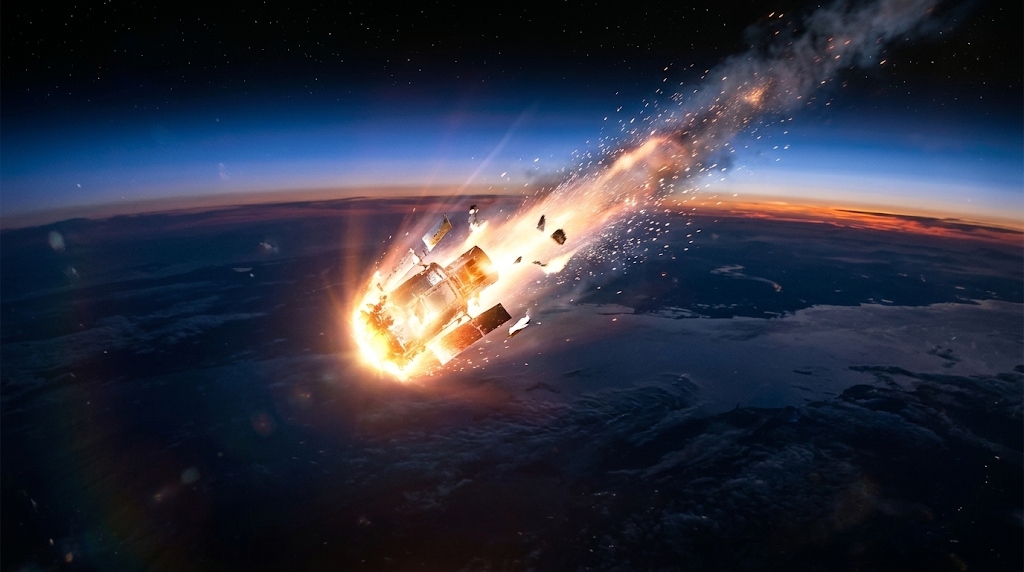 Representative
Key Takeaways & Intelligence
- NASA's Neil Gehrels Swift Observatory completed its atmospheric re-entry over the remote South Pacific, concluding one of the most prolific missions in the history of astrophysics.
- Launched in November 2004 with a primary baseline lifespan of two years, Swift operated continuously for twenty-two years, fundamentally transforming time-domain astronomy.
- The spacecraft captured and localized more than 1,600 gamma-ray bursts (GRBs)—the most luminous relativistic explosions in the universe since the Big Bang.
- Swift's autonomous rapid-slewing architecture enabled astronomers worldwide to observe the birth of stellar-mass black holes and mergers of binary neutron stars within seconds.
- Heightened solar cycle atmospheric drag ultimately triggered the satellite's decay, handing the torch to next-generation multi-messenger observatories.
GREENBELT, MD. — The NASA Swift Observatory concludes its legendary astrophysics mission in orbit, completing a 22-year journey that revolutionized gamma-ray astronomy.
With that final, fiery plunge, NASA’s Neil Gehrels Swift Observatory concluded one of the most astonishingly successful chapters in the history of space science.
Launched from Cape Canaveral on November 20, 2004, Swift was conceived with an ambitious yet modest primary lifespan: two years in low-Earth orbit to investigate gamma-ray bursts (GRBs), the fleeting, ultra-high-energy flashbulbs of the cosmos. Instead, the 1.5-ton observatory operated for an extraordinary twenty-two years—surpassing its design life eleven-fold and transforming human understanding of the violent, dynamic universe.
1. The Autonomous Slew: Why Swift Changed Astrophysics Forever
Prior to Swift’s launch, studying gamma-ray bursts was an exercise in astronomical frustration. Gamma-ray bursts occur unpredictably in random patches of the sky, flashing with intense radiation for merely a fraction of a second to a few minutes before fading into invisibility. Ground-based optical and radio telescopes rarely had time to maneuver and locate the source before the afterglow vanished.
Swift solved this problem through a revolutionary autonomous control system that earned the satellite its name:
- The Burst Alert Telescope (BAT): A wide-field coded-aperture mask that continuously monitored one-seventh of the celestial sphere, detecting sudden spikes in hard X-rays and gamma rays.
- Autonomous Reorientation: Within 20 to 75 seconds of detecting a burst, Swift’s onboard computers automatically fired its reaction wheels, physically pivoting the entire spacecraft to point its narrow-field instruments directly at the source.
- Multi-Wavelength Precision: The onboard X-ray Telescope (XRT) and Ultraviolet/Optical Telescope (UVOT) pinpointed the explosion’s precise sky coordinates down to arcseconds, instantly beaming coordinates via the TDRSS satellite network to astronomers and robotic observatories worldwide.
“Swift completely eliminated the latency between detection and deep exploration,” said Dr. Bradley Cenko, Swift principal investigator at NASA’s Goddard Space Flight Center. “It turned astrophysics into a real-time reactive discipline. For over two decades, astronomers’ phones would buzz at three in the morning with automated alerts that a star had just collapsed into a black hole across the universe.”
2. Twenty-Two Years of Unrivaled Cosmic Discoveries
Across more than two decades of operation, Swift cataloged over 1,600 gamma-ray bursts, each representing a catastrophic astronomical event at relativistic scales.
Its landmark scientific milestones reshaped textbook astrophysics:
- The Origin of Short GRBs: In 2005, Swift resolved a decades-old mystery by capturing the first optical afterglow of a short-duration gamma-ray burst, proving they originate from the cataclysmic collision of two ultra-dense neutron stars—the cosmic forge where heavy elements like gold, platinum, and uranium are created.
- The Birth of Black Holes: Swift confirmed that long-duration GRBs signal the core-collapse hypernova explosion of massive rotating stars, directly observing the birth of stellar-mass black holes billions of light-years away.
- Tidal Disruption Events (TDEs): In 2011, Swift witnessed a star straying too close to a dormant supermassive black hole at the center of a distant galaxy, tracking the relativistic plasma jets emitted as the star was literally torn apart and consumed.
- The “BOAT” (Brightest Of All Time): In October 2022, Swift captured GRB 221009A, an explosion of such colossal power that its gamma photons ionized the Earth’s upper ionosphere from a distance of 2.4 billion light-years, saturating orbital detectors and providing a once-in-ten-thousand-years data set.
3. Solar Drag and the Final Orbital Descent
Despite the flawless operation of its science instruments, Swift’s low-Earth orbit (altitude ~600 km) subjected it to the physical realities of the upper atmosphere.
During the heightened peak of Solar Cycle 25 in 2024–2026, intensified solar ultraviolet radiation and coronal mass ejections heated and expanded the Earth’s thermosphere. This dramatic increase in atmospheric density created relentless aerodynamic drag on the spacecraft’s solar arrays and chassis.
NASA engineers monitored the orbital decay closely. While commercial studies were conducted to evaluate robotic refueling and re-boost missions, the spacecraft lacked propulsion thrusters to arrest its descent safely.
As Swift’s perigee dipped below 250 kilometers, mission controllers commanded the spacecraft’s onboard reaction wheels to perform a final data transmission, safely passivating its batteries to prevent orbital fragmentation. On Wednesday morning, U.S. Space Command confirmed that the spacecraft disintegrated safely over the uninhabited South Pacific Ocean.
4. Passing the Torch in Time-Domain Astronomy
The passing of Swift leaves an indelible legacy on modern science. The protocols and international networks established by the mission laid the groundwork for today’s era of multi-messenger astronomy, where gravitational wave detectors like LIGO/Virgo collaborate with space telescopes to catch cosmic collisions in both gravitational and electromagnetic spectra.
“Swift taught humanity that the universe is not static and quiet,” reflected NASA Associate Administrator for Science Nicola Fox. “It is a violent, luminous, constantly evolving frontier where stars are born, collide, and die in flashes of brilliant light. Swift gave us eyes to see the universe’s most dramatic moments, and its discoveries will continue to educate generations of physicists long into the future.”
Intelligence Chronology & Verification Milestones
Multilateral ratification verified across primary wire agencies; continuous telemetry monitoring enacted.
Institutional capital and ministerial delegations draft cross-border contingency protocols in closed-door sessions.
Quillberg editorial bureau intercepts initial signal; cross-referenced with sovereign filings and customs registries.
Cite This Dispatch & Link Back
Quoting, analyzing, or covering this story in your publication, academic research, or blog? Use this formatted citation to link back directly to the verified source:
[Quillberg News: NASA Swift Observatory Concludes Legendary Astrophysics Mission in Orbit](https://quillberg.com/nasa-swift-observatory-atmospheric-reentry-gamma-ray-astronomy-legacy)