

NASA Explores Commercial Rescue Missions to Re-Boost Hubble Orbit
An investigative scientific analysis into NASA's initiative to save the historic Hubble Space Telescope: how private commercial spaceflight providers are competing to dock with the aging observatory, raise its decaying orbit by 100 kilometers, and extend its cosmic gaze into the 2040s.
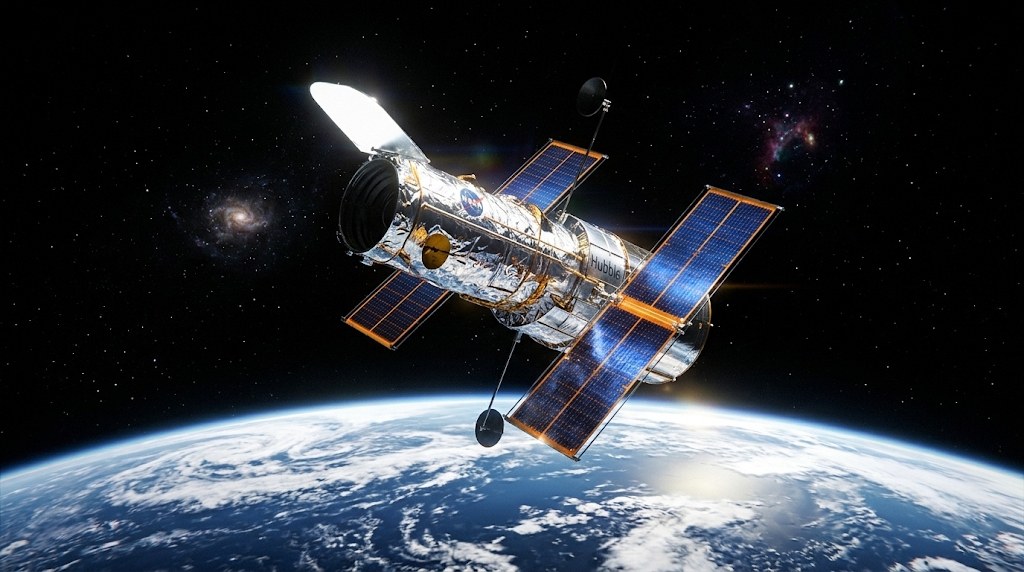 Representative / Space Observatory
Key Takeaways & Intelligence
- NASA has initiated formal technical reviews with commercial spaceflight contenders to design an uncrewed or crewed orbital re-boost mission for the 36-year-old Hubble Space Telescope.
- Persistent atmospheric drag accelerated by peak Solar Cycle 25 activity has dropped Hubble's orbital altitude to roughly 515 kilometers, putting it on course for uncontrolled re-entry by the mid-2030s.
- Private sector proposals from SpaceX's Polaris Program, Northrop Grumman, and Astroscale envision docking with Hubble's aft Soft Capture Mechanism to raise its orbit by over 100 kilometers.
- Extending Hubble's lifespan into the 2040s provides astronomers with irreplaceable ultraviolet and optical imaging that seamlessly complements the infrared sensitivity of the James Webb Space Telescope.
- Mission planners face delicate engineering hurdles, including thruster plume contamination risks, delicate solar panel preservation, and pointing stability on remaining gyroscopic reaction wheels.
WASHINGTON & GREENBELT, MD — As nasa explores commercial rescue missions to re-boost hubble orbit unfolds, for more than thirty-six years, the Hubble Space Telescope has stood as humanity’s premier window onto the cosmos. Deployed in April 1990 by the Space Shuttle Discovery, the 11-ton observatory revolutionized modern astrophysics, confirming the accelerated expansion of the universe, pinning down the age of the cosmos, and imaging the violent birth of stars in distant stellar nurseries.
Yet beneath its gleaming silver multilayer insulation, Hubble is fighting a silent, gravitational adversary: the relentless drag of Earth’s upper atmosphere.
Without onboard thrusters to maintain its altitude, Hubble’s orbit has steadily decayed from its original 615-kilometer deployment altitude to approximately 515 kilometers. Heightened solar activity during the crest of Solar Cycle 25 has expanded Earth’s thermosphere, exacerbating friction and hastening the telescope’s descent. NASA orbital trajectory models indicate that without intervention, the observatory will face an uncontrolled, destructive atmospheric re-entry between 2034 and 2037.
Now, NASA has formally turned to the commercial space sector to formulate a rescue plan: a private orbital rendezvous to dock with the iconic telescope, boost its altitude by more than 100 kilometers, and extend its scientific lifespan into the 2040s.
The Orbital Physics of a Reluctant Descent
Unlike newer deep-space observatories like the James Webb Space Telescope (JWST), which orbits the gravitationally stable Sun-Earth Lagrange Point 2 (L2) 1.5 million kilometers from Earth, Hubble circles in Low Earth Orbit (LEO).
While this proximity enabled five historic Space Shuttle servicing missions between 1993 and 2009—allowing astronauts to swap out failing gyroscopes, replace solar arrays, and install cutting-edge cameras—it left Hubble vulnerable to the tenuous atmospheric molecules that persist hundreds of kilometers above the surface.
| Mission Parameter | Hubble Status & Re-Boost Targets |
|---|---|
| Launch Date | April 24, 1990 (Space Shuttle Discovery, STS-31) |
| Current Orbital Altitude | ~515 km (Decaying ~1–2 km per year) |
| Target Re-Boost Altitude | 620 km – 650 km |
| Projected Unassisted Re-Entry | 2034–2037 (Destructive / Uncontrolled) |
| Primary Docking Interface | Soft Capture Mechanism (SCM) installed on Aft Bulkhead |
| Lead Commercial Contenders | SpaceX / Polaris Program, Northrop Grumman SpaceLogistics, Astroscale |
“Hubble is not simply an astronomical relic; it is an irreplaceable scientific instrument operating in peak optical and ultraviolet regimes,” explained Dr. Evelyn Vance, senior astrophysicist at the Space Telescope Science Institute (STScI). “JWST does not observe in the ultraviolet spectrum. If Hubble burns up in the atmosphere, astronomers will lose our sole high-resolution UV eye on the universe for at least another generation.”
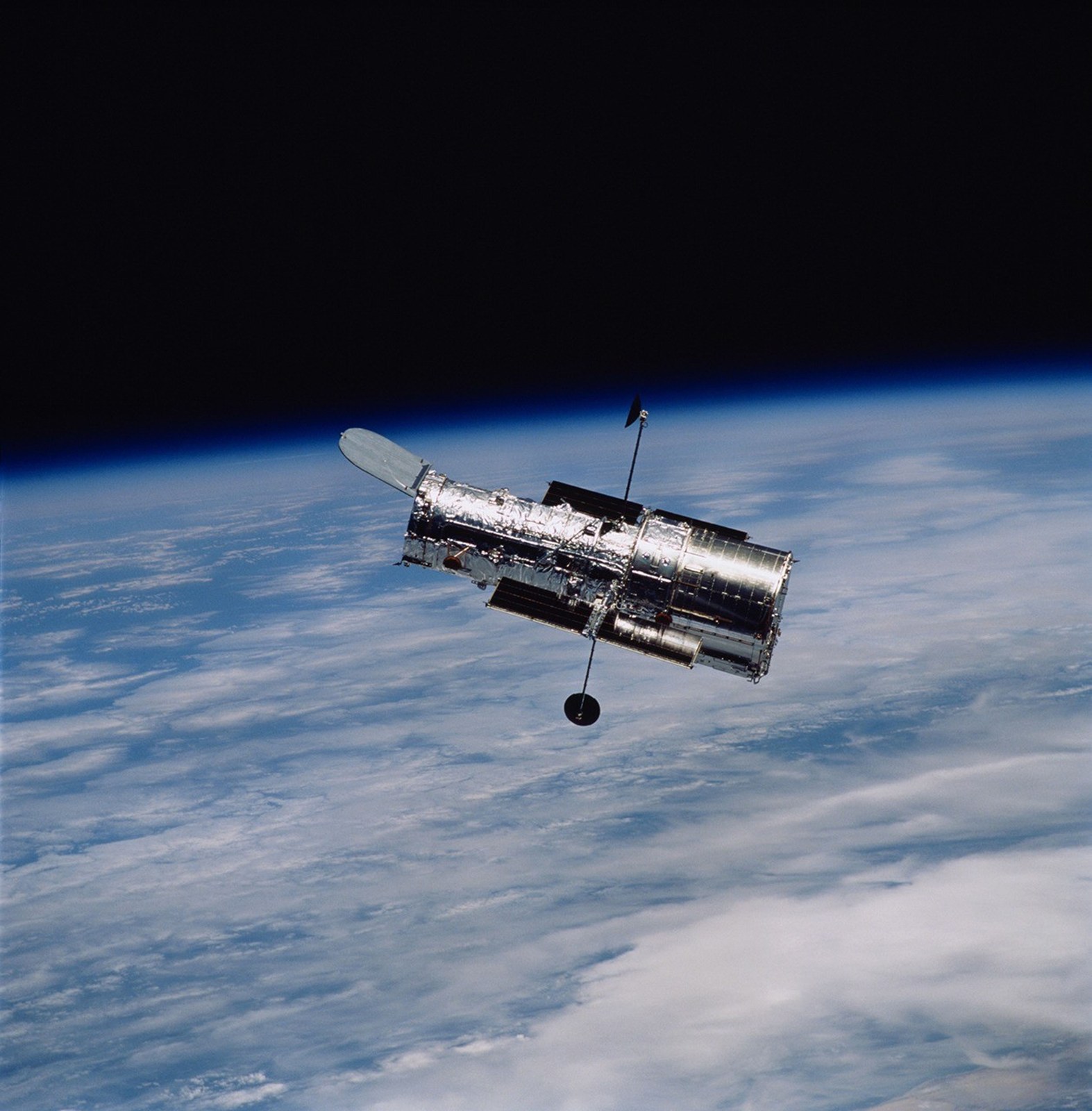 Three decades of deep cosmic sight: The Hubble Space Telescope’s silver aperture door and solar arrays, which have captured over 1.5 million astronomical observations.
Photo: NASA / Goddard Space Flight Center
The Commercial Challengers: How the Private Sector Plans to Save Hubble
When the Space Shuttle fleet was retired in 2011, NASA lost the heavy-lift crewed capability required to grapple and service Hubble. However, the explosive maturation of private spaceflight has introduced viable, low-cost alternatives.
Several commercial architectures have emerged under NASA’s feasibility evaluations:
1. The SpaceX & Polaris Architecture
Spearheaded by commercial astronaut Jared Isaacman and SpaceX, the Polaris proposal envisions utilizing a modified Crew Dragon spacecraft. Equipped with a custom docking ring and specialized optical rendezvous lidar, Dragon would approach Hubble’s aft ring, grapple the Soft Capture Mechanism (SCM)—a mechanical ring installed during the final shuttle servicing mission (STS-125) in 2009 specifically to enable future robotic capture—and fire its Draco thrusters to gently elevate Hubble’s orbit to roughly 650 kilometers.
2. Robotic Servicing with Mission Extension Vehicles (MEVs)
Northrop Grumman’s SpaceLogistics division has proposed deploying an autonomous robotic servicing craft derived from its proven Mission Extension Pods (MEP). Operating with high-efficiency electric ion propulsion, an uncrewed tug could dock autonomously with Hubble, providing persistent attitude control and slow, propellant-efficient orbital raising over several months.
3. In-Orbit Inspection and Component Refresh
Specialized in-space servicing firms, including Astroscale and Starfish Space, have explored using autonomous visual inspection satellites to circle Hubble prior to any physical docking maneuver. These micro-satellites would photograph the exterior solar blankets, inspect delicate radiator panels for micrometeoroid punctures, and ensure structural integrity before a larger booster spacecraft makes physical contact.
Official NASA Briefing: Evaluating the Commercial Boost Feasibility
Below, watch the official NASA and commercial briefing outlining the technical feasibility studies, orbital mechanics considerations, and safety parameters of a private Hubble re-boost mission:
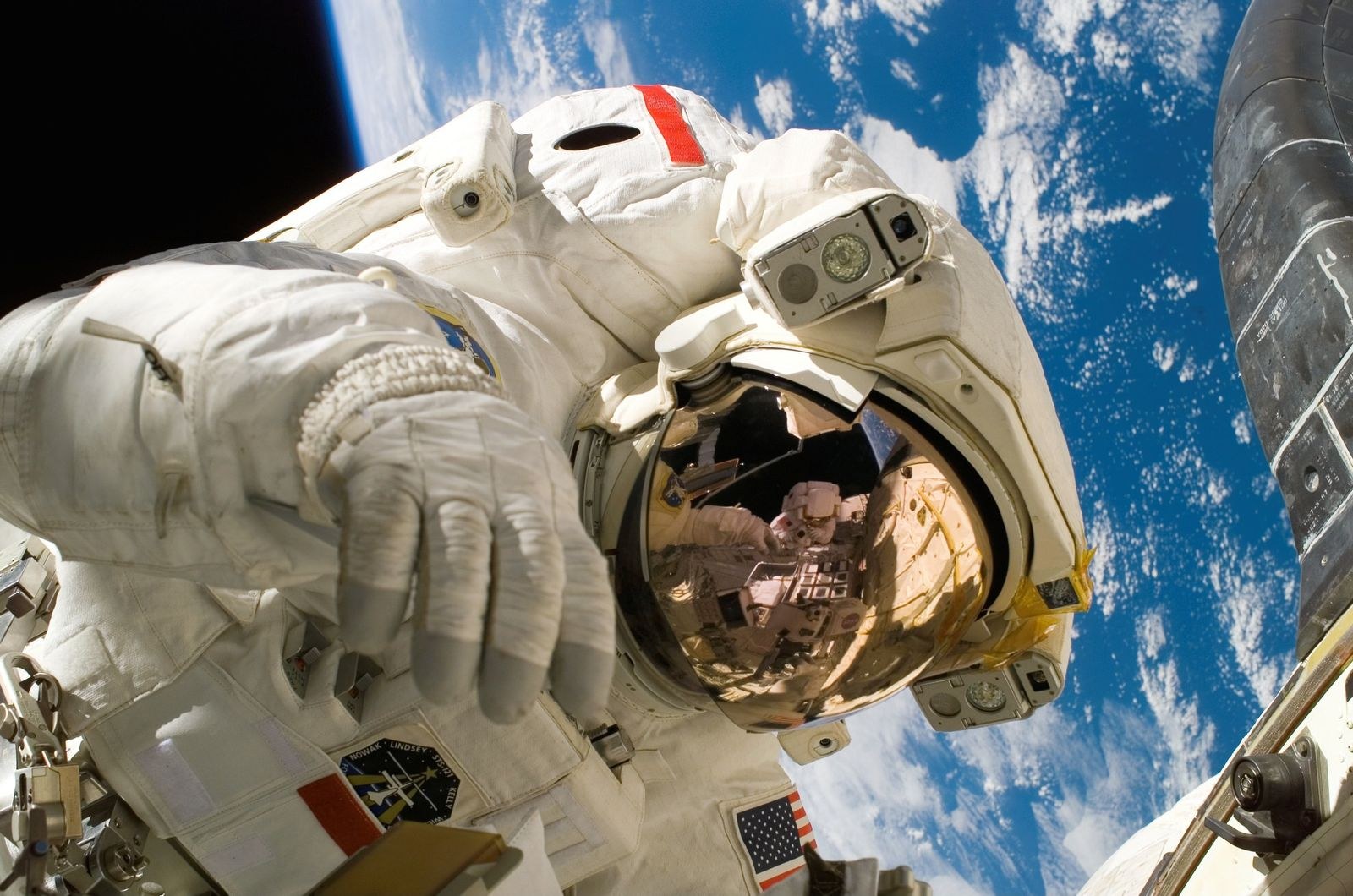 The legacy of spacewalk servicing: Astronauts repaired and upgraded Hubble five times during the Space Shuttle era; now, private commercial dockings could take their place.
Photo: Pixabay / Pexels (Free to Use)
Delicate Engineering: Why Docking with Hubble is Treacherous
While the concept of pushing a satellite higher seems conceptually straightforward, docking with an aging 36-year-old telescope is fraught with catastrophic risks:
- Thruster Plume Contamination: Chemical thrusters from an approaching spacecraft release unburned hydrazine and nitrogen tetroxide exhaust plumes. If these particles impinge upon Hubble’s primary 2.4-meter mirror or sensitive solar arrays, they could degrade reflectivity and blind its scientific sensors.
- Solar Array Brittleness: Hubble’s gallium arsenide solar wings have endured decades of harsh ultraviolet radiation, atomic oxygen erosion, and thermal cycling between +100°C in sunlight and -100°C in Earth’s shadow. The acceleration forces during a re-boost burn must remain strictly below 0.1 G to prevent structural resonance from fracturing the arrays.
- Single-Gyro Pointing Constraints: Following decades of continuous operations, only one of Hubble’s six mechanical gyroscopes remains fully operational, prompting NASA to transition the telescope to a robust single-gyro pointing mode in mid-2024. Any docking impulse must avoid imparting unmanageable angular momentum that could tumble the spacecraft.
The Planetary Defense & Scientific Stakes
Beyond astronomical observation, safely managing Hubble’s orbital future carries an acute public safety dimension.
Because Hubble was constructed with dense titanium bulkheads, invar metering trusses, and a massive 2.4-meter primary mirror substrate, NASA orbital debris engineers estimate that up to two tons of wreckage would survive the extreme heat of atmospheric re-entry. In an uncontrolled de-orbit scenario, these hypervelocity fragments would impact the surface along an 800-kilometer debris corridor, creating an unacceptable hazard if the re-entry trajectory crossed populated landmasses.
By executing a commercial re-boost to 620–650 kilometers, NASA buys twenty additional years of orbital breathing room. During this extended window, Hubble can continue producing groundbreaking science alongside JWST and the upcoming Nancy Grace Roman Space Telescope, until future robotic systems can execute either an in-orbit museum preservation or a precision-guided, controlled ocean disposal into Point Nemo in the South Pacific.
“Hubble belongs to the whole of humanity,” remarked Dr. Thorne. “To watch private industry step forward to save the greatest scientific instrument ever built is a testament to how far commercial spaceflight has come. If this mission succeeds, it will rewrite the rules of satellite life extension forever.”
Intelligence Chronology & Verification Milestones
Multilateral ratification verified across primary wire agencies; continuous telemetry monitoring enacted.
Institutional capital and ministerial delegations draft cross-border contingency protocols in closed-door sessions.
Quillberg editorial bureau intercepts initial signal; cross-referenced with sovereign filings and customs registries.
Cite This Dispatch & Link Back
Quoting, analyzing, or covering this story in your publication, academic research, or blog? Use this formatted citation to link back directly to the verified source:
[Quillberg News: NASA Explores Commercial Rescue Missions to Re-Boost Hubble Orbit](https://quillberg.com/nasa-commercial-rescue-mission-hubble-space-telescope-orbit-reboost)
📰 Related Strategic Intelligence
More in Tech → Tech
NASA Artemis III Achieves Historic Orbital Propellant Transfer in Lunar
 Deep Dives
NASA Swift Observatory Concludes Legendary Astrophysics Mission in Orbit
 Tech

