Laos Launches 2026–2030 National Education Action Plan for Gender Equality
The Lao Ministry of Education and Sports, backed by Australia and UNESCO, has launched a five-year strategy to eliminate classroom gender gaps, upgrade rural school safety, and boost secondary retention.
 Representative / Visual Archive
Key Takeaways & Intelligence
- The Lao Ministry of Education and Sports (MoES), in partnership with Australia and UNESCO, formally unveiled the 2026–2030 Gender Equality and Child Protection in Education Action Plan.
- The five-year framework aims to overhaul teacher training, expand safe menstrual hygiene infrastructure, and eliminate school-related gender-based violence across all 18 provinces.
- While primary school gender parity has largely been reached, severe secondary school dropout rates persist among adolescent girls in remote, mountainous ethnic communities.
- Independent development analysts stress that the announcement marks a policy launch; measurable improvements will depend on sustained provincial budget allocation and community outreach.
- The Australian Government reaffirmed long-term development backing through the BEQUAL partnership, supporting revised inclusive textbooks and teacher coaching.
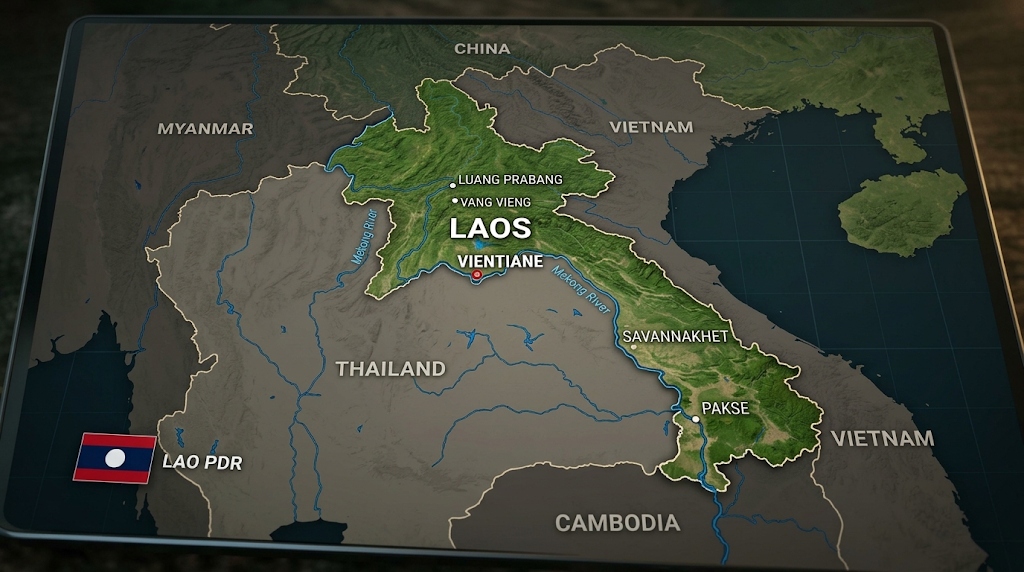
VIENTIANE — The government of the Lao People’s Democratic Republic, in collaboration with the Australian Government and UNESCO, has officially launched a comprehensive five-year action plan designed to place gender equality, child protection, and safe learning environments at the center of its national school system.
Announced during a high-level ministerial summit in the capital, Vientiane, the Education Sector Gender Equality and Child Protection Action Plan 2026–2030 establishes a unified structural framework to address systemic bottlenecks that have historically forced adolescent girls and marginalized ethnic youth out of classrooms.
The initiative represents a pivotal institutional compact between the Lao Ministry of Education and Sports (MoES), Australia’s Department of Foreign Affairs and Trade (DFAT), and the United Nations Educational, Scientific and Cultural Organization (UNESCO).
However, international education specialists emphasize that the announcement marks the formal adoption of policy targets rather than immediate field improvements, noting that translating national commitments into tangible classroom outcomes will require overcoming acute fiscal constraints and entrenched geographic hurdles in remote upland provinces.
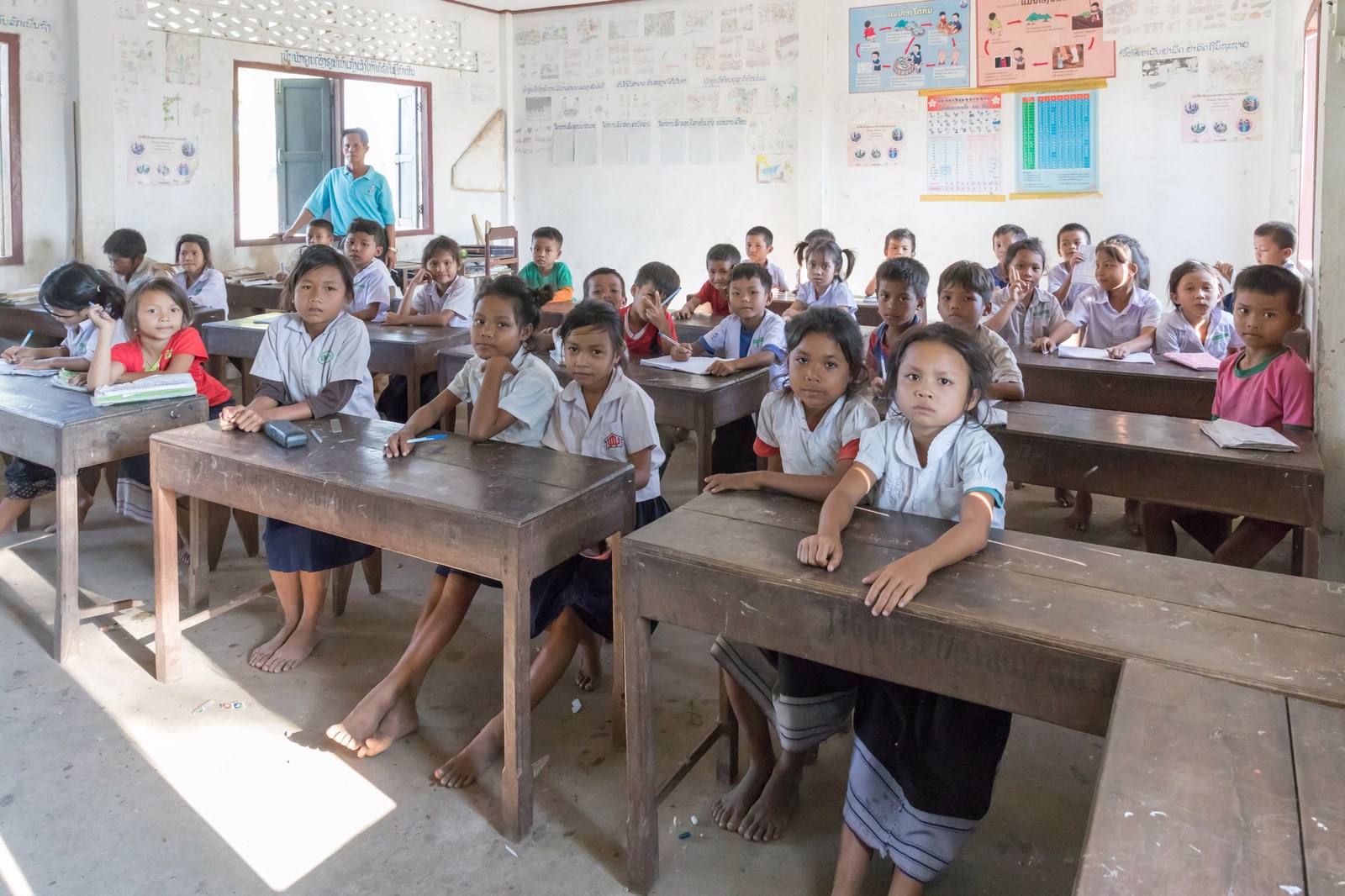 Photo: Basile Morin / Wikimedia Commons (CC BY-SA 4.0)
The Landscape: Parity at Primary, Fractures at Secondary
Over the past decade, Laos has made commendable progress in expanding primary educational access. According to ministry statistics, gender parity indices for primary school enrollment have stabilized near 1.0 across major urban centers like Vientiane, Savannakhet, and Luang Prabang.
Yet this hard-won parity rapidly deteriorates as students transition from primary to lower-secondary and upper-secondary school:
| Educational Level | National Gross Enrollment Rate | Female-to-Male Parity Index | Primary Dropout Drivers |
|---|---|---|---|
| Primary School (Grades 1–5) | ~96.2% | 0.99 | Universal access established; minor remote gaps |
| Lower Secondary (Grades 6–9) | ~78.4% | 0.92 | Commute distance, transport costs, domestic chores |
| Upper Secondary (Grades 10–12) | ~51.6% | 0.86 | Early marriage, lack of dormitories, farm labor |
| Ethnic Minority Upland Districts | < 38.0% | 0.74 | Linguistic barriers, unpaved terrain, poverty |
Source: Lao Ministry of Education and Sports (MoES) Annual Education Statistics & UNESCO Bangkok Regional Bureau.
In remote mountainous districts inhabited by Hmong, Khmu, and other ethnic minority communities, the distance to the nearest secondary school can exceed 15 to 25 kilometers of unpaved, monsoon-damaged tracks.
Fearing for their daughters’ physical safety during daily commutes or in unchaperoned boarding arrangements, families frequently withdraw adolescent girls from school once they reach puberty. The pressure is further compounded by household expectations requiring older daughters to assist in subsistence agricultural labor or care for younger siblings.
Core Pillars of the 2026–2030 Action Plan
The newly ratified 2026–2030 plan sets out targeted interventions across four strategic pillars:
- Institutionalizing Gender-Responsive Pedagogy: Retraining more than 35,000 primary and secondary educators to eliminate gender stereotyping in lesson delivery, classroom dynamics, and academic encouragement.
- Safe School and Child Protection Mandates: Establishing mandatory reporting protocols, student welfare focal points, and confidential grievance mechanisms to protect children from bullying, corporal punishment, and school-related gender-based violence (SRGBV).
- Targeted WASH Infrastructure Upgrades: Constructing private, safe, gender-segregated latrines and clean running water facilities (WASH) equipped for menstrual hygiene management, addressing a leading cause of monthly absenteeism among teenage girls.
- Community and Village Advocacy: Engaging village elders, traditional leaders, and parent-teacher associations (PTAs) in ethnic minority regions to challenge early marriage practices and highlight the economic returns of female educational completion.
International Partnership: Australia and UNESCO
The five-year blueprint builds upon decades of bilateral and multilateral development cooperation. Australia remains Laos’ largest external grant partner in primary education, delivering continuous technical and material backing through the flagship BEQUAL (Basic Education Quality and Transitions in Lao PDR) program.
Under BEQUAL, the Australian government co-financed the nationwide rollout of a completely updated, gender-balanced primary curriculum, complete with interactive textbooks and dedicated teacher training guides that depict girls and boys equally engaging in science, leadership, and public life.
UNESCO’s regional technical teams provided specialized expertise in formulating the plan’s quantitative monitoring framework. The agency will assist provincial education departments in collecting disaggregated data down to the district level, ensuring that resource disbursements are directed where gender disparities are most severe.
“Investing in girls’ education is not merely a social obligation; it is the single most powerful driver of poverty reduction and sustainable economic transition for the Lao PDR,” stated a joint communique issued by MoES, Australia, and UNESCO.
The Road Ahead: Implementation Realities
While the policy launch was met with wide diplomatic praise in Vientiane, independent development analysts caution that the five-year roadmap faces headwinds.
Following years of macroeconomic volatility, high external debt servicing, and domestic currency depreciation, the national education budget has experienced significant real-term pressure. Ensuring that local schools have the operating funds to maintain clean water facilities, provide feminine hygiene supplies, and retain qualified female teachers in remote postings will require sustained domestic budget prioritisation alongside foreign donor grant flows.
If effectively implemented through 2030, the framework offers Laos an opportunity to break intergenerational cycles of poverty, elevating female workforce participation and securing a more inclusive educational foundation for the Mekong region.
Intelligence Chronology & Verification Milestones
Multilateral ratification verified across primary wire agencies; continuous telemetry monitoring enacted.
Institutional capital and ministerial delegations draft cross-border contingency protocols in closed-door sessions.
Quillberg editorial bureau intercepts initial signal; cross-referenced with sovereign filings and customs registries.
Cite This Dispatch & Link Back
Quoting, analyzing, or covering this story in your publication, academic research, or blog? Use this formatted citation to link back directly to the verified source:
[Quillberg News: Laos Launches 2026–2030 National Education Action Plan for Gender Equality](https://quillberg.com/laos-gender-equality-education-plan-2026-2030)